

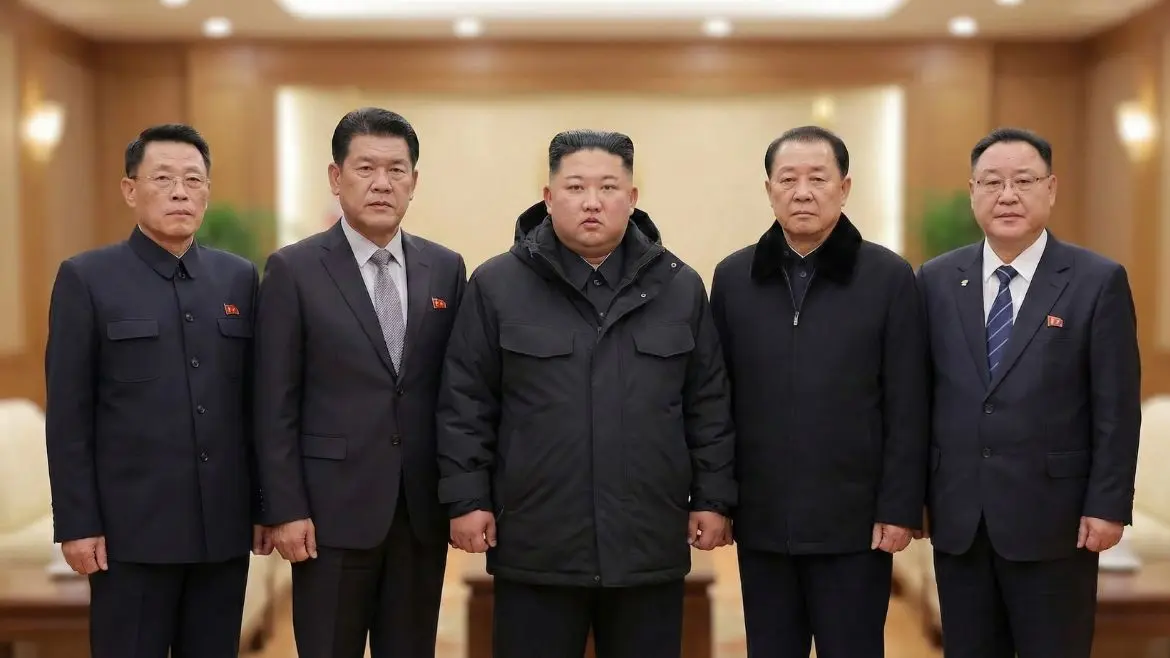
As 2026 begins, North Korea has once again captured global attention with a provocative ballistic missile launch on January 4. This event, occurring just hours before a critical diplomatic summit involving South Korea and China, signals a renewed escalation in the region. This article explores the details of the launch, the strategic motivations of Kim Jong Un, and the implications for U.S. national security and international relations.
Table of Contents
- Introduction
- The January 2026 Launch: A Rude Awakening
- Kim Jong Un’s New Year Strategy
- Diplomatic Timing: The China Connection
- International Reaction and Fallout
- The Rising North Korea Nuclear Threat
- Conclusion
- Frequently Asked Questions (FAQs)
Introduction
The year 2026 has barely started, and North Korea is already making headlines with a brazen display of military power. On the morning of January 4, 2026, the reclusive regime fired multiple ballistic missiles into the waters off its east coast, shattering the relative calm of the New Year. For observers in the United States, this isn’t just distant noise; it is a stark reminder of the persistent volatility in East Asia. North Korea remains one of the most unpredictable actors on the world stage, and this latest move has put Washington, Seoul, and Tokyo on high alert.
While the world was focused on other geopolitical shifts, North Korea used this moment to reassert its relevance. The timing was impeccable—and intentional. The launch occurred just hours before South Korean leadership was scheduled to depart for high-stakes talks in Beijing. By disrupting this diplomatic window, North Korea has effectively signaled that no conversation about the Korean Peninsula can happen without its input—or its interference.
The January 2026 Launch: A Rude Awakening
The specifics of the North Korea missile launch are alarming for defense experts. According to the South Korean Joint Chiefs of Staff, the projectiles were fired from the Pyongyang area and traveled approximately 900 kilometers (560 miles) before splashing down. This wasn’t a failed test or a minor short-range projectile; it was a calculated demonstration of a delivery system capable of striking key targets in the region.
Details of the East Sea Missile Test
The East Sea missile test involved what analysts believe to be upgraded solid-fuel ballistic missiles. Unlike liquid-fuel missiles, which take time to fuel and launch, solid-fuel variants can be deployed quickly, making them much harder for U.S. and allied satellites to detect in advance.
- Flight Distance: ~900 km (560 miles)
- Altitude: ~50 km
- Target Area: Waters between the Korean Peninsula and Japan (outside the EEZ).
This North Korea fires ballistic missile Jan 2026 event is the first significant weapons test of the year. It serves as a data point for U.S. intelligence, suggesting that despite sanctions and economic isolation, the regime’s engineering capabilities are advancing, not retreating.
Kim Jong Un’s New Year Strategy
To understand why North Korea is acting out now, we have to look at the man at the top. Kim Jong Un has recently been seen touring major munitions factories, calling for an exponential increase in the production of tactical guided weapons. His rhetoric has shifted from vague threats to specific production quotas.
Strengthening the “Invincible Alliance”
Recent DPRK news 2026 indicates a tightening bond between Pyongyang and Moscow. By aligning himself with other anti-Western powers, Kim is trying to create a buffer against U.S. pressure. The narrative inside North Korea is one of encirclement; they claim their nuclear program is the only guarantee of survival against what they perceive as American aggression.
This domestic propaganda serves a dual purpose. First, it distracts the impoverished population from economic hardships. Second, it justifies the massive spending on the military. When Kim Jong Un appears on state television inspecting missile trucks, the message to his people is clear: We are a fortress, and North Korea will not bow to foreign powers.
Diplomatic Timing: The China Connection
Politics in East Asia is a game of 4D chess, and North Korea just made a chaotic move. The missile launch wasn’t random; it was timed to overshadow the visit of South Korean President Lee Jae Myung to China.
The Message to Beijing and Seoul
Beijing is North Korea‘s economic lifeline, accounting for the vast majority of its trade. However, China also wants stability in the region to protect its own economic interests. By conducting a Pyongyang first missile test 2026 right before the South Korean President arrived in Beijing, Kim Jong Un effectively embarrassed his patrons in China while intimidating his rivals in the South.
- To South Korea: The message is that diplomacy with China will not solve the security crisis.
- To China: It forces Beijing to choose between enforcing sanctions or supporting its unruly neighbor.
- To the U.S.: It is a reminder that Washington cannot ignore Pyongyang, even with other global crises demanding attention.
The Korean peninsula tension 2026 is now at a boiling point. The South Korean government has condemned the launch as a “grave provocation,” but their options are limited without direct Chinese cooperation, which North Korea has just successfully complicated.
International Reaction and Fallout
The international community was swift to condemn the actions of North Korea, but the path forward remains murky. The US-Japan-South Korea response has been unified in rhetoric but cautious in action.
Japan’s Security Concerns
The Japan reaction to North Korea missile activity was particularly sharp. Although the missiles fell outside the North Korea missile Japan EEZ (Exclusive Economic Zone), they traveled a distance that covers much of the Japanese mainland. Japan’s Defense Ministry lodged a formal protest through diplomatic channels in Beijing. For Japan, North Korea is an existential threat; a missile that can fly 900km can easily reach major Japanese cities or U.S. military bases in Okinawa.
The U.S. Stance
The U.S. Indo-Pacific Command issued a statement noting that while the launch did not pose an “immediate threat” to U.S. personnel, it highlighted the destabilizing impact of the North Korea ballistic missile program. The U.S. administration is likely to push for tighter enforcement of UN Security Council resolutions, but with Russia and China holding veto power, new sanctions are unlikely to pass. This diplomatic gridlock works in North Korea‘s favor, allowing them to test weapons with relatively few new consequences.
The Rising North Korea Nuclear Threat
Ultimately, every missile launch is a step toward a larger goal: a fully deliverable nuclear arsenal. The North Korea nuclear threat is not just about the bombs themselves, but about the delivery systems.
Miniaturization and Precision
The holy grail for North Korea is a warhead small enough to fit on a tactical missile—one that can target a specific airfield or port rather than just a general city-sized area. The January 2026 test suggests they are refining the guidance systems needed for this precision. If North Korea can reliably field tactical nuclear weapons, it changes the calculus for the United States. It raises the terrifying question: Would the U.S. risk San Francisco to save Seoul?
Recent intelligence suggests North Korea is also eyeing a nuclear-powered submarine. Photos released in late 2025 showed Kim inspecting hull sections of a massive new vessel. If North Korea succeeds in moving its nuclear deterrent underwater, it becomes infinitely harder to track and preemptively strike.
Conclusion
The events of January 2026 serve as a sober reminder that North Korea remains a dangerous flashpoint in global geopolitics. By launching ballistic missiles on the eve of a major diplomatic summit, the regime has proven it is willing to disrupt peace efforts to maintain its leverage.
For the United States, managing North Korea will require a delicate balance of military deterrence and diplomatic maneuvering. Ignoring the problem has allowed it to fester, but direct confrontation carries catastrophic risks. As Kim Jong Un continues to modernize his arsenal, the window for a peaceful resolution narrows. Whether through tightened alliances with Japan and South Korea or renewed pressure from China, the world must find a way to contain the ambitions of North Korea before the next test involves something far more destructive than a missile falling into the sea.
Frequently Asked Questions (FAQs)
1. Can North Korea’s missiles reach the United States? Yes, North Korea possesses Intercontinental Ballistic Missiles (ICBMs) like the Hwasong-17, which have the theoretical range to strike the U.S. mainland. The recent tests in 2026, however, focused on shorter-range missiles targeting regional areas.
2. Why did North Korea fire a missile in January 2026? The launch was likely a show of force to disrupt a summit between South Korea and China. It signals that North Korea refuses to be sidelined in regional discussions and serves as a test of their new solid-fuel technology.
3. What is the U.S. doing about North Korea? The U.S. maintains a strong military presence in South Korea and Japan to deter aggression. Additionally, Washington enforces strict economic sanctions on North Korea and works with allies to monitor the regime’s weapons development.
4. Is it safe to travel to South Korea with these tensions? Despite the Korean peninsula tension 2026, daily life in South Korea generally continues as normal. Missile tests by North Korea are frequent, and while they are serious security issues, they rarely impact civilian travel or safety in the South directly.
5. Does North Korea have nuclear weapons? Yes, North Korea has conducted multiple nuclear tests since 2006 and is estimated to have an arsenal of 40 to 50 nuclear warheads, along with the fissile material to build more.
Visit Vic Waves for the latest trending USA news, updates, and insights you may have missed today, and more stories.