

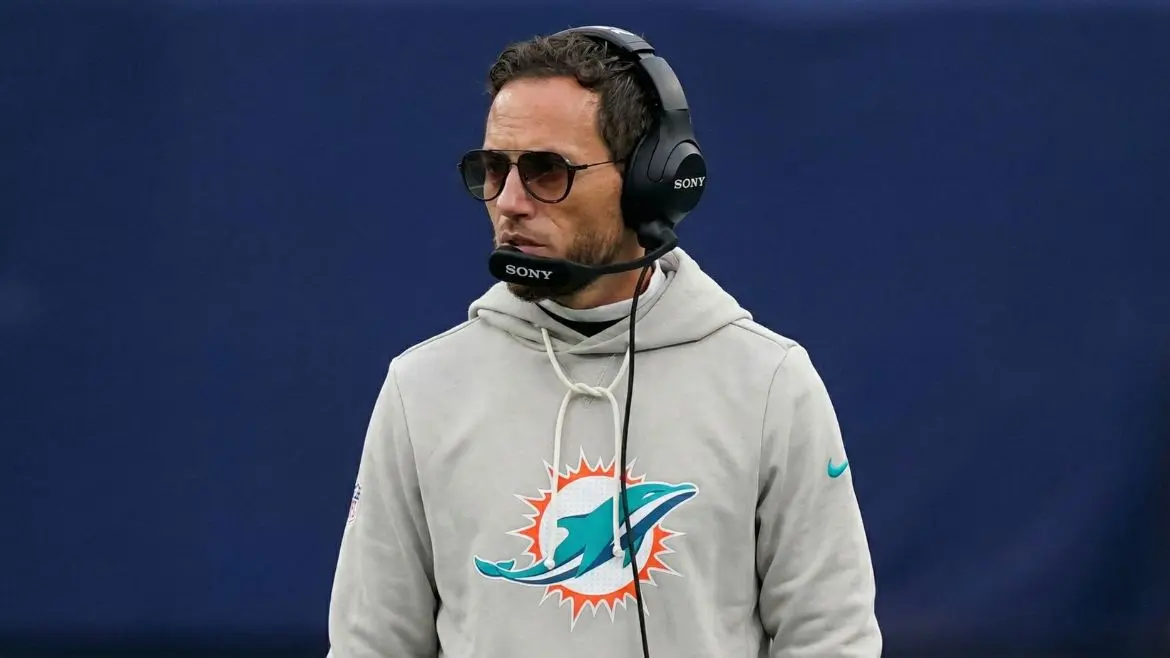
This article provides an in-depth look at the recent dismissal of the Miami Dolphins head coach following a frustrating 2025-2026 season. We explore the factors leading to the decision, the legacy of the Mcdaniels offense, and the immediate interest from other NFL teams like the Cleveland Browns. Additionally, we analyze the potential candidates to fill the vacancy in Miami and what this move means for the future of the franchise.
Table of Contents
- Introduction
- The Decision: Why the Dolphins Moved On
- Analyzing the 7-10 Season Breakdown
- The Mcdaniels Offensive Legacy
- Official Statements and Front Office Reactions
- What’s Next for Mcdaniels? Cleveland Calls
- The Dolphins’ Search: Harbaugh and Belichick Rumors
- The Impact on Tua and the Roster
- Conclusion
- Frequently Asked Questions (FAQs)
Introduction
The NFL landscape shifted dramatically on January 8, 2026, with news that sent shockwaves through South Florida and beyond. The Miami Dolphins officially parted ways with their charismatic head coach, ending what many fans refer to as the Mcdaniels experiment. Known for his quirky personality, aviator sunglasses, and innovative offensive schemes, his tenure brought excitement back to Miami, but ultimately failed to deliver the deep playoff run the franchise desperately craved.
For three seasons, the Mcdaniels approach captivated the league. He transformed the Dolphins into a track team on grass, utilizing speed and precision to break records. However, the NFL is a results-oriented business, and after a regression in performance, owner Stephen Ross decided it was time for a change. This article dives deep into what went wrong, the highs and lows of the Mcdaniels years, and where both the coach and the team go from here in a turbulent offseason.
The Decision: Why the Dolphins Moved On
The firing of a head coach is rarely about a single game; it is usually a culmination of missed expectations. For the Dolphins, the decision to move on from Mcdaniels was rooted in a lack of postseason success. Despite having one of the most talented rosters in the league, the team struggled to close out big games against quality opponents.
Critics of the Mcdaniels system often pointed to its fragility. When everything clicked, it was unstoppable. But when defenses adjusted or the weather turned cold, the high-flying offense often stalled. The front office likely felt that the team had hit a ceiling. The expectation was not just to make the playoffs, but to contend for a Super Bowl. When the team took a step back this year, the pressure mounted on Mcdaniels to prove he could adapt—a test he unfortunately did not pass in the eyes of ownership.
Furthermore, game management issues plaguing the Mcdaniels tenure—such as questionable clock management and play-calling in critical fourth-quarter situations—became harder to ignore. While his players loved him, the results on the scoreboard simply didn’t match the talent on the payroll.
Analyzing the 7-10 Season Breakdown
The nail in the coffin was undoubtedly the Dolphins 7-10 season. Coming off consecutive playoff appearances, the 2025 campaign was viewed as “Super Bowl or Bust.” Instead, it ended in a bust of a different kind. The regression was stark. The offense, which had terrified defensive coordinators for two years, looked pedestrian for long stretches.
Injuries played a role, as they always do in the NFL, but good coaching is expected to overcome adversity. Under the leadership of Mcdaniels, the team failed to find an identity when their “Plan A” didn’t work. They struggled significantly against teams with winning records, a haunting trend that followed the coach throughout his time in Miami.
The slide at the end of the season was particularly damaging. Losing winnable games in December turned up the heat on the Mcdaniels seat. By the time the final whistle blew on the regular season, it was clear that the magic had faded. The 7-10 record wasn’t just a bad statistic; it was an indictment of a team that had lost its way and perhaps its confidence in the scheme that once made them famous.
The Mcdaniels Offensive Legacy
Despite the sour ending, it is impossible to discuss this era without acknowledging the impact of the Mcdaniels offense. When he arrived from San Francisco, he brought a version of the Shanahan zone-run scheme that he evolved into something entirely his own. He unlocked the potential of his quarterback and turned his wide receivers into statistical monsters.
The “cheat motion” and the sheer speed of the offense forced the entire NFL to adjust how they played defense. Coaches across the league spent offseasons trying to decode the Mcdaniels playbook. He proved that a cerebral, non-traditional coach could command a locker room and build a high-octane unit.
However, the legacy of Mcdaniels in Miami will also be a cautionary tale about adaptability. The league catches up fast. What works in year one might not work in year three if it doesn’t evolve. The reliance on timing and speed made the offense susceptible to physical play at the line of scrimmage, a weakness that opponents exploited relentlessly in the 2025 season.
Official Statements and Front Office Reactions
Following the dismissal, the organization released a formal announcement. The Stephen Ross statement was professional but firm, emphasizing the need for a new direction. Ross thanked the coach for his contributions and for revitalizing the fan base but made it clear that mediocrity was not the standard for the Miami Dolphins.
“We have high expectations for this franchise,” the statement implied, signaling that the window to win is now. The decision to fire Mcdaniels wasn’t made lightly, but Ross has never been afraid to make bold moves in pursuit of a championship. The front office is now tasked with finding a leader who can take the foundation Mcdaniels built and add the toughness and discipline required to win in January.
The reaction from the players was mixed. Many expressed shock and sadness, as Mcdaniels was known as a “player’s coach.” He fostered a culture of openness and fun, which will be missed. However, veteran leaders in the locker room likely understand the business side: when you finish with a losing record, changes are inevitable.
What’s Next for Mcdaniels? Cleveland Calls
One man’s loss is often another man’s treasure. Almost immediately after the news broke, rumors began swirling about where the offensive guru would land next. The most prominent report suggests Mike McDaniel Cleveland Browns interest. The Browns, struggling with their own offensive identity, could view Mcdaniels as the perfect spark plug.
Cleveland has a roster that, on paper, fits what Mcdaniels likes to do: a strong running game foundation and athletic playmakers. If he were to head to Cleveland, even as an offensive coordinator or potentially a head coach (depending on their own staff situation), it would be a fascinating second act.
Critics question whether the Mcdaniels style can work in the harsh winters of the AFC North, widely considered the toughest division in football. However, his ingenuity is respected league-wide. It is unlikely Mcdaniels stays unemployed for long. Whether he takes a year off to recharge or jumps right back onto the sideline, his name will be at the top of many wish lists this hiring cycle.
The Dolphins’ Search: Harbaugh and Belichick Rumors
With the Mcdaniels chapter closed, Miami turns its eyes to the future. Who can fix the Dolphins? The rumor mill is already spinning out of control. One name that has surfaced repeatedly is John Harbaugh. The John Harbaugh Dolphins rumors suggest that Miami is looking for an experienced, proven winner—essentially the anti-Mcdaniels in terms of coaching profile.
Harbaugh brings discipline, special teams expertise, and a Super Bowl pedigree. If he were to become available or be lured away from Baltimore, it would signal a massive cultural shift for Miami. Another name that always looms over Miami coaching searches is Bill Belichick, though his age and recent history make him a polarizing candidate.
The Dolphins need a stabilizer. After the rollercoaster of the Mcdaniels years, fans might welcome a more traditional, defensive-minded head coach who can instill toughness. The search will be aggressive, with Stephen Ross likely willing to pay top dollar for a big name.
The Impact on Tua and the Roster
The person most affected by the departure of Mcdaniels is undoubtedly quarterback Tua Tagovailoa. Mcdaniels was Tua’s biggest advocate; he built the entire system around the quarterback’s quick release and accuracy. He restored Tua’s confidence after a rocky start to his career.
Now, Tua faces an uncertain future. A new coach means a new system. Will the next head coach be as committed to Tua as Mcdaniels was? Or will they want to bring in their own guy? This roster is built for speed, tailored specifically to the Mcdaniels vision. A new coach might want to overhaul the personnel, leading to a potential rebuild or retooling period.
The wide receiver duo, which thrived under Mcdaniels, will also have to adjust. They were the beneficiaries of free releases and motion concepts that confused defenders. Without the Mcdaniels play-calling wizardry, they will have to prove they can dominate in a more traditional offense.
The “Boy Genius” Narrative
When Mcdaniels was hired, he was hailed as a boy genius—a Yale graduate who saw the game differently. He broke the mold of the stereotypical yelling football coach. He wore sneakers, made jokes in press conferences, and treated players like peers.
This approach worked wonders initially. It relaxed a tense organization. But as the losses piled up in the 2025 season, the “genius” label began to fade. The quirkiness that was once charming began to look like a lack of seriousness to some observers. The firing of Mcdaniels serves as a reminder that in the NFL, style never outweighs substance. You can be different, but you have to win.
Despite the ending, the Mcdaniels tenure will be remembered for making the Dolphins relevant again. He brought excitement and electricity to Hard Rock Stadium. The “Mcdaniels effect” on ticket sales and national interest was real. He proved he belongs in the NFL, even if his time as the head man in Miami has run its course.
Conclusion
The firing of Mike Mcdaniels (McDaniel) marks a significant turning point for the Miami Dolphins. It is the end of an experiment that promised the world but delivered mixed results. A 7-10 season was simply not enough to save his job in a league that demands consistent excellence.
As Mcdaniels likely heads to a new opportunity, perhaps in Cleveland or elsewhere, he leaves behind a complicated legacy. He was an innovator who revitalized a dormant offense, but he was also a coach who couldn’t get over the hump when it mattered most. For Miami, the search for the next leader begins now. They need someone who can take the talent assembled during the Mcdaniels years and forge it into a championship team. The pressure is on Stephen Ross to get this next hire right, as the Dolphins’ Super Bowl window won’t stay open forever.
Frequently Asked Questions (FAQs)
Why was Mcdaniels fired by the Dolphins? The coach was fired primarily due to the team’s disappointing performance in the 2025 season, finishing with a 7-10 record and missing the playoffs despite high expectations.
Are the Cleveland Browns interested in Mcdaniels? Yes, reports indicate there is strong Mike McDaniel Cleveland Browns interest. His offensive expertise is seen as a potential asset for the Browns, who are looking to revitalize their scoring attack.
What was the Dolphins’ record in the final season under Mcdaniels? The team finished with a Dolphins 7-10 season, a significant regression from previous years where they had made the playoffs.
Who are the top candidates to replace Mcdaniels? Rumors are circulating regarding several high-profile coaches, including John Harbaugh Dolphins rumors and speculation about other veteran coaches who can bring discipline and playoff experience to the roster.
What did Stephen Ross say about the firing? The Stephen Ross statement thanked the coach for his hard work but emphasized that the organization is determined to compete for championships immediately and felt a change in leadership was necessary to achieve that goal.
Did Mcdaniels have a winning record in Miami? Over his three-year tenure, he had winning seasons in his first two years but finished below .500 in his final season. His overall impact was positive offensively, but the lack of playoff wins was a deciding factor.
Visit Vic Waves for the latest trending USA news, updates, and insights you may have missed today, and more stories.