

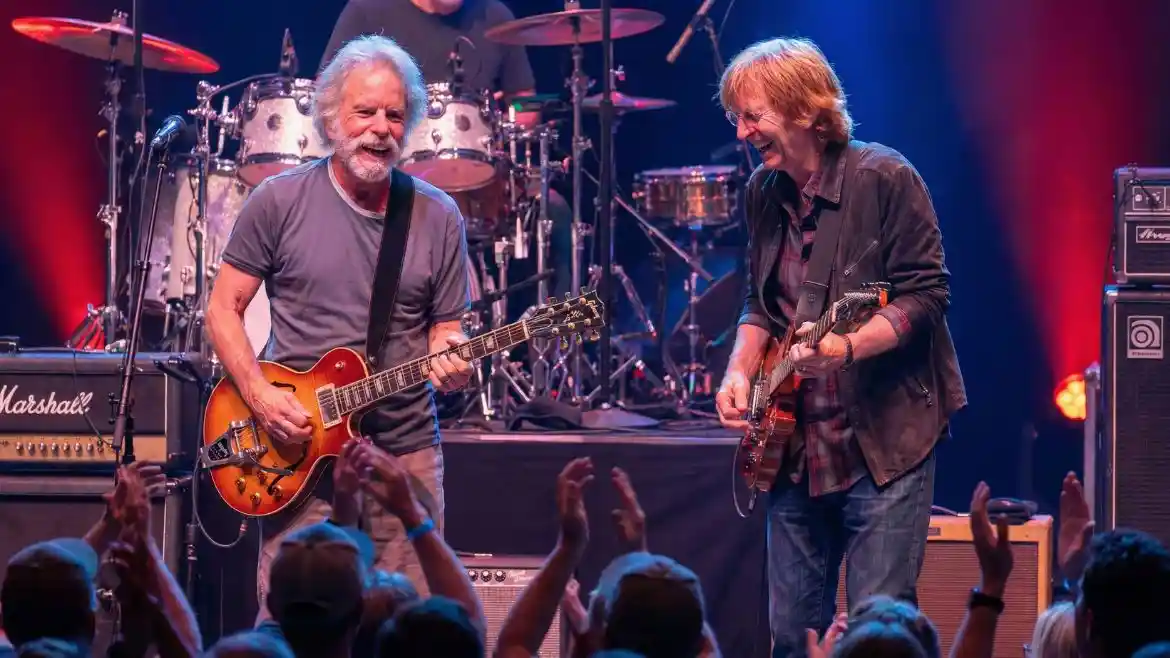
Music legend Bob Weir, the rhythm guitarist and founding member of the Grateful Dead, has passed away at the age of 78. This article explores his monumental impact on American music, the details surrounding his death, and the outpouring of love from the jam band community, including tributes from peers like Trey Anastasio. We delve into his final days, his historic career, and the enduring legacy he leaves behind.
Table of Contents
- Introduction
- Breaking News: The Passing of a Legend
- The Architect of Rhythm: Defining the Bob Weir Sound
- A Founding Father: The Grateful Dead Years
- Carrying the Torch: Dead & Company and Modern Era
- Tributes from the Road: Trey Anastasio and the Community
- Bob Weir’s Final Curtain: The 60th Anniversary Shows
- Personal Life and Activism
- Conclusion
- Frequently Asked Questions (FAQs)
Introduction
The music world stopped spinning for a moment on January 10, 2026. The news that Bob Weir, the iconic rhythm guitarist and founding member of the Grateful Dead, had passed away sent shockwaves through generations of “Deadheads.” At Bob Weir age 78, he was more than just a musician; he was a cowboy philosopher, a relentless road warrior, and the beating heart of a counterculture movement that refused to fade away.
For over six decades, Bob Weir stood stage right, weaving intricate, jazz-inflected chords that danced around Jerry Garcia’s leads. From the psychedelic ballrooms of San Francisco to sold-out stadiums with Dead & Company, his influence on live music culture is immeasurable. As fans light candles and cue up “Sugar Magnolia” in his honor, this article serves as a tribute to the man who promised the music would never stop—and ensured it never will.
Breaking News: The Passing of a Legend
The confirmation of Bob Weir death came via a heartfelt statement from his family on social media. It was revealed that the legendary musician passed away peacefully on Saturday, January 10, 2026, surrounded by his loved ones.
The Cause
According to the official announcement, Bob Weir had been battling cancer since a diagnosis in July 2025. In a display of his characteristic resilience, he had reportedly “beat” the cancer itself but ultimately succumbed to underlying lung issues that arose as complications. This detail adds a poignant layer to his final months; even while facing a monumental health crisis, he remained focused on the music.
The Final Days
Remarkably, Bob Weir did not spend his final year in seclusion. True to his reputation as the “iron man” of the jam scene, he returned to the stage just weeks after beginning treatment. His determination to perform at the Grateful Dead’s 60th-anniversary celebration in San Francisco’s Golden Gate Park now stands as a heroic final chapter—a goodbye given through the language he spoke best: music.
The Architect of Rhythm: Defining the Bob Weir Sound
When discussing Bob Weir, one cannot overlook his unique approach to the guitar. He wasn’t a traditional rhythm player who simply strummed chords to keep the beat. Instead, he invented a new vocabulary for the instrument.
- Inversions and Voicings: Influenced by jazz pianist McCoy Tyner, Bob Weir played complex chord inversions that occupied the sonic space between the bass and lead guitar. This allowed the Grateful Dead’s music to “breathe” in a way that standard rock bands couldn’t replicate.
- The “Weir” Tone: His tone was often bright, metallic, and cutting, designed to slice through the dense mix of two drummers and a heavy bass.
- Songwriting Prowess: While Jerry Garcia often got the spotlight, Bob Weir penned some of the band’s most enduring anthems. Songs like “The Other One,” “Throwing Stones,” and “Cassidy” showcased his ability to blend existential storytelling with driving rock rhythms.
His style was eccentric, often misunderstood by critics in the early days, but revered by musicians who understood the complexity of what he was achieving. He didn’t just play rhythm; he colored the music.
A Founding Father: The Grateful Dead Years
The story of Bob Weir is the story of the Grateful Dead. He was just a teenager—16 years old—when he met Jerry Garcia at a music store in Palo Alto on New Year’s Eve, 1963. That chance encounter sparked a partnership that would change American culture.
The Kid Brother
In the band’s early years, Bob Weir was the “kid brother” of the group. He was younger, eager, and occasionally at odds with the older members who briefly fired him in 1968 for not practicing enough. However, that dismissal was the catalyst he needed. He returned with a vengeance, developing the distinct style that became crucial to the band’s sound.
The Rock Star
By the 1970s, Bob Weir had evolved into a rock star in his own right. With his rugged good looks and energetic stage presence, he provided a dynamic counterpoint to Garcia’s stoic demeanor. He took the lead on the band’s rock-and-roll numbers, channeling Chuck Berry on “Promised Land” and delivering the cowboy ballads like “El Paso” that became fan favorites.
For 30 years, until Garcia’s death in 1995, Bob Weir was the reliable engine of the Grateful Dead, playing thousands of shows and helping to foster a touring community that became a family for millions.
Carrying the Torch: Dead & Company and Modern Era
After the Grateful Dead disbanded, Bob Weir refused to hang up his guitar. He founded RatDog, toured with The Other Ones and The Dead, and eventually spearheaded the formation of Dead & Company in 2015.
This supergroup, featuring John Mayer, Oteil Burbridge, and Jeff Chimenti, introduced the Grateful Dead’s catalog to a completely new generation. Critics were initially skeptical of Mayer’s inclusion, but Bob Weir saw the potential. Under his mentorship, the band became a touring juggernaut, selling out baseball stadiums across America.
Dead & Company wasn’t just a nostalgia act; it was a passing of the torch. Bob Weir spoke often of his desire for the music to outlive the men who created it. By teaching these songs to younger musicians, he ensured that the “Deadhead” culture would survive long after the original members were gone.
Tributes from the Road: Trey Anastasio and the Community
The news of Bob Weir passing has triggered an avalanche of tributes from every corner of the music world. Perhaps none are more poignant than those from the musicians who walked in his footsteps.
The Trey Anastasio Connection
Phish frontman Trey Anastasio has long looked up to Bob Weir as a mentor and a friend. Their bond was solidified during the “Fare Thee Well” shows in 2015, where Anastasio stepped in to play lead guitar. While the official Trey Anastasio tribute is still circulating through emotional social media posts and expected stage dedications, the history between them speaks volumes.
Anastasio has often credited Bob Weir with teaching him the art of listening on stage. In past interviews, Trey recounted stories of sitting with Bobby, learning the intricacies of the Dead’s arrangements. For Anastasio, Bob Weir was the bridge between the chaotic improvisation of the 60s and the structured jamming of the modern era.
A Community in Mourning
Social media feeds are flooded with black-and-white photos of Bob Weir in his signature cutoff shorts or, in later years, his grey beard and Birkenstocks. Fellow artists from the jam scene, including members of Widespread Panic, The String Cheese Incident, and Billy Strings, have all shared stories of Bobby’s generosity and wisdom. The sentiment is universal: the campfire has lost its elder statesman.
Bob Weir’s Final Curtain: The 60th Anniversary Shows
The timing of Bob Weir death makes his recent performances even more legendary. In 2025, despite his private health battles, he rallied the troops for the Grateful Dead’s 60th anniversary.
These shows in San Francisco were described by attendees as spiritual. Bob Weir, frail but fierce, led the band through marathon sets. Fans now realize that he likely knew these were his final bows. He didn’t play for money or fame; he played because that is what he did. He was a musician until the very last beat.
Those who were there witnessed a man engaging in what his family described as “another act of resilience.” He stood tall, sang with grit, and looked out over the Golden Gate Park crowd one last time—a fitting farewell for a San Francisco native son.
Personal Life and Activism
Behind the rock star persona, Bob Weir was a man of deep conviction and privacy.
- Family Man: He is survived by his wife, Natascha Münter, and their two daughters, Monet and Chloe. In his later years, he often spoke of the joy of fatherhood and the grounding presence his family provided amidst the chaos of touring.
- Activism: Bob Weir was a passionate advocate for the environment and social justice. He worked with the United Nations Development Programme as a Goodwill Ambassador and was a board member of the Rainforest Action Network. He famously encouraged Deadheads to vote, partnering with organizations like HeadCount to register voters at concerts.
His legacy is not just in the notes he played, but in the trees he helped save and the voices he helped empower.
Conclusion
The death of Bob Weir marks the end of an era, but not the end of the music. He was the “kid” who snuck into the band and grew up to become its patriarch. He was the Grateful Dead founding member who ensured the bus kept rolling for 60 years.
As we reflect on his life, it is impossible to be purely sad. Bob Weir lived a life that most can only dream of. He saw the world, created art that touched millions, and died peacefully after one final, triumphant lap. The lyrics to “Cassidy,” a song he wrote, seem appropriate now: “Flight of the seabirds, scattered like lost words… Fare thee well now, let your life proceed by its own design.”
Bob Weir designed a life of rhythm, adventure, and love. And for that, we are all grateful.
Frequently Asked Questions (FAQs)
When did Bob Weir die? Bob Weir passed away on Saturday, January 10, 2026.
What was the cause of Bob Weir’s death? Bob Weir died from underlying lung issues. His family stated that he had successfully battled cancer after a diagnosis in July 2025, but complications with his lungs ultimately claimed his life.
How old was Bob Weir when he died? He was 78 years old. The keyword Bob Weir age 78 is trending as fans reflect on his long and storied career.
Is Bob Weir a founding member of the Grateful Dead? Yes, Bob Weir was a Grateful Dead founding member, forming the band in 1965 alongside Jerry Garcia, Phil Lesh, Bill Kreutzmann, and Ron “Pigpen” McKernan.
Did Trey Anastasio tribute Bob Weir? Yes, the bond between the two is profound. Following the news, the jam band community anticipates and is sharing the Trey Anastasio tribute, reflecting on their time playing together during the “Fare Thee Well” concerts and their shared mentorship.
What will happen to Dead & Company? With Bob Weir death, the future of Dead & Company is uncertain. As the primary vocalist and rhythm guitarist, his absence leaves a void that may signal the end of the project, though the music will undoubtedly live on through the other members.
Visit Vic Waves for the latest trending USA news, updates, and insights you may have missed today, and more stories.