
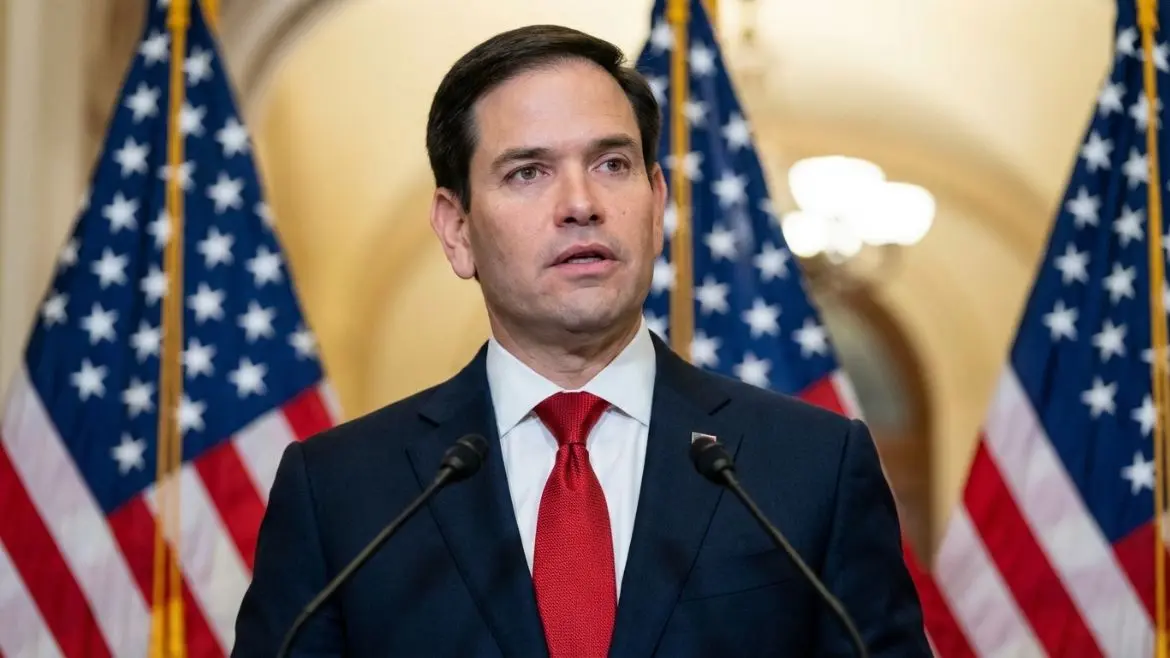
On January 28, 2026, Secretary of State Marco Rubio testified before the Senate Foreign Relations Committee regarding the recent U.S. operation in Venezuela. Following the capture of Nicolás Maduro, Rubio outlined a stark ultimatum to the interim leadership in Caracas: cooperate with U.S. objectives or face further military force. This article breaks down Rubio’s testimony, the status of Edmundo González, and the future of US foreign policy in the region.
Table of Contents
- The Senate Hearing: Rubio Takes the Hot Seat
- A New Era: The Ousting of Nicolás Maduro
- Ultimatum to Caracas: “Prepared to Use Force”
- The Role of Edmundo González and the Opposition
- Economic Strategy: Oil, Cuba, and Recovery
- Domestic Reaction to Marco Rubio Venezuela Testimony
- Conclusion
- Frequently Asked Questions (FAQs)
The Senate Hearing: Rubio Takes the Hot Seat
On a tense Wednesday morning in Washington, Secretary of State Marco Rubio faced his former colleagues on the Senate Foreign Relations Committee. The hearing, titled “The Future of Democracy in Venezuela,” was the first public accounting of the U.S. strategy since the dramatic events of early January 2026.
Marco Rubio arrived with a clear message: the United States is not at war with the people of Venezuela, but the patience of the White House has run out. The Marco Rubio Venezuela hearing January 2026 was widely anticipated as a defining moment for the administration’s aggressive US foreign policy in Latin America.
Senators pressed Marco Rubio on the legality, cost, and long-term vision of the operation that removed Nicolás Maduro from power. While Republicans largely praised the decisive action, Democrats questioned the ongoing naval blockade and the risks of a power vacuum in Caracas. Through it all, Marco Rubio maintained a composed but uncompromising tone, emphasizing that the “criminal state” era of Venezuela was over, one way or another.
A New Era: The Ousting of Nicolás Maduro
To understand the weight of Marco Rubio‘s testimony, one must look at the context. Earlier this month, U.S. forces executed a targeted raid that resulted in the arrest of Nicolás Maduro. The operation, which Marco Rubio framed as a “law enforcement action” rather than a military invasion, has left the country in a fragile transition.
Marco Rubio insisted during the hearing, “There is no war against Venezuela, and we did not occupy a country.” This distinction is crucial for the Secretary of State, who is navigating the legal complexities of the War Powers Act. By categorizing the ouster of Nicolás Maduro as a strike against a “narcotrafficking ring” rather than a sovereign government, Marco Rubio aims to bypass certain congressional hurdles associated with declaring war.
However, the regime change is not yet complete. While Maduro is in custody facing charges in the U.S., his former inner circle—led by interim figure Delcy Rodríguez—still holds significant sway on the ground. This precarious reality was the focal point of the Senate hearing on Venezuela policy summary.
Ultimatum to Caracas: “Prepared to Use Force”
The most headline-grabbing moment of the hearing came when Marco Rubio issued a direct warning to the remaining leadership in Caracas. Addressing the Marco Rubio stance on removing Maduro and his cronies fully, the Secretary of State did not mince words.
“Make no mistake,” Marco Rubio stated in his prepared remarks. “We are prepared to use force to ensure maximum cooperation if other methods fail.”
This comment sent shockwaves through diplomatic channels. It answers the lingering question: Will US use force in Venezuela? According to Marco Rubio, the answer is a conditional “yes.” While the initial raid was surgical, the threat of broader military force remains on the table if the interim government refuses to adhere to U.S. demands.
Marco Rubio warnings to Maduro regime remnants included three specific requirements for avoiding further intervention:
- Full cooperation with the transition to democracy.
- Opening the energy sector to American and Western companies.
- The immediate cessation of oil shipments to Cuba.
Marco Rubio emphasized that the U.S. naval blockade would continue until these conditions were met, signaling that the economic stranglehold on the regime would not loosen without tangible results.
The Role of Edmundo González and the Opposition
A critical component of the US goals for Venezuela 2026 involves the legitimate winner of the 2024 election, Edmundo González. For nearly two years, the U.S. has recognized Edmundo González as the President-elect, despite Nicolás Maduro refusing to cede power.
During the hearing, Marco Rubio reaffirmed the US recognition of Edmundo González Urrutia. He described González as the rightful leader who must play a central role in the country’s reconstruction. However, the current situation on the ground is complex. The U.S. is effectively negotiating with Delcy Rodríguez’s interim authority to facilitate the handover of power to the democratic opposition.
Marco Rubio outlined a “reconciliation” phase where opposition figures would be granted amnesty and allowed to return to Caracas. The ultimate goal, according to Marco Rubio, is to seat Edmundo González and restore constitutional order. Critics argue that negotiating with Rodríguez risks legitimizing the very regime Marco Rubio has spent his career fighting, but the Secretary argued it is a necessary pragmatic step to avoid a bloody civil war.
Economic Strategy: Oil, Cuba, and Recovery
Beyond the political maneuvering, Marco Rubio laid out an economic roadmap that places Venezuela’s vast oil reserves at the center of the recovery. The Update on US Venezuela relations 2026 includes a plan to use Venezuelan oil revenue to fund the country’s reconstruction—but with strict U.S. oversight.
Marco Rubio stated that the administration plans to sell up to 50 million barrels of Venezuelan crude “at market value.” The proceeds would bypass the regime and go directly to a U.S.-controlled trust for the Venezuelan people. This plan drew sharp rebuke from some Senators, who labeled it “stealing oil,” a charge Marco Rubio fiercely denied.
“We are ensuring that American companies have access to the Venezuelan market in a way that is fair,” Marco Rubio explained. He argued that reviving the oil sector is the only way to pull Venezuela out of its humanitarian crisis. Furthermore, stopping the flow of subsidized oil to Cuba is a personal priority for Marco Rubio, who views the Havana-Caracas alliance as the root of regional instability.
Domestic Reaction to Marco Rubio Venezuela Testimony
The reaction to Marco Rubio Venezuela testimony has been polarized along party lines.
Republican Support
GOP lawmakers largely rallied behind Marco Rubio, viewing the operation against Nicolás Maduro as a long-overdue victory for freedom in the Western Hemisphere. They praised Marco Rubio for his “peace through strength” approach and supported his willingness to use military force as a deterrent.
Democratic Skepticism
Democrats, led by Ranking Member Senator Jeanne Shaheen, expressed deep reservations. While acknowledging that Nicolás Maduro was a dictator, they questioned the costs. “The U.S. naval blockade and the raid have already cost American taxpayers hundreds of millions of dollars,” Shaheen noted. There is also concern among Democrats that Marco Rubio is committing the U.S. to a long-term nation-building project in Venezuela without a clear exit strategy.
International Response
Globally, allies are watching closely. The Rubio comments on Venezuela military intervention have alarmed some Latin American neighbors who fear a return to Cold War-era interventionism. However, Marco Rubio insists that the U.S. is not acting as a conqueror, but as a liberator aiding a neighbor in distress.
Conclusion
The January 2026 hearing confirmed that Marco Rubio is the architect of one of the most aggressive shifts in US foreign policy in decades. By ousting Nicolás Maduro and threatening further military force, Marco Rubio has bet his tenure as Secretary of State on the success of the Venezuelan transition.
The path forward is fraught with danger. Marco Rubio must navigate a hostile interim government in Caracas, a skeptical Congress at home, and the logistical nightmare of rebuilding a failed state. Yet, his message remains clear: the U.S. will no longer tolerate a “criminal state” in its backyard. Whether this strategy leads to the democratic inauguration of Edmundo González or a prolonged conflict depends on how seriously the remnants of the regime take the warnings of Marco Rubio.
Frequently Asked Questions (FAQs)
1. Will US use force in Venezuela? According to the testimony given by MarcoRubio, the United States has already used force to capture Nicolás Maduro. Furthermore, MarcoRubio explicitly stated that the U.S. is “prepared to use force” again if the interim leadership does not cooperate with transition goals.
2. What was the Marco Rubio Venezuela hearing January 2026 about? The hearing was an opportunity for Secretary of State Marco Rubio to testify before the Senate Foreign Relations Committee. He explained the recent military raid, defended the US foreign policy shift, and outlined the roadmap for transitioning power to Edmundo González.
3. What is Marco Rubio’s stance on removing Maduro? MarcoRubio has been a lifelong advocate for regime change in Venezuela. He views the removal of Nicolás Maduro not just as a political necessity but as a moral imperative to stop human rights abuses and narcotics trafficking. He framed the recent ouster as a law enforcement operation against a criminal cartel.
4. Who is Edmundo González? Edmundo González Urrutia is the Venezuelan opposition leader who is widely recognized by the U.S. and other nations as the winner of the 2024 presidential election. Marco Rubio confirmed that installing him as the legitimate president is a primary objective of the current U.S. strategy.
5. What are the US goals for Venezuela 2026? As outlined by MarcoRubio, the goals include:
- Stabilizing the country after the removal of Nicolás Maduro.
- Ensuring U.S. energy companies have access to Venezuelan oil markets.
- Cutting off oil subsidies to Cuba.
- Transitioning power to a democratic government led by Edmundo González.
Visit Vic Waves for the latest trending USA news, updates, and insights you may have missed today, and more stories.