
In early 2026, the city of Minneapolis became the epicenter of a heated national debate regarding federal immigration enforcement. At the heart of this controversy is Jesus Ochoa, a Customs and Border Protection (CBP) agent identified as one of the shooters in the death of Alex Pretti. This article explores the details of the raid, the background of the agents involved, and the broader implications of BORTAC deployments in sanctuary cities under new DHS directives.
Table of Contents
- The Incident: How Jesus Ochoa Became a Household Name
- Who is Jesus Ochoa? The Agent Behind the Badge
- The Role of Raymundo Gutierrez and BORTAC Agents
- Minneapolis Raid: Why Were Federal Agents There?
- The Investigation: Body Cameras and Legal Battles
- Political Fallout: Sanctuary Cities vs. DHS 2026
- Public Reaction and Protests for Justice
- Conclusion
- Frequently Asked Questions (FAQs)
The Incident: How Jesus Ochoa Became a Household Name
In the chilling winter months of early 2026, a name began circulating through news feeds and legal briefs that would soon dominate the conversation around policing and immigration: Jesus Ochoa. While previously unknown to the public, Ochoa has been identified as one of the primary federal agents involved in the high-profile CBP shooting that resulted in the death of Alex Pretti.
The incident occurred during what was supposed to be a targeted enforcement operation in Minneapolis. However, details emerging from the Minneapolis Raid suggest a chaotic encounter. Jesus Ochoa, serving as a member of the elite Border Patrol Tactical Unit (BORTAC), was deployed far from the southern border, operating within the interior of the United States. This deployment was part of a broader DHS 2026 initiative to crack down on sanctuary jurisdictions.
According to initial reports and witness statements, Jesus Ochoa and his partner encountered Pretti during the operation. The situation escalated rapidly, leading to the discharge of service weapons. The immediate aftermath has left a community grieving and a nation asking difficult questions about the scope of Federal Police powers. As the CBP agents identified in Alex Pretti shooting Minneapolis hit the headlines, scrutiny has focused intensely on Ochoa’s decision-making in those critical seconds.
Who is Jesus Ochoa? The Agent Behind the Badge
Whenever a tragedy of this magnitude occurs, the public inevitably asks: Who pulled the trigger? Jesus Ochoa is a veteran agent within the Customs and Border Protection agency, specifically attached to BORTAC, the agency’s special operations unit. BORTAC agents are often compared to SWAT teams, trained to handle high-risk warrants and dangerous fugitives.
However, the transition from border operations to interior city policing is complex. Critics argue that agents like Jesus Ochoa are trained for war-zone-like environments on the border, not for interacting with civilians in dense urban settings like Minneapolis. While specific details of his service record are currently protected by privacy laws, the Jesus Ochoa and Raymundo Gutierrez background check demands from civil rights groups are growing louder. They are seeking to know if there is a history of excessive force by CBP agent Raymundo Gutierrez or Ochoa himself prior to this fatal event.
Understanding Jesus Ochoa as an agent requires understanding the pressure cooker of federal law enforcement in 2026. With the Trump Immigration policies pushing for aggressive enforcement, agents are often placed at the tip of the spear in political conflicts between state and federal wills.
The Role of Raymundo Gutierrez and BORTAC Agents
Jesus Ochoa did not act alone. He was accompanied by another agent, Raymundo Gutierrez. Together, they represent the sharp edge of the BORTAC Agents deployment that has been criticized by local leaders. Gutierrez, much like Ochoa, is facing intense scrutiny.
The dynamic between partners in tactical units is critical. In the split-second decisions that define a shooting, the actions of one agent often precipitate the actions of another. Investigators are currently piecing together the choreography of the raid to determine if Jesus Ochoa fired in response to a genuine threat or if the situation was mishandled by the tactical team collectively.
The involvement of Raymundo Gutierrez complicates the narrative. If one agent has a spotless record and the other does not, it changes how the Civil rights lawsuit Alex Pretti family vs CBP might proceed. Determining culpability will require a granular analysis of who escalated the confrontation and whether Jesus Ochoa followed standard operating procedures or deviated from protocol.
Minneapolis Raid: Why Were Federal Agents There?
One of the most common questions circulating online is: Why were BORTAC agents in Minneapolis 2026? Minneapolis is over a thousand miles from the Mexican border. The presence of Jesus Ochoa and his unit in the Twin Cities highlights a significant shift in American immigration enforcement policy.
Under the directives associated with Trump Immigration strategies, the definition of “border security” has expanded. DHS 2026 operational guidelines allow for the deployment of elite tactical units to “Sanctuary Cities” to assist ICE (Immigration and Customs Enforcement) in apprehending individuals whom local police refuse to hold.
Jesus Ochoa was likely deployed to Minneapolis not just to serve a warrant, but as a show of force and capability. The federal government has argued that in cities where local cooperation is non-existent, they must send their most capable units to ensure officer safety. However, the presence of militarized units like the one Jesus Ochoa belonged to often escalates tensions with local communities, leading to tragic outcomes like the death of Alex Pretti.
The Investigation: Body Cameras and Legal Battles
Transparency is the watchword of modern policing, but federal agencies have historically been slower to adopt it than local departments. The demand for the Alex Pretti shooting body camera footage release date has reached a fever pitch. The public wants to see exactly what Jesus Ochoa saw.
Unlike local police, who often release footage within days or weeks, federal agencies like CBP have different protocols. However, due to the intense public outcry surrounding Jesus Ochoa, there is immense political pressure to release the tapes. The footage is expected to answer key questions:
- Did Jesus Ochoa identify himself clearly?
- Was Alex Pretti armed?
- Did Jesus Ochoa attempt de-escalation techniques before using lethal force?
This evidence will be the cornerstone of the inevitable Civil rights lawsuit Alex Pretti family vs CBP. If the footage contradicts the official report filed by Jesus Ochoa, the legal ramifications could be severe, potentially leading to criminal charges rather than just administrative discipline.
Political Fallout: Sanctuary Cities vs. DHS 2026
The actions of Jesus Ochoa have ignited a firestorm regarding Federal vs state jurisdiction in Alex Pretti case. Minneapolis has long been a sanctuary city, limiting how much its local police cooperate with federal immigration agents.
The Minneapolis police reaction to CBP shooting has been one of distance and frustration. Local authorities often view the deployment of agents like Jesus Ochoa as an infringement on their community policing efforts. When federal agents conduct raids without full coordination with local precincts, the risk of “blue-on-blue” incidents or civilian casualties increases.
This clash is a direct result of the Trump 2026 immigration policy impact on local police. By overriding local non-cooperation policies with federal tactical teams, the administration has created a volatile environment. Jesus Ochoa stands at the intersection of this policy dispute—a federal agent enforcing federal will in a city that explicitly resists it.
Public Reaction and Protests for Justice
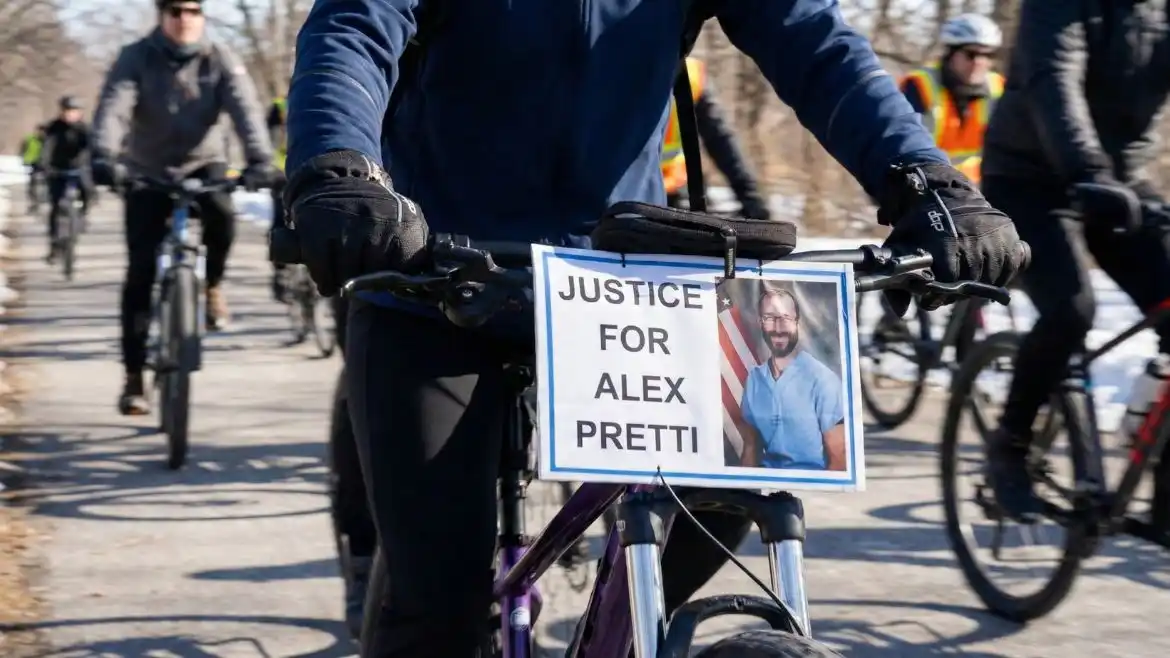
The streets of Minneapolis are no stranger to civil unrest and demands for justice. Following the identification of Jesus Ochoa as the shooter, Protests in Minneapolis for Alex Pretti justice have mobilized thousands.
Chants of “Justice for Alex” and signs bearing the name Jesus Ochoa have been seen outside the federal courthouse. The community sees Pretti’s death not as an isolated incident, but as a symptom of a militarized approach to immigration. They argue that agents like Jesus Ochoa bring a war-zone mentality to their neighborhoods.
The Governor of Minnesota statement on federal agents shooting reflected this anger, calling for a full, independent investigation into Jesus Ochoa and the BORTAC unit. The Governor emphasized that federal agents are not above the law and that Jesus Ochoa must be held accountable if misconduct is found.
Conclusion
The shooting of Alex Pretti is a tragedy that will take years to unravel in the courts and the court of public opinion. Jesus Ochoa, the agent at the center of the storm, represents the complex and often violent reality of modern immigration enforcement. As the nation waits for the release of body camera footage and the results of official inquiries, the name Jesus Ochoa serves as a reminder of the high stakes involved when elite tactical units are deployed to American streets.
Whether Jesus Ochoa is viewed as an officer doing a dangerous job in a hostile environment or an example of federal overreach and excessive force will depend heavily on the evidence yet to be revealed. But for now, in the year 2026, his actions have fundamentally altered the conversation on Sanctuary Cities and the power of the Federal Police.
Frequently Asked Questions (FAQs)
Why were BORTAC agents in Minneapolis 2026?
BORTAC agents, including Jesus Ochoa, were deployed to Minneapolis as part of a DHS 2026 initiative to conduct interior immigration enforcement operations in sanctuary cities where local police do not cooperate with federal requests.
Who are the CBP agents identified in Alex Pretti shooting Minneapolis?
Investigative reports have identified the agents involved as Jesus Ochoa and Raymundo Gutierrez. Both are members of the Border Patrol Tactical Unit (BORTAC).
What is the legal status of federal agents operating in sanctuary cities?
Federal agents like Jesus Ochoa have nationwide jurisdiction to enforce federal immigration laws. While “Sanctuary Cities” can refuse to use local resources to help them, they cannot legally stop federal agents from operating within city limits.
Is there a history of excessive force by CBP agent Raymundo Gutierrez?
Background checks and investigative journalism pieces are currently probing the service records of both Jesus Ochoa and Raymundo Gutierrez. Civil rights groups are demanding the release of their disciplinary files to see if there is a pattern of excessive force.
When is the Alex Pretti shooting body camera footage release date?
While no specific date has been set, pressure from the Civil rights lawsuit Alex Pretti family vs CBP and the Governor of Minnesota statement on federal agents shooting is likely to expedite the release. Typically, this can take anywhere from weeks to months depending on the federal investigation status.
What are the US Customs and Border Protection use of force statistics 2026?
The US Customs and Border Protection use of force statistics 2026 have shown an uptick in incidents involving BORTAC units in interior cities. Analysts suggest this correlates with the increased deployment of agents like Jesus Ochoa away from the border and into urban environments.
Visit Vic Waves for the latest trending USA news, updates, and insights you may have missed today, and more stories.