

In early March 2026, the nation of Turkey found itself unexpectedly pulled into the center of a rapidly escalating Middle East conflict. As unprecedented military action unfolded between the United States, Israel, and Iran, the fallout quite literally fell from the sky onto Turkish territory. When an Iranian ballistic missile veered dangerously close to European airspace, a rapid Nato response neutralized the threat mid-air. However, the resulting flaming debris crashed down onto the countryside, sparking immediate fears of a broader, continent-wide war. This comprehensive guide breaks down the timeline of the interception, the intense geopolitical reactions, and what this dramatic event means for global security and U.S. readers watching from afar.
Table of Contents
- Introduction: A Nation on the Edge
- The Catalyst: The US Iran Strikes 2026
- Tracking the Chaos and Live Updates
- The Sky Ignites: NATO Intercepts Missile
- A Mid-Air Defensive Maneuver
- Official Confirmations
- The Aftermath: Debris on the Ground
- Visuals of the Destruction
- The Big Question: Did Iran Attack Turkey NATO?
- Understanding the Article 5 Doctrine
- Global Media Tracking the NATO Turkey Iran Dynamics
- How Major Outlets Are Reporting the Crisis
- What This Means for the Future
- Conclusion
- Frequently Asked Questions (FAQs)
Introduction: A Nation on the Edge
For centuries, Turkey has served as a literal and figurative bridge between the East and the West. Geographically situated between Europe and the Middle East, it occupies one of the most strategically vital locations on the planet. As a key member of the North Atlantic Treaty Alliance, the country’s borders represent the easternmost defensive flank of Europe.
Usually, this strategic position gives the nation immense diplomatic leverage. However, during times of intense regional warfare, it also places the country directly in the line of fire. In early 2026, a massive geopolitical earthquake shook the Middle East, and the shockwaves reached the Turkish border in the form of a rogue ballistic missile. Let us explore exactly how a conflict hundreds of miles away suddenly became a domestic emergency for the nation, and why the entire world held its breath waiting to see what would happen next.
The Catalyst: The US Iran Strikes 2026
To understand why the skies over the border suddenly lit up with anti-aircraft fire, we have to look at the broader regional context. Early in the year, severe military escalations resulted in the US Iran strikes 2026. This unprecedented series of direct military confrontations dramatically altered the security landscape of the entire region.
Following a highly coordinated joint operation by American and Israeli forces targeting top leadership in Tehran, the Iranian military launched a massive, multi-front retaliatory campaign. They fired waves of drones and ballistic missiles aimed at various allied outposts across the Middle East. It was during this chaotic barrage that the flight path of one particular projectile caused alarm bells to ring across Europe.
Tracking the Chaos and Live Updates
For U.S. readers waking up to the news, the sheer volume of information was overwhelming. Millions tuned into the US Iran Israel strikes Trump live updates to make sense of the rapidly developing war. Furthermore, as the American administration addressed the nation, search trends for the Trump Iran strike live updates 2026 skyrocketed. Viewers were desperate to know if the conflict was contained or if it was spilling over into allied nations. Sadly, the answer arrived quickly in the form of a mid-air explosion.
The Sky Ignites: NATO Intercepts Missile
When sophisticated radar systems detect an incoming threat, military personnel have only seconds to react. As Iranian forces launched their retaliatory barrage, allied defense systems tracked one specific missile that had strayed from its expected southern trajectory.
A Mid-Air Defensive Maneuver
In a heart-stopping moment, NATO intercepts Iranian missile heading to Turkey. The alliance maintains highly advanced Patriot missile batteries and early-warning radar systems stationed precisely for this type of scenario. When the projectile crossed a critical threshold, threatening to breach allied airspace, the automated defense protocols were engaged.
The resulting action was swift and decisive. In a spectacular display of defensive technology, an Iranian missile shot down in the upper atmosphere illuminated the night sky. The sheer force of the NATO intercepts missile event was visible for miles, creating a massive flash that startled residents in nearby border towns.
Official Confirmations
It did not take long for official government statements to clarify the terrifying light show. The capital in Ankara quickly released a bulletin to the global press. The headline was clear: Turkey says NATO defenses destroyed missile from Iran.
This statement was vital to preventing mass panic. By explicitly stating that NATO air defenses shoot down Iranian missile threats successfully, the government reassured its citizens—and the watching world—that the defensive shield was fully operational and effective. An Iranian ballistic missile destroyed over Turkey is a terrifying concept, but the successful interception proved the value of the alliance’s integrated air and missile defense architecture.
The Aftermath: Debris on the Ground
While destroying a missile mid-air neutralizes the threat of a targeted explosive payload, the physical mass of the rocket does not simply vanish. The laws of physics dictate that what goes up must come down.
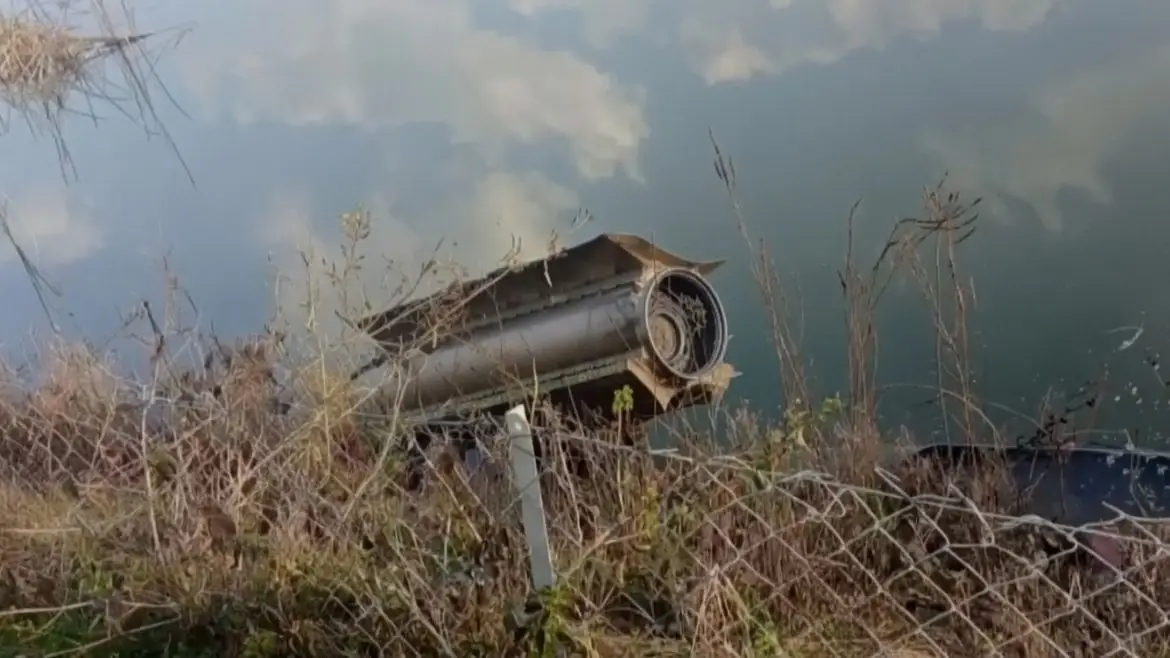
Immediately following the interception, a dangerous new phase of the crisis began. Debris from NATO missile interception falls on Turkish soil, showering a rural, sparsely populated region with jagged, flaming metal. This Turkey missile debris caused several localized fires and damaged agricultural property, though thankfully, early reports indicated no civilian casualties.
Visuals of the Destruction
In today’s hyper-connected world, the aftermath was instantly broadcast globally. The Al Jazeera video Turkish soil missile debris quickly went viral across social media platforms. The footage showed local emergency responders putting out brush fires while military cordons were established around large, smoldering chunks of the missile fuselage.
A secondary report, highlighting the Al Jazeera debris NATO missile interception Turkey, featured interviews with shaken locals who described the deafening sonic boom of the interception followed by the terrifying sound of metal raining down on their fields. The visual confirmation of the wreckage made the abstract threat of war feel incredibly real and immediate for audiences worldwide.
The Big Question: Did Iran Attack Turkey NATO?
As the sun rose over the smoldering debris, the geopolitical ramifications began to set in. In diplomatic and military circles, a single, burning question dominated the conversation: Did Iran attack Turkey NATO intentionally, or was this a catastrophic targeting error?
Understanding the intent behind the missile’s trajectory is the most critical aspect of this entire event. If a hostile nation intentionally fires a weapon at a sovereign member of the alliance, it changes the entire fabric of global security. However, early intelligence analysis suggested that the missile experienced a guidance system failure shortly after launch, causing it to veer wildly off its intended course toward U.S. bases in the south.
Understanding the Article 5 Doctrine
For readers in the U.S., the most concerning search query to emerge from this event was: Will NATO Article 5 be triggered against Iran?
Article 5 is the cornerstone of the alliance. It dictates that an armed attack against one member state shall be considered an attack against them all. If this clause is invoked, it would legally require the United States and all European allies to enter a direct, full-scale war with Iran.
Because of the extreme gravity of Article 5, allied leaders are treading very carefully. As long as intelligence confirms that the NATO Turkey Iran incident was a result of a malfunctioning weapon rather than a deliberate, targeted attack on the country, diplomats will likely favor de-escalation over invoking the mutual defense clause. However, it serves as a terrifying reminder of how easily a technical malfunction can spark a global war.
Global Media Tracking the NATO Turkey Iran Dynamics
Because this event involves the world’s most powerful military alliance and one of the most volatile regions on earth, international news organizations dedicated massive resources to covering every angle.
How Major Outlets Are Reporting the Crisis
If you are looking to stay updated on the nuanced diplomatic fallout, various publications offer different perspectives:
- The New York Times: Readers following the NYT NATO Iranian missile Turkey coverage will find deep-dive analyses into the capabilities of European air defense systems and the historical context of the alliance’s eastern border.
- The Washington Post: For minute-by-minute updates on the broader conflict, the Washington Post US Iran Israel strikes live feed is providing unparalleled coverage of the political maneuvers happening in Washington, D.C., in response to the falling debris.
By consuming a variety of these reports, U.S. readers can gain a well-rounded understanding of how the Turkey incident is shifting foreign policy discussions in real-time.
What This Means for the Future
The events of March 2026 will undoubtedly leave a lasting mark on the nation’s domestic and foreign policy. For Turkey, serving as the shield of Europe is a heavy burden.
Moving forward, we can expect to see a massive increase in military readiness along the southern and eastern borders of the country. The government in Ankara will likely demand further deployments of advanced anti-missile batteries from its Western allies to ensure complete coverage of its airspace. Furthermore, this incident will force European leaders to re-evaluate their crisis management protocols.
The successful interception was a massive victory for allied defense technology, but the falling debris was a stark reminder of vulnerability. It highlighted the terrifying reality that even successful military defense operations can result in domestic chaos and panic.
Conclusion
The 2026 Middle East escalation has proven that modern warfare rarely stays contained within intended borders. When the conflict spilled over, Turkey found itself at the absolute center of a terrifying geopolitical storm. The moment the alliance’s defense systems tracked the rogue projectile, the world held its breath.
Thankfully, the defense shield held strong. The successful interception of the ballistic missile prevented a direct impact, even though the resulting scattered wreckage caused immense anxiety on the ground. As diplomats work frantically to determine the exact cause of the missile’s trajectory, the global community must grapple with the uncomfortable truth of how close we came to a continent-wide war. For now, Turkey remains vigilant, acting as the crucial, heavily armed bridge between a peaceful Europe and a region engulfed in conflict.
Frequently Asked Questions (FAQs)
Why did a missile enter the airspace of Turkey? During the massive retaliatory strikes launched by Iran in March 2026, a ballistic missile is believed to have suffered a guidance system failure. Instead of hitting its intended target in the south, it veered off course and headed directly toward Turkish airspace.
Did the missile hit any cities or civilian centers? No. The missile was successfully intercepted and destroyed mid-air by allied defense systems before it could reach a populated target. However, flaming metal debris did fall onto rural agricultural land, causing localized fires.
What is NATO Article 5, and why is it important here? Article 5 is the mutual defense clause of the North Atlantic Treaty Organization. It states that an attack on one member is an attack on all. If the missile was deemed an intentional attack on the country, it could have triggered this clause, pulling the U.S. and Europe into a full-scale war.
Are commercial flights still operating over the country? Following the interception event, international aviation authorities heavily restricted or completely closed airspace near the southern and eastern borders out of an abundance of caution, causing massive global flight delays and reroutes.
Where can I see visuals of the fallen missile? Several international news organizations captured the aftermath on the ground. Searching for the Al Jazeera footage of the wreckage will provide clear visual evidence of the large metal fragments that crashed into the rural countryside.
Visit Vic Waves for the latest trending USA news, updates, and insights you may have missed today, and more stories.