

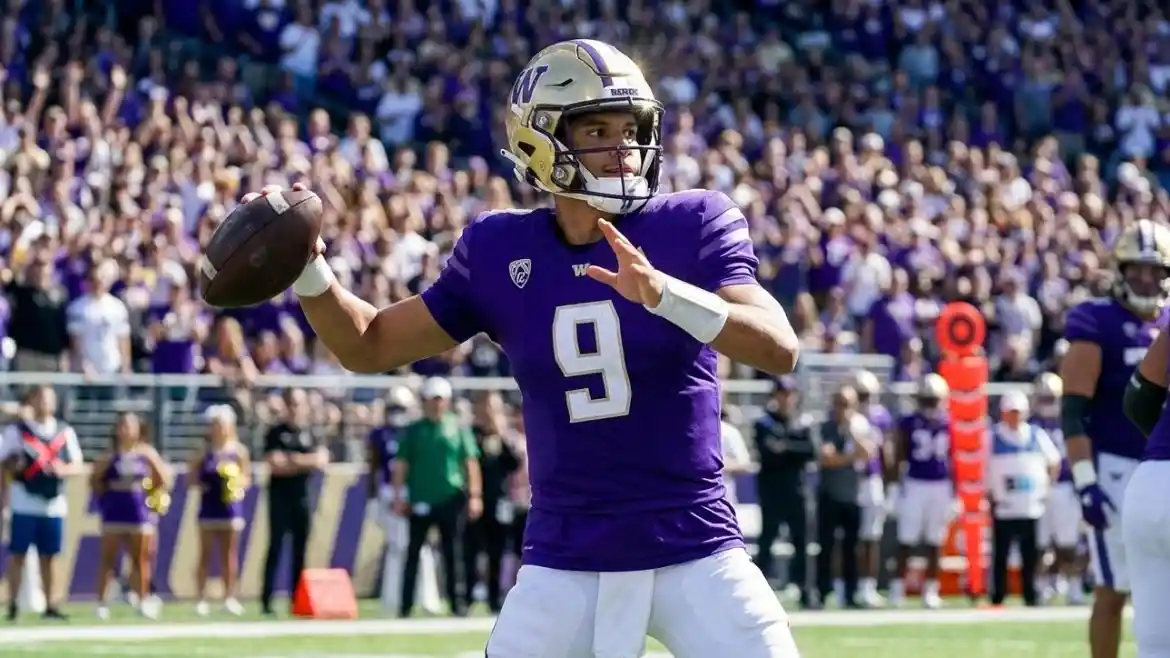
The college football world was stunned on January 6, 2026, when Washington Huskies star quarterback Demond Williams Jr. announced his entry into the transfer portal. This move comes just days after Williams reportedly signed a massive $5 million deal to remain in Seattle for the 2026 season. As the Washington Huskies explore legal avenues to enforce the contract, rumors swirl about a potential move to LSU.
Table of Contents
- 1. Introduction: The Shocking Exit of Demond Williams Jr.
- 2. The $5 Million Deal: A Historic Contract Dispute
- 3. Impact on the Washington Huskies Program
- 4. Potential Landing Spots: The LSU Connection
- 5. Understanding the “Do Not Contact” Tag
- 6. The Legal Battle Ahead: Enforcing NIL Contracts
- 7. Conclusion: A New Era of College Football Free Agency
- 8. Frequently Asked Questions (FAQs)
1. Introduction: The Shocking Exit of Demond Williams Jr.
On the evening of January 6, 2026, Demond Williams Jr. sent shockwaves through the Pacific Northwest by announcing his intention to enter the transfer portal. For the Washington Huskies, this news was as devastating as it was unexpected. Williams, a rising junior who had just completed a breakout 2025 season, was widely considered the “face of the program” under head coach Jedd Fisch.
What makes this departure particularly high-profile is the timing. Only four days prior, news broke that Williams had agreed to a record-breaking deal to stay at Washington for the 2026 college football season. His decision to leave so soon after signing has ignited a fierce debate regarding the stability of NIL (Name, Image, and Likeness) agreements and the future of player loyalty in the modern era of the transfer portal.
2. The $5 Million Deal: A Historic Contract Dispute
The financial details surrounding Demond Williams Jr. and his stay in Seattle were staggering. Reports indicate that Williams signed a deal worth approximately $5 million between revenue sharing and NIL compensation on January 2, 2026. This contract was among the highest in the nation for a college quarterback, reflecting his value after throwing for over 3,000 yards and 25 touchdowns in 2025.
However, the ink was barely dry when Williams posted his farewell message on Instagram. This has led to an unprecedented situation where the University of Washington and its boosters are reportedly seeking legal remedies. While professional organizations like the Ravens make major coaching shifts, a college player leaving a $5 million contract after four days may be a legal landmark for NCAA sports.
3. Impact on the Washington Huskies Program
Losing a player of Williams’ caliber is a massive blow to Jedd Fisch’s offensive plans. In 2025, Williams was a dual-threat nightmare for Big Ten defenses, rushing for over 600 yards alongside his passing prowess.
- Depleted QB Room: Most top-tier transfer quarterbacks have already committed to new schools, leaving Washington with limited options to replace their star.
- Recruiting Fallout: A sudden departure of the team leader can create a “domino effect,” causing other players or recruits to reconsider their commitment to the Huskies.
- Internal Morale: The coaching staff must now pivot to damage control while simultaneously scouring the portal for a late-cycle starter.
4. Potential Landing Spots: The LSU Connection
While Williams entered the portal with a “do not contact” tag, one school has emerged as the clear frontrunner: LSU. The Tigers, led by Lane Kiffin (who recently took the job in Baton Rouge), are reportedly prepared to offer a deal that matches or exceeds the one Williams signed at Washington.
Williams has a history with Kiffin, having originally committed to him during his high school recruitment. The lure of playing in the SEC and the high-octane offense Kiffin is known for appears to be the primary driver behind this sudden “change of heart.” Other schools like Miami and Oregon have been mentioned, but all signs currently point toward the bayou.
5. Understanding the “Do Not Contact” Tag
In the world of the transfer portal, the “do not contact” tag is a significant indicator. It typically means that the athlete already knows where they are going and does not want to be recruited by other programs. For Demond Williams Jr., this reinforces the theory that a deal with a new school—likely LSU—was already in motion before he officially filed his paperwork. This tag speeds up the transition process, allowing the player to enroll at their new institution almost immediately.
6. The Legal Battle Ahead: Enforcing NIL Contracts
The most fascinating aspect of this story is the potential for a courtroom battle. Washington sources have indicated they are prepared to pursue all legal avenues to enforce the signed contract. This mirrors a growing trend where schools attempt to hold players to their financial agreements.
- Breach of Contract: If the $5 million deal included a “commitment to play” clause, Washington may sue for damages or attempt to block his eligibility.
- NIL Regulation: This case could serve as a “test case” for how binding these multi-million dollar NIL deals actually are.
- Player Rights: Legal experts argue that under current labor laws, it is difficult to force a student-athlete to play for a specific team, even with a signed contract.
7. Conclusion: A New Era of College Football Free Agency
The saga of Demond Williams Jr. entering the transfer portal is a stark reminder that college football has entered an era of total free agency. Contracts that were once thought to be solid are now being treated as temporary agreements. As Washington prepares for a potential legal fight and LSU prepares to welcome a new star, the fans are left to navigate a landscape where loyalty is often second to the highest bidder.
Whether Williams takes the field for LSU or is caught in a legal limbo, this event will be remembered as the moment the NIL era truly became “pro-style” business. For the Huskies, the search for a new leader begins now, in the middle of a winter of discontent.
8. Frequently Asked Questions (FAQs) : demond williams
- Q1: Why did Demond Williams Jr. enter the transfer portal? Williams stated he is doing “what’s best for his future,” though reports suggest a massive offer from LSU and a desire to play for Lane Kiffin are the primary reasons.
- Q2: Did he really sign a $5 million deal with Washington? Yes, reports indicate he signed a deal worth nearly $5 million just days before entering the portal.
- Q3: What does the “do not contact” tag mean? It means he has likely already chosen his next school and does not want other coaches to recruit him.
- Q4: Can Washington sue him for leaving? University sources indicate they are exploring legal options to enforce the signed contract, which could lead to an unprecedented court case.
- Q5: Where is Demond Williams Jr. expected to go? LSU is widely considered the favorite to land Williams, especially given his prior connection to head coach Lane Kiffin.
Visit Vic Waves for the latest trending USA news, updates, and insights you may have missed today, and more stories.