

The vibrant city of Doha has suddenly found itself at the epicenter of a massive global travel crisis. Following the unprecedented escalation of geopolitical tensions in late February and early March 2026, major airspace closures have completely disrupted international aviation. For U.S. travelers and global citizens relying on massive transit hubs in the Persian Gulf, the situation is evolving rapidly. Hundreds of thousands of people are currently facing rerouted journeys, unexpected layovers, and complex refund processes. From understanding the widespread flight cancellations to knowing exactly what to do if you are stranded at the airport, this comprehensive guide covers everything you need to know about flying into, out of, or through this critical transit hub during this chaotic period.
Table of Contents
- Introduction: A Global Hub Under Pressure
- The Root of the Global Aviation Disruption
- Flights Canceled Due to US Iran Strikes
- Iran Airspace Closed to Commercial Jets
- The Ripple Effect Across Global Hubs
- Dubai and Hong Kong: A World of Delays
- Doha as the Central Transit Lifeline
- What Travelers in Doha Are Experiencing
- Flight Cancellations 2026: The Reality on the Ground
- Managing Stranded Passengers
- Critical Questions Answered for U.S. Travelers
- Is it Safe to Fly to the Middle East Right Now?
- Are Flights to Dubai Canceled Right Now?
- Practical Advice for Navigating the Chaos
- How to Get a Refund for Canceled Middle East Flight
- Rebooking and Finding Alternative Routes
- Conclusion
- Frequently Asked Questions (FAQs)
Introduction: A Global Hub Under Pressure
Doha is known worldwide as a premier transit hub, perfectly situated to connect the Americas, Europe, Asia, and Africa. However, if you are planning a trip right now, you need to be aware of the rapidly shifting landscape. In early 2026, the entire region experienced a geopolitical shockwave that instantly rippled through the travel industry.
For millions of U.S. travelers, a layover in Doha at the luxurious Hamad International Airport is a standard part of long-haul itineraries. Unfortunately, the current airspace restrictions have turned smooth itineraries into complex logistical puzzles. If you are currently sitting in an airport lounge frantically refreshing your airline app, or if you are at home wondering whether to pack your bags for an upcoming trip, you are not alone. The ongoing Middle East flights crisis requires patience, flexibility, and up-to-date information. Let’s break down exactly what is happening in the skies above the region and how it directly impacts your travel plans.
The Root of the Global Aviation Disruption
To understand why your itinerary through Doha might be experiencing severe delays or changes, it is essential to look at the broader geopolitical events that unfolded in late February 2026.
Flights Canceled Due to US Iran Strikes
The catalyst for this massive logistical nightmare was a sudden military escalation. With Flights canceled due to US Iran strikes, commercial airlines immediately prioritized passenger safety over operational schedules. When military action occurs in such a densely flown region, aviation authorities issue strict “no-fly” directives to prevent civilian aircraft from crossing paths with active conflict zones.
This Global aviation disruption US strikes Iran event forced airline dispatchers to scramble. Aircraft already in the air were forced to make U-turns, while thousands of scheduled departures were grounded indefinitely.
Iran Airspace Closed to Commercial Jets
The most significant logistical hurdle is geography. With the Iran airspace closed, airlines have lost one of the most vital aerial corridors connecting Europe and North America to South Asia and the Far East.
When you look at a Middle East airspace closures map 2026, the problem becomes clear. Flights taking off from Doha must now take extreme, circuitous detours to avoid restricted zones. These detours require extra fuel, add hours to total flight times, and often disrupt the tight layover connections that major airlines rely on to keep their networks moving smoothly.
The Ripple Effect Across Global Hubs
While Doha is managing the influx of travelers as best as it can, the strain on the global aviation network is painfully visible when looking at neighboring and connected hubs.
Dubai and Hong Kong: A World of Delays
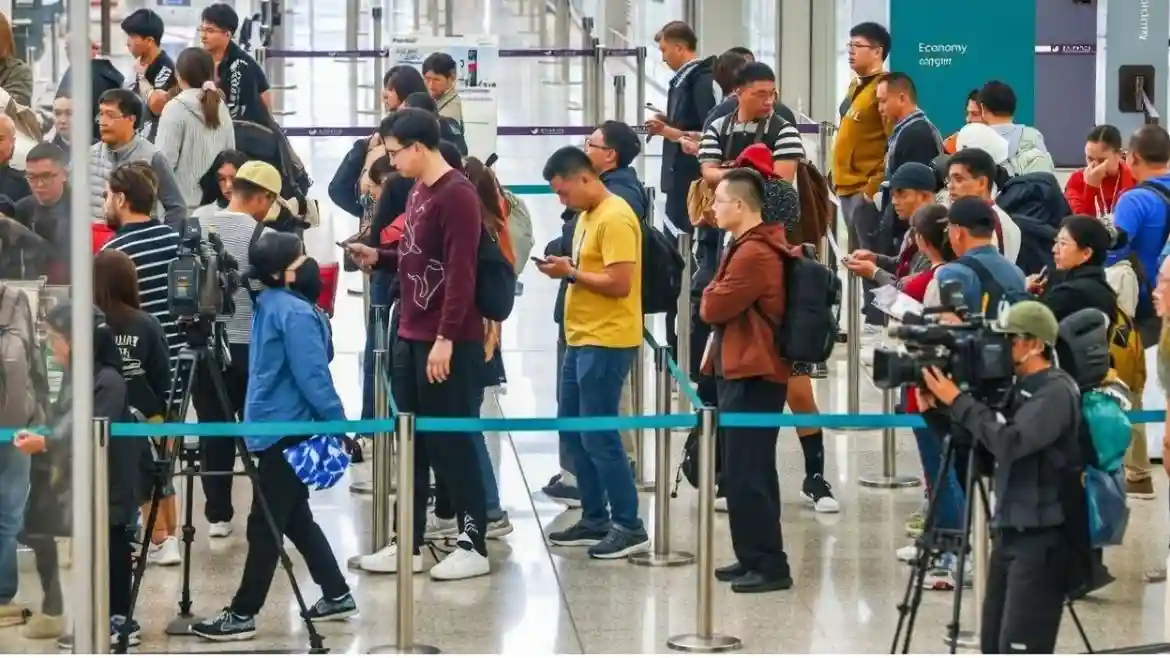
The crisis has heavily impacted the United Arab Emirates. The Dubai International Airport flights diverted today updates show a system struggling with capacity. If you have seen the viral Business Insider Dubai airport photos stranded passengers circulating on social media, you have witnessed the sheer scale of the disruption—travelers sleeping on terminal floors and massive lines winding through the concourses.
The backlog is not contained to the Middle East. It has stretched all the way to Asia. The Hong Kong airport Middle East flight disruptions have left massive crowds waiting for updates. As noted in recent SCMP Hong Kong travelers stranded Middle East flights reports, passengers attempting to fly westward are finding themselves stuck in Asian terminals, waiting for clearance to enter the Gulf region.
Doha as the Central Transit Lifeline
Amidst this chaos, Doha has emerged as a critical pressure valve. Because Qatar Airways operates one of the largest fleets in the world, Hamad International Airport is processing an unprecedented volume of rerouted traffic. However, even with state-of-the-art facilities, the sheer volume of Hundreds of thousands of travelers stranded globally means that every single lounge, hotel, and waiting area in Doha is operating at maximum capacity.
What Travelers in Doha Are Experiencing
If you are currently on the ground in Doha, or scheduled to arrive shortly, setting realistic expectations is crucial.
Flight Cancellations 2026: The Reality on the Ground
The wave of Flight cancellations 2026 has been historic. We are seeing extensive Emirates and Qatar Airways flight cancellations Iran-bound, as well as significant reductions in flights heading toward Eastern Europe and parts of Asia.
Airlines are doing their best to consolidate flights and use larger aircraft to move more people at once, but the mathematical reality of closed airspace means fewer planes can take off each hour.
Managing Stranded Passengers
For the Stranded passengers currently waiting in Doha, the airport authorities have deployed extra staff to provide blankets, food vouchers, and rebooking assistance. However, travelers should prepare for extended wait times. The airport’s famous indoor tropical garden and luxury transit hotels are completely booked. It is highly recommended that passengers in Doha remain close to their departure gates and keep their airline’s mobile app open with push notifications enabled for sudden boarding announcements.
Critical Questions Answered for U.S. Travelers
Uncertainty is the most stressful part of travel. Here are the answers to the most pressing questions Americans have regarding their itineraries.
Is it Safe to Fly to the Middle East Right Now?
The most common question on search engines is: Is it safe to fly to the Middle East right now? The short answer is yes, flying itself remains safe. Commercial airlines will never fly through restricted, dangerous airspace.
As highlighted by recent The Guardian Middle East airspace closures coverage, the aviation industry operates with an abundance of caution. The reason you are experiencing delays and cancellations is specifically because the airlines are keeping you safe by rerouting aircraft hundreds of miles away from conflict zones. You will not be put in danger while in the air, but you must be prepared for extreme inconveniences on the ground.
Are Flights to Dubai Canceled Right Now?
If your itinerary involves multiple stops, you might be asking, Are flights to Dubai canceled right now? Yes, many flights in and out of the UAE, as well as flights connecting through Doha to Dubai, are facing rolling cancellations and heavy delays. The Dubai airport stranded situation means that regional “shuttle” flights between Gulf cities are frequently being sacrificed to prioritize long-haul international routes. Check your flight status before leaving for the airport.
Practical Advice for Navigating the Chaos
If your journey through Doha has been impacted, taking proactive steps can save you hours of frustration.
Rebooking and Finding Alternative Routes
If you are stuck in Doha, avoid waiting in the massive physical lines at the customer service desks if possible. Instead:
- Use the Airline App: Most rebooking can be done automatically through the official airline application.
- Call International Call Centers: If the local Qatari phone lines are jammed, use Wi-Fi calling to dial the airline’s U.S. or European customer service numbers, which may have shorter hold times.
- Look for Partner Airlines: Qatar Airways is part of the Oneworld alliance. Ask agents if you can be rebooked on a partner airline flying a completely different geographical route to get you home.
How to Get a Refund for Canceled Middle East Flight
Many travelers are simply choosing to abandon their trips entirely. If you want to know How to get a refund for canceled Middle East flight, the process depends on your carrier and your ticket type.
Under U.S. Department of Transportation rules, if an airline cancels your flight or makes a “significant schedule change,” you are legally entitled to a full cash refund back to your original form of payment—even if you bought a non-refundable ticket. You do not have to accept a travel voucher. When speaking to an agent representing a flight out of Doha, politely but firmly state that you are opting for a full refund due to the airline-initiated cancellation.
Why Doha Remains a Critical Hub Despite the Chaos
Despite the immense pressure, Doha continues to prove why it is one of the most resilient aviation hubs on the planet. The infrastructure of Hamad International Airport was designed specifically to handle massive volumes of international transit passengers.
While the current geopolitical climate is incredibly challenging, the logistical teams in Doha are working around the clock to clear the backlog of aircraft. The coordination between air traffic controllers, airline executives, and ground staff is a monumental effort aimed at getting hundreds of thousands of tired travelers safely to their final destinations.
Conclusion
The 2026 travel crisis has turned the usually seamless experience of global transit into a profound test of patience. With major airspace closures forcing unprecedented detours, the vibrant city of Doha has become a massive waiting room for the world.
Whether you are currently navigating the crowded terminals of Hamad International Airport, or sitting at home deciding whether to cancel your upcoming vacation, staying informed is your best defense. By understanding your passenger rights, utilizing digital rebooking tools, and packing an extra dose of empathy for the overwhelmed airline staff, you can successfully navigate this historic period of aviation disruption. The skies above the Middle East will eventually clear, but until then, safe travels and stay vigilant.
Frequently Asked Questions (FAQs)
Why are there so many flight cancellations in Doha right now? Flights are heavily delayed or canceled due to the recent U.S. and Iran military tensions, which forced the sudden closure of Iranian airspace. This forces airlines to take massive detours, disrupting global flight schedules and aircraft availability.
Is Hamad International Airport in Doha still open? Yes, the airport is fully operational and open. However, it is operating at maximum capacity due to the high volume of stranded and rerouted transit passengers.
Will airlines pay for my hotel if I am stranded in Doha? If the delay or cancellation is caused by an “extraordinary circumstance” like geopolitical conflict or airspace closures, airlines are typically not legally required to provide complimentary hotel accommodations. However, many premium carriers will provide food vouchers on a case-by-case basis.
How do I safely reroute my trip to avoid the Middle East? If you wish to avoid the region entirely, you will need to contact your airline and request a reroute. For example, if traveling from the U.S. to Asia, you might ask to be rebooked on a trans-Pacific flight rather than a transatlantic route that connects through the Gulf.
Am I entitled to a full refund if my flight is canceled due to strikes? Yes. If your flight touching U.S. soil is canceled by the airline for any reason—including war or airspace closures—you are entitled to a full refund to your original payment method, not just a travel credit.
Visit Vic Waves for the latest trending USA news, updates, and insights you may have missed today, and more stories.