
As the sun prepares to rise over Gobbler’s Knob on February 2, 2026, the entire nation turns its eyes to a small town in Pennsylvania. Groundhog Day has arrived, bringing with it the age-old question: Will Punxsutawney Phil see his shadow? This article explores the history, the science, and the excitement surrounding the 2026 prediction, detailing everything you need to know about the Inner Circle, the accuracy of the “Prognosticator of Prognosticators,” and how the USA celebrates this quirky mid-winter holiday. From the economic boost to the town of Punxsutawney to the rivalries with other famous weather-predicting rodents, we cover every angle of this beloved American tradition.
Table of Contents
- The Anticipation at Gobbler’s Knob
- Did Punxsutawney Phil See His Shadow 2026?
- Decoding the Legend: Shadow vs. No Shadow
- The History of Groundhog Day Tradition
- Punxsutawney Phil vs Weather Forecast: The Accuracy Debate
- Behind the Scenes: The Groundhog Club and Inner Circle
- The Cultural Impact: From Folklore to Film
- Celebrating Groundhog Day Across the USA
- Conclusion
- Frequently Asked Questions (FAQs)
The Anticipation at Gobbler’s Knob
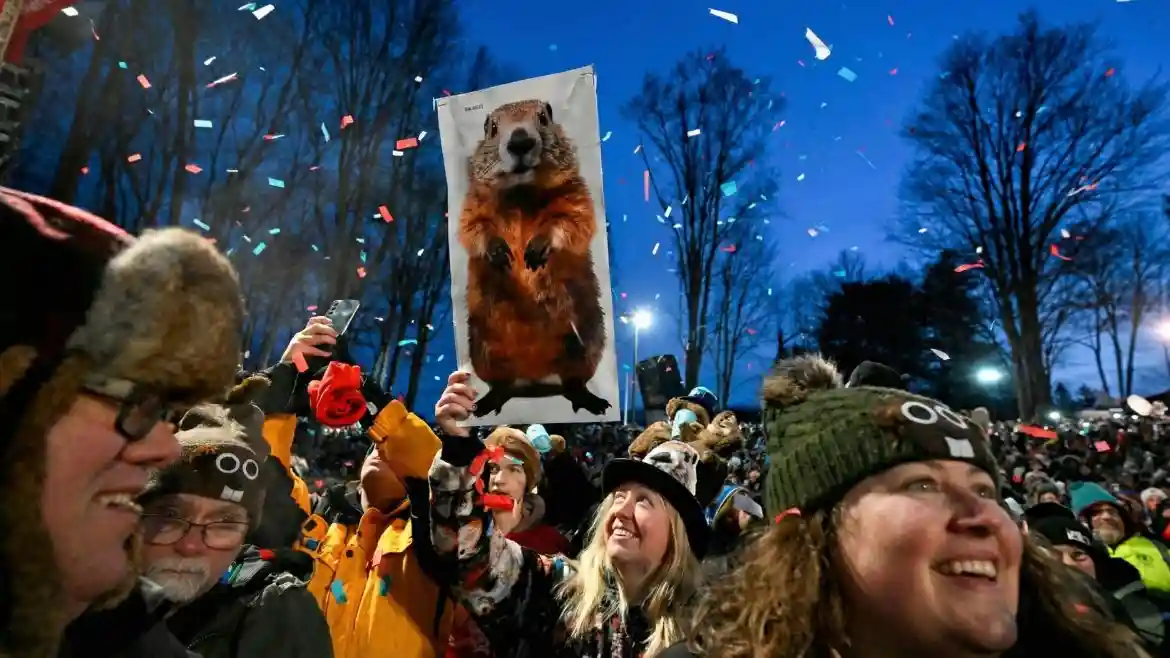
Every year on Feb 2, a sleepy town in western Pennsylvania transforms into the center of the meteorological universe. Groundhog Day is more than just a date on the calendar; it is a cultural phenomenon that blends folklore, festivity, and a touch of winter fatigue. In 2026, the atmosphere at Gobbler’s Knob is electric. Despite the freezing temperatures, tens of thousands of faithful followers—often sporting groundhog hats and scarves—have gathered before dawn to witness the magic.
The crowd chants “Phil! Phil! Phil!” as fireworks illuminate the dark sky. It is a celebration of hope, a collective wish for warmer days, or perhaps just a good excuse to have a party in the middle of winter. Whether you are watching the Punxsutawney Phil 2026 video livestreams from the comfort of your home or standing in the snow at the Knob, the energy is undeniable. Groundhog Day captures the American imagination because it adds a layer of whimsy to the often bleak winter season.
The event has grown significantly over the decades. What started as a small local gathering has exploded into a media circus, attracting news crews from around the globe. The anticipation builds throughout the night, with music, dancing, and comedy acts keeping the crowd warm. By the time the sun begins to crest the horizon, the excitement is palpable. Everyone is waiting for that singular moment when the President of the Groundhog Club taps on the door of the burrow, waking the world’s most famous weatherman.
Did Punxsutawney Phil See His Shadow 2026?
The question burning on everyone’s mind this morning is simple: Did Punxsutawney Phil see his shadow 2026? As the ceremony approaches sunrise (around 7:25 AM EST), the tension mounts. The President of the Inner Circle, distinct in his top hat and tuxedo, prepares to tap on Phil’s stump with a special acacia cane.
If Punxsutawney Phil emerges and casts a shadow on the snowy ground, the Groundhog Day 2026 prediction results will declare six more weeks of winter. This “winter forecast” is traditionally the more common outcome, occurring roughly 85% of the time historically. It signifies that the high-pressure systems creating clear skies are likely to persist, keeping the cold air trapped over the region.
However, if the day is cloudy and Phil does not see his shadow, the crowd will erupt in cheers for an early spring. For those seeking the Groundhog Day 2026 early spring verdict, the answer lies in the hands—or paws—of the groundhog. As of this morning, meteorologists have been tracking cloud cover over Pennsylvania closely. A heavy overcast sky would favor the “no shadow” outcome, while a crisp, clear winter sunrise almost guarantees a shadow. Keep your eyes peeled on the Gobbler’s Knob ceremony 2026 broadcast for the official proclamation, which is always delivered in “Groundhogese” and then translated for the waiting world.
Decoding the Legend: Shadow vs. No Shadow
The lore of Groundhog Day is binary, but the meaning runs deep. The concept of the groundhog and shadow is rooted in the idea that hibernating animals are sensitive to the rhythms of nature. This isn’t just about a shadow; it’s about the biology of winter survival.
- Shadow: If the ground hog see his shadow, it implies that the sun is out and the winter air is likely crisp and clear—conditions often associated with a stable, prolonged cold front (a “high-pressure” system). Thus, the animal retreats into its burrow, signaling six more weeks of winter. The logic is that winter has not yet released its grip, and the groundhog knows better than to wake up fully.
- No Shadow: If the sky is gray and the groundhog sees nothing, it suggests a low-pressure system might be moving in, which often brings the thaw and rain associated with spring. This leads to the early spring prediction. An overcast sky is often a precursor to milder, wetter weather, signaling to the animal that the harsh freeze may be breaking.
This binary prediction is the heart of the groundhog day meaning. It’s a battle between the desire for warmth and the resignation to the cold. The phrase “Six more weeks of winter or early spring?” becomes the morning’s mantra. Interestingly, in modern times, an “early spring” prediction tends to go viral much faster, as winter-weary Americans are desperate for good news and a reason to pack away their heavy coats.
The History of Groundhog Day Tradition
To understand why we look to a rodent for weather advice, we must look back at the History of Groundhog Day tradition. The holiday’s roots are found in the ancient Christian festival of Candlemas Day, where clergy would bless and distribute candles needed for winter. The candles represented how long and cold the winter would be. This was a critical time for agrarian societies; knowing how much longer winter would last was a matter of survival, dictating how they rationed their food stores.
The old English song went:
If Candlemas be fair and bright, Come, Winter, have another flight; If Candlemas brings clouds and rain, Go Winter, and come not again.
When German settlers arrived in Pennsylvania in the 18th and 19th centuries, they brought this tradition with them. In Germany, they used a hedgehog to predict the weather. Finding no hedgehogs in Pennsylvania, they adopted the local groundhog (or woodchuck), a sensible choice given the animal’s hibernation habits and abundance in the region.
The first official Groundhog Day celebration at Gobbler’s Knob took place in 1887. Since then, the Punxsutawney Groundhog Club has maintained the tradition, claiming that there is only one Phil and that he has been making predictions for over a century thanks to a magical “elixir of life” he drinks every summer. This rich history turns Groundhog Day into a bridge between the Old World and the New, preserving a slice of folklore in the age of digital meteorology. It is a testament to the community of Punxsutawney that they have kept this quirky custom alive for nearly 140 years.
Punxsutawney Phil vs Weather Forecast: The Accuracy Debate
While the pageantry is fun, the scientific community often raises an eyebrow at Phil’s Prediction. When analyzing Punxsutawney Phil accuracy rate, the results are… mixed. According to the National Oceanic and Atmospheric Administration (NOAA) and other weather archives, Phil’s predictions are correct about 40% of the time—essentially less accurate than a coin flip.
The battle of Punxsutawney Phil vs weather forecast models highlights the difference between folklore and climatology.
- Phil’s Method: Looks for a shadow. Based on localized sunlight at 7:25 AM. It is purely observational and rooted in myth.
- Meteorologist’s Method: Uses satellite data, pressure systems, jet stream analysis, and ocean currents (like El Niño or La Niña).
Despite the low Groundhog Day accuracy statistics, millions prefer Phil’s version. Why? Because it offers certainty in an uncertain season. A Punxsutawney Phil winter forecast provides a specific timeline (six weeks), whereas a standard weather report changes hourly. The charm lies not in the precision, but in the ritual. Whether the Groundhog Day 2026 prediction results align with the Farmer’s Almanac or the National Weather Service is secondary to the joy of the tradition. It is a moment where magic supersedes math, if only for one morning.
Behind the Scenes: The Groundhog Club and Inner Circle
The guardians of the Groundhog Day flame are the members of the Inner Circle. These are the gentlemen you see wearing top hats and tuxedos at the ceremony. They are responsible for the care and well-being of Phil year-round, ensuring he is fed, happy, and healthy in his burrow at the Punxsutawney Memorial Library.
The Groundhog Club asserts that Phil speaks to the Club President in “Groundhogese,” a language only the President can understand. During the ceremony, the President listens to Phil’s chirp and translates it into the prediction for the world. This theatrical element is crucial to the Gobbler’s Knob ceremony 2026. Without the Inner Circle, the event would lack its signature gravity and charm.
The Inner Circle also manages the logistics of the event, ensuring that Gobbler’s Knob is safe for the crowds and that Phil remains stress-free. In recent years, they have expanded the celebration to include a “Groundhog Ball,” talent shows, and craft festivals, turning the town of Punxsutawney into a multi-day tourist destination. Their dedication turns a simple weather prediction into a massive economic engine for the region, filling hotels and restaurants during what would otherwise be a quiet time of year.
The Cultural Impact: From Folklore to Film
One cannot discuss Groundhog Day without mentioning the massive cultural impact of the 1993 film starring Bill Murray. Before the movie, the event was well-known but relatively smaller. The film Groundhog Day catapulted Punxsutawney Phil into international superstardom. It introduced the concept of the time loop, adding a philosophical layer to the holiday: the idea of repeating the same day until you get it right.
This cultural touchstone has made Groundhog Day a metaphor for monotony and self-improvement. It has also boosted tourism significantly. Fans of the movie flock to Punxsutawney not just for the rodent, but to relive the movie’s magic. The town has embraced this, often hosting screenings and tours related to the film.
Furthermore, Groundhog Day cards and greetings have become a niche but fun market. People use the day to check in on friends, sending messages like “Happy Groundhog Day! Hope you don’t see your shadow!” It has become a lighthearted checkpoint in the calendar, bridging the long gap between New Year’s and Valentine’s Day.
Celebrating Groundhog Day Across the USA
While Punxsutawney is the epicenter, Groundhog Day is celebrated nationwide. From groundhog day activities in schools to local festivals, the holiday has permeated American culture. It serves as a unifying event where communities across the country look for signs of spring.
Other Famous Groundhogs
Phil isn’t the only groundhog in the game. Regional rivalries have sprung up, with other rodents vying for the title of top forecaster.
- Staten Island Chuck (New York): Often boasts a higher accuracy rate than Phil and has a famous (and sometimes contentious) relationship with NYC mayors.
- General Beauregard Lee (Georgia): Predicts the weather for the South, often with a higher success rate for the warmer climate.
- Jimmy the Groundhog (Wisconsin): A midwestern favorite who speaks for the heartland.
- Wiarton Willie (Canada): Our neighbor to the north also joins in, proving that weather anxiety is a cross-border phenomenon.
How Americans Celebrate
- Watch Parties: Many wake up early to watch the Groundhog Day 2026 live updates over coffee and donuts. Bars and diners in Pennsylvania often open early for “Phil Fest” breakfasts.
- Movie Marathons: The Bill Murray film is a staple, often played on repeat (fittingly) throughout the day on cable networks.
- School Crafts: Kids make paper plate groundhogs and track the ground hogs day meaning in science class, learning about hibernation and seasons.
- Social Media: The internet lights up with memes, groundhog day cards, and debates over Phil’s Prediction.
Even e-commerce giants get involved, with Amazon Groundhog Day deals often popping up for winter gear (if six weeks of winter are predicted) or gardening tools (if spring is coming). For those with a birthday on Groundhog Day, it is a double celebration, often referred to as a birthday Groundhog Day bash. These “groundhog babies” often feel a special connection to the furry forecaster.
Conclusion
As the sun climbs higher on Feb 2, the verdict from Gobbler’s Knob settles into the national consciousness. Whether Punxsutawney Phil saw his shadow or not, Groundhog Day 2026 has successfully brought people together for a moment of shared curiosity and fun. It is a day that defies the cynicism of the modern world, asking us to believe—just for a moment—in the wisdom of a woodchuck.
The tradition reminds us that even in our high-tech world, there is comfort in looking to nature for answers. If the Groundhog Day 2026 results point to an early spring, we will celebrate with thoughts of flowers and sunshine. If they point to six more weeks of winter, we will bundle up, grab another hot cocoa, and wait it out together. Either way, Groundhog Day remains a beloved quirk of American life, proving that a little bit of magic, a lot of community spirit, and a very famous groundhog are enough to keep us warm through the end of winter.
Frequently Asked Questions (FAQs)
1. What time does the groundhog come out? Punxsutawney Phil typically emerges from his burrow at sunrise, around 7:20 AM to 7:25 AM EST. The Gobbler’s Knob ceremony 2026 broadcast usually begins an hour or two prior with music and festivities to hype up the crowd.
2. Did Punxsutawney Phil see his shadow 2026? The official result is announced live at Gobbler’s Knob. To know definitively, you must tune in to the live broadcast or check the breaking news updates immediately following sunrise on Feb 2. Historically, he sees his shadow far more often than not (about 85% of the time).
3. How accurate is the groundhog’s prediction? Statistically, Phil’s Groundhog Day accuracy statistics hover around 39-40%. He is essentially less accurate than a random guess, but his fans and the Inner Circle argue that his predictions are about the spirit of the season, not meteorological data.
4. What is the ground hogs day meaning regarding the shadow? The ground hogs day meaning is simple lore: Shadow = 6 more weeks of winter (bad news for sun lovers). No Shadow = Early Spring (good news). This is based on the notion that clear weather (which creates a shadow) indicates a lingering cold high-pressure system.
5. Can I visit Gobbler’s Knob? Yes! Gobbler’s Knob is open to the public year-round, and thousands attend the ceremony on Feb 2. If you can’t make it, you can always celebrate ground hog phil by watching the Punxsutawney Phil 2026 video streams online.
6. Is there really an “Inner Circle”? Yes, the Inner Circle is a real group of local dignitaries in Punxsutawney who organize the event and care for Phil. They are easily recognizable by their top hats and tuxedos and are the official keepers of the legend.
Visit Vic Waves for the latest trending USA news, updates, and insights you may have missed today, and more stories.