
On Thursday, January 15, 2026, President Donald Trump escalated his standoff with Minnesota officials by threatening to invoke the Insurrection Act of 1807. The warning comes amid intensifying protests in Minneapolis following two shootings by federal agents involved in “Operation Metro Surge,” a massive immigration enforcement campaign. With over 3,000 federal agents already on the ground, the potential use of the Insurrection Act would mark a historic and controversial expansion of federal military power on American soil.
Table of Contents
- The Threat: Trump Vows to “Put an End” to Unrest
- The Trigger: Minneapolis on Edge After ICE Shootings
- What is the Insurrection Act?
- State vs. Federal: Gov. Walz Calls It an “Occupation”
- Operation Metro Surge: The Context
- Frequently Asked Questions (FAQs)
The Threat: Trump Vows to “Put an End” to Unrest
Early Thursday morning, President Trump took to Truth Social to issue a stark warning to Minnesota leadership. Frustrated by the ongoing clashes between protesters and federal agents, the President explicitly mentioned the Insurrection Act as a tool to bypass state authority.
“If the corrupt politicians of Minnesota don’t obey the law and stop the professional agitators and insurrectionists from attacking the Patriots of I.C.E… I will institute the INSURRECTION ACT, which many Presidents have done before me, and quickly put an end to the travesty that is taking place in that once great State,” Trump wrote.
If invoked, the Insurrection Act would allow the President to deploy active-duty U.S. military troops or federalize the Minnesota National Guard to act as a police force, regardless of Governor Tim Walz’s objections. This move would effectively place the streets of Minneapolis under direct federal military control.
The Trigger: Minneapolis on Edge After ICE Shootings
The threat to use the Insurrection Act follows a volatile week in the Twin Cities. Tensions first erupted on January 7, when an ICE agent fatally shot Renee Good, a bystander, during a raid.
The situation deteriorated further on Wednesday, January 14, when another federal officer shot a Venezuelan man in the leg during an attempted arrest in Minneapolis. The Department of Homeland Security (DHS) claimed the officer was “ambushed” by individuals wielding a shovel and a broom handle, forcing a “defensive shot.”
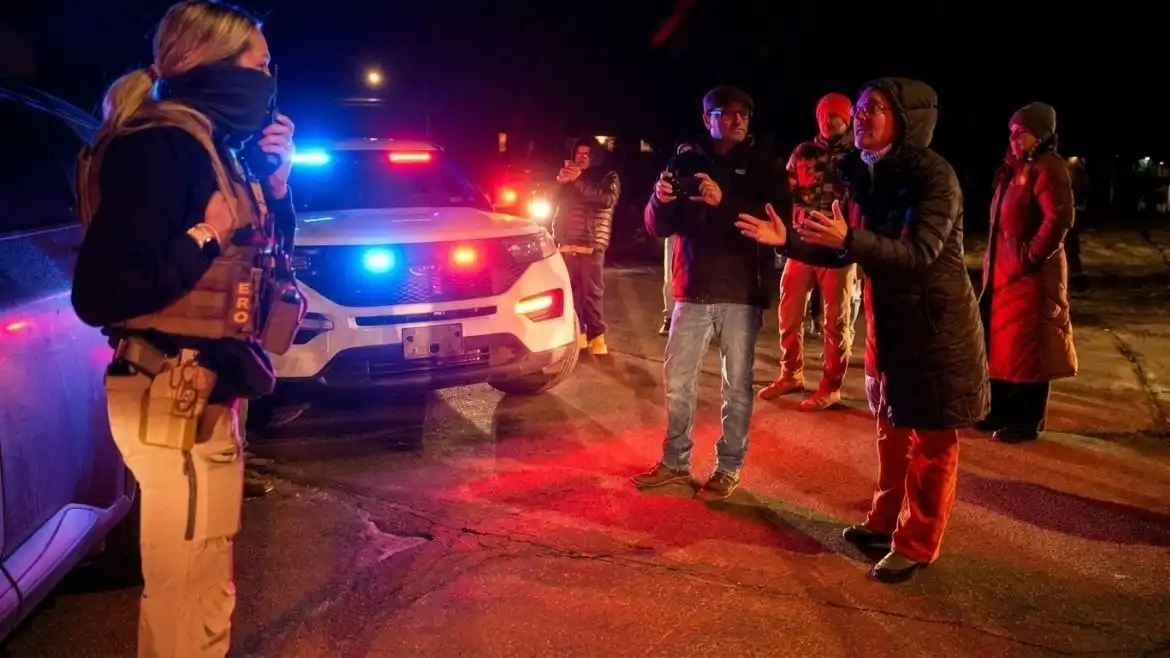
The incidents have triggered nightly protests, with federal agents deploying tear gas and rubber bullets against demonstrators near the Graduate Hotel and the Whipple Building. For the President, these demonstrations are not protected speech but grounds for invoking the Insurrection Act.
What is the Insurrection Act?
The Insurrection Act is a federal law enacted in 1807 that grants the President the authority to deploy the U.S. military within the United States to suppress lawlessness, insurrection, and rebellion.
- Exceptions to Posse Comitatus: Generally, the Posse Comitatus Act forbids using the military for domestic law enforcement. The Insurrection Act is the primary statutory exception to this rule.
- State Consent: While the Act is typically used at the request of a state governor (as seen during the 1992 L.A. Riots), a specific provision allows the President to invoke it without state consent if he determines that unlawful obstructions hinder the enforcement of federal laws or deprive citizens of their constitutional rights.
- Presidential Discretion: The Supreme Court has historically given Presidents wide latitude in deciding when the conditions for the Insurrection Act have been met.
Legal scholars warn that invoking the Insurrection Act to quell protests against federal policy would be an unprecedented use of the statute in the modern era.
State vs. Federal: Gov. Walz Calls It an “Occupation”
Minnesota Governor Tim Walz has fiercely opposed the federal presence, setting the stage for a constitutional showdown if the Insurrection Act is triggered. In a rare primetime address on Wednesday night, Walz characterized the federal deployment as an “occupation.”
“I call on President Trump and Secretary Noem to end this occupation and remove these forces from our streets,” Walz stated.
Despite the Governor’s pleas, the federal judiciary has sided with the administration so far. On Wednesday, U.S. District Judge Kate Menendez denied a request from Minnesota prosecutors for a temporary restraining order against ICE, ruling that the state could not impede federal law enforcement operations. This legal victory has likely emboldened the President to put the Insurrection Act on the table.
Operation Metro Surge: The Context
The backdrop to this potential constitutional crisis is “Operation Metro Surge,” described by DHS officials as the largest domestic deployment in the department’s history. Approximately 3,000 agents from ICE and Customs and Border Protection (CBP) have been deployed to the region.
Kristi Noem, the Secretary of Homeland Security, has vowed that the operation will continue despite the local backlash. “Anyone who obstructs or assaults law enforcement will be prosecuted,” Noem’s office stated, reinforcing the administration’s justification for potentially utilizing the Insurrection Act.
Frequently Asked Questions (FAQs)
What does the Insurrection Act allow the President to do? The Insurrection Act allows the President to deploy U.S. military troops and federalized National Guard units to suppress civil disorder, insurrection, or rebellion on U.S. soil, potentially without the consent of the state governor.
Has the Insurrection Act been used before? Yes. The Insurrection Act has been invoked dozens of times in U.S. history, most recently by President George H.W. Bush in 1992 during the Los Angeles riots. It was also notably used by Presidents Eisenhower and Kennedy to enforce desegregation in the South.
Can Governor Walz stop Trump from using the Insurrection Act? Likely not. While governors usually request the aid, Section 252 of the Insurrection Act allows the President to act unilaterally if he believes federal law is being obstructed. Governor Walz could challenge the move in court, but historical precedent favors presidential authority in these matters.
Why is Trump threatening to use the Insurrection Act now? Trump cites the “obstruction” of federal ICE agents and violent attacks on officers as justification. He argues that local officials have failed to maintain order, necessitating federal intervention under the Insurrection Act.
Visit Vic Waves for the latest trending USA news, updates, and insights you may have missed today, and more stories.