
As the Chair of the Federal Reserve, Jerome Powell holds perhaps the most influential economic position in the world. Following his pivotal address on January 11, 2026, eyes are once again fixed on the central bank’s strategy for the year ahead. This article provides a comprehensive look at Jerome Powell, dissecting his recent comments on interest rates, the 2026 inflation outlook, and how his leadership impacts your wallet and the global markets.
Table of Contents
- Introduction
- Who is Jerome Powell? A Brief Biography
- The January 2026 Address: Breaking Down the Speech
- Federal Reserve Interest Rates: The Path Forward
- Inflation Outlook 2026: Is Price Stability Here?
- Global Markets Reaction: How the World Responded
- Understanding Fed Monetary Policy Under Powell
- The U.S. Economic Outlook for the Year
- The “Powell Pivot” and Communication Style
- Challenges and Political Pressures
- Conclusion
- Frequently Asked Questions (FAQs)
Introduction
In the intricate machinery of the global economy, few individuals wield as much power as Jerome Powell. As the Chair of the Federal Reserve, his words can move stock markets, influence mortgage rates, and dictate the cost of borrowing for businesses and families alike. As we settle into 2026, the spotlight on Jerome Powell has only intensified. The U.S. economy finds itself at a unique crossroads, balancing the need for sustained growth with the lingering ghosts of past inflation.
On January 11, 2026, Jerome Powell delivered a highly anticipated speech that set the tone for the coming year. Investors, policymakers, and everyday Americans tuned in, parsing every syllable for clues about the future. His leadership style—often described as pragmatic and data-driven—has been tested repeatedly, from the pandemic era to the recovery phase. This article aims to demystify the man behind the podium, explain the significance of his latest policy signals, and explore what Jerome Powell means for the financial future of the United States.
Who is Jerome Powell? A Brief Biography
Before understanding his current policies, it is essential to understand the man himself. Jerome Powell, known affectionately by market watchers as “Jay,” took a somewhat unconventional path to the top of the central bank. Unlike many of his predecessors who were career academics with Ph.D.s in economics, Jerome Powell is a trained lawyer with a background in investment banking.
Born in Washington, D.C., in 1953, he studied politics at Princeton and law at Georgetown. His career spanned influential roles at investment firms like The Carlyle Group and service in the Treasury Department under President George H.W. Bush. This private-sector experience has often been cited as a strength, giving Jerome Powell a practical, “real-world” perspective on how financial markets operate.
He joined the Federal Reserve Board of Governors in 2012 and was elevated to Chair in 2018. His tenure has been defined by historic challenges, most notably the rapid response to the economic shutdowns of 2020 and the subsequent battle to tame soaring prices. Today, Jerome Powell is viewed as a steady hand, a consensus builder who prioritizes the health of the labor market and price stability above political ideology.
The January 2026 Address: Breaking Down the Speech
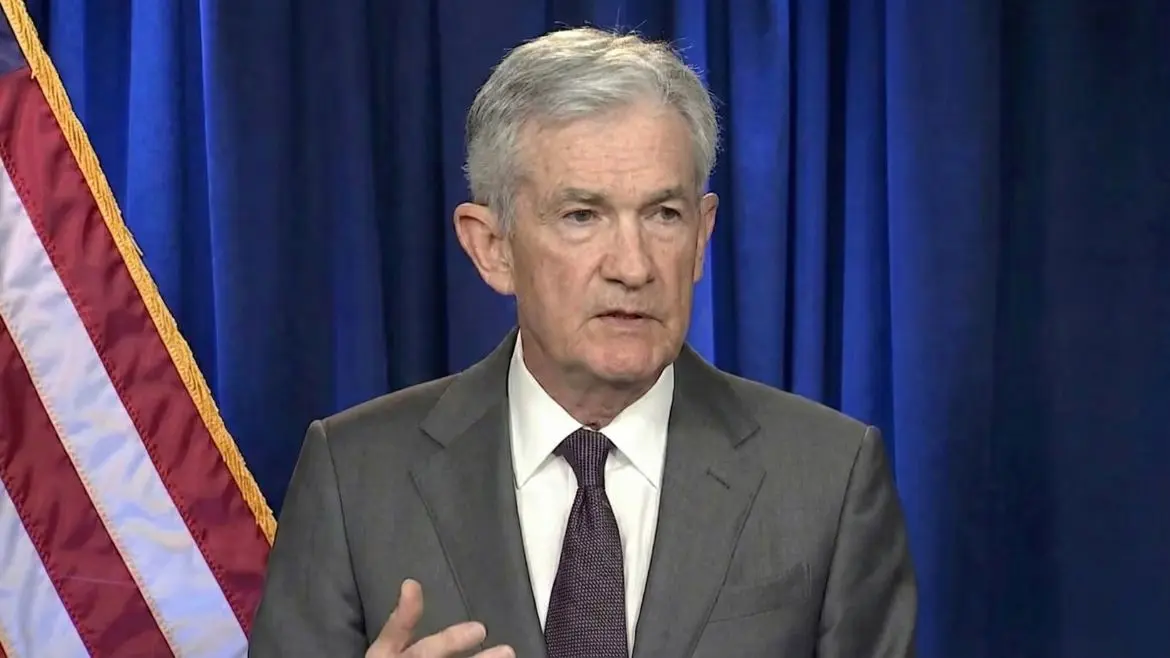
The recent Jerome Powell speech delivered on January 11, 2026, was a masterclass in central bank communication. Speaking to a room of economists and reporters, Jerome Powell addressed the current state of the nation’s financial health. The primary question on everyone’s mind was simple: “What comes next?”
In his address, Jerome Powell emphasized that while significant progress has been made, the job is not yet finished. He highlighted that the Federal Reserve remains committed to its dual mandate: maximum employment and stable prices. However, the tone of this specific speech was notably cautious yet optimistic.
He acknowledged that the aggressive measures taken in previous years had successfully cooled the economy without tipping it into a deep recession—a scenario economists call a “soft landing.” However, Jerome Powell warned against complacency. He signaled that the Federal Reserve would continue to be “data-dependent,” meaning they will not make decisions based on forecasts alone but on the hard numbers arriving each month regarding jobs and prices.
Federal Reserve Interest Rates: The Path Forward
The most scrutinized portion of any appearance by Jerome Powell is his commentary on the cost of money. Federal Reserve interest rates are the primary tool the Fed uses to speed up or slow down the economy. By raising rates, borrowing becomes expensive, cooling demand. By lowering them, cash becomes cheap, fueling growth.
In his 2026 outlook, Jerome Powell hinted at the board’s strategy regarding these rates. For the past two years, Americans have dealt with higher borrowing costs for homes, cars, and credit cards. Jerome Powell suggested that if the data continues to cooperate, the central bank might consider a calibration of these rates later in the year.
However, he was careful not to promise immediate cuts. Jerome Powell knows that promising cheap money too soon can reignite the very inflation he has spent years fighting. The takeaway for U.S. consumers is that while relief might be on the horizon, the era of near-zero interest rates is likely in the rearview mirror. The “new normal” under Jerome Powell appears to be rates that are moderate—neither suffocatingly high nor dangerously low.
Inflation Outlook 2026: Is Price Stability Here?
The ghost of inflation has haunted the U.S. economy for much of the 2020s, and taming it has been the defining mission for Jerome Powell. During his recent address, the Inflation outlook 2026 was a central theme. Powell noted that the Consumer Price Index (CPI) and the Personal Consumption Expenditures (PCE) index—the Fed’s preferred measures—have moved much closer to the long-term target of 2%.
Jerome Powell elaborated on Inflation outlook 2026 (Powell’s comments on price stability), stating that supply chains have largely healed and the labor market has come into better balance. He pointed out that the “stickier” parts of inflation, such as housing and services, are finally showing signs of easing.
For the average American, this is good news. It suggests that the rapid price hikes at the grocery store and the gas pump are leveling off. Jerome Powell expressed confidence that the worst of the inflationary period is behind us, but he reiterated that “price stability is the bedrock of a healthy economy.” Without it, the economy cannot work for anyone. Therefore, Jerome Powell remains vigilant, ready to act if prices begin to creep up unexpectedly.
Global Markets Reaction: How the World Responded
When Jerome Powell speaks, the world listens. The U.S. dollar is the global reserve currency, meaning Fed policy ripples across oceans instantly. Following the speech, there was a swift Global markets reaction impacting trading floors from London to Tokyo.
European and Asian markets digested Powell’s words with a mix of relief and caution. The Global markets reaction (Impact on European and Asian stocks) was generally positive, as international investors appreciated the clarity and stability Jerome Powell projected. European indices saw a modest bump, interpreting his comments as a sign that the U.S. economy—a major export market for Europe—would remain resilient.
In Asia, markets reacted to the potential stability of the U.S. dollar. A stable Fed policy helps emerging markets manage their own currencies and debt. By avoiding hawkish surprises, Jerome Powell provided a sense of calm to the global financial system, reducing volatility in foreign exchange markets.
Understanding Fed Monetary Policy Under Powell
To truly grasp the impact of Jerome Powell, one must understand the mechanics of Fed monetary policy. Under his leadership, the Fed has utilized a mix of traditional interest rate adjustments and balance sheet reductions (quantitative tightening).
Jerome Powell has often been described as a pragmatist rather than a dogmatist. He doesn’t stick to a rigid economic theory if the real-world data contradicts it. This flexibility was evident when Jerome Powell pivoted quickly in 2021 and 2022 to address rising prices after initially viewing them as “transitory.”
Current Fed monetary policy is focused on maintenance. It is about keeping the car on the road at a steady speed rather than slamming on the brakes or flooring the gas. Jerome Powell and his colleagues look at a dashboard of indicators: job openings, wage growth, GDP, and various inflation metrics. His goal is to achieve a neutral stance where the policy neither stimulates nor restricts the economy excessively, allowing natural growth to take over.
The U.S. Economic Outlook for the Year
What does all this mean for the US economic outlook in 2026? Based on the guidance from Jerome Powell, the forecast is one of “cautious optimism.”
The economy has shown remarkable resilience. Despite higher interest rates, consumer spending has held up, and businesses continue to hire. Jerome Powell noted that the risk of a recession, while never zero, has diminished compared to forecasts from previous years. The US economic outlook envisions a year of moderate growth—not a boom, but certainly not a bust.
For households, this stability is crucial. It means job security remains relatively high. It implies that while savings accounts might earn slightly less interest if rates dip, the cost of loans for big-ticket items could become more manageable. Jerome Powell essentially painted a picture of an economy returning to a boring, predictable rhythm—which, after the chaos of the early 2020s, is exactly what most Americans want.
The “Powell Pivot” and Communication Style
One of the hallmarks of the tenure of Jerome Powell has been his evolution as a communicator. In the past, Federal Reserve Chairs were often cryptic, speaking in “Greenspan-speak” (named after former Chair Alan Greenspan) that was intentionally vague. Jerome Powell has worked to change that.
He speaks in plain English. He holds regular press conferences after meetings to explain the “why” behind the “what.” In his January address, Jerome Powell used clear metaphors and avoided overly academic jargon. This transparency is a deliberate strategy. Jerome Powell believes that if the public and the markets understand the Fed’s goals, they are more likely to act in ways that help achieve them.
This clarity helps prevent market panics. When Jerome Powell signals a potential shift—often dubbed a “Powell Pivot”—he telegraphs it months in advance. This prevents the “taper tantrums” of the past where markets crashed due to sudden policy changes.
Challenges and Political Pressures
Leading the Federal Reserve is not without its thorns. Jerome Powell operates in a highly charged political environment. Although the Fed is an independent agency, federal reserve jerome powell is a topic often debated in the halls of Congress.
On one side, there are calls to lower rates faster to boost housing and help struggling borrowers. On the other, fiscal hawks demand he keep rates high to ensure inflation is dead and buried. Jerome Powell must navigate these waters carefully. He famously visits Capitol Hill to testify, where he patiently answers questions from Senators and Representatives, always steering the conversation back to the data and the Fed’s non-partisan mandate.
In 2026, as the political cycle heats up, the pressure on Jerome Powell to steer the economy in a favorable direction will likely increase. However, his track record suggests he will remain steadfast in ignoring political noise to focus on long-term economic health.
Conclusion
As we look at the financial landscape of 2026, Jerome Powell remains the central figure in the narrative. His journey from a lawyer and investment banker to the guardian of the U.S. economy is a testament to steady leadership in turbulent times.
The speech on January 11, 2026, reinforced his commitment to a balanced approach. By carefully managing Federal Reserve interest rates and keeping a hawk-eye on the Inflation outlook 2026, Jerome Powell is attempting to engineer a sustained economic expansion. The positive Global markets reaction suggests that, for now, investors trust his hand on the wheel.
While the future is never certain, having Jerome Powell at the helm provides a degree of predictability. Whether you are an investor watching the ticker or a homeowner watching your budget, the decisions made by Jerome Powell will continue to shape your financial reality throughout the year.
Frequently Asked Questions (FAQs)
Who appoints the Federal Reserve Chair? The Chair of the Federal Reserve, currently JeromePowell, is appointed by the President of the United States and must be confirmed by the Senate. The term lasts for four years, and the Chair can be reappointed.
Did Jerome Powell raise interest rates in 2026? In his recent updates, Jerome Powell has signaled a strategy of maintenance and data dependence. As of early 2026, the focus has been on holding rates steady to ensure inflation remains subdued, with potential adjustments dependent on future economic data.
Is Jerome Powell an economist? Unlike many past Chairs, Jerome Powell is not a Ph.D. economist. He has a law degree and a background in investment banking and the Treasury Department. This background is often credited for his pragmatic approach to Fed monetary policy.
How does Jerome Powell affect the stock market? Jerome Powell affects the market through his influence on interest rates and money supply. When he signals lower rates, stocks often rise as borrowing costs drop. Conversely, hawkish signals about higher rates can cause markets to dip as liquidity tightens.
What did Jerome Powell say about inflation in 2026? Regarding the Inflation outlook 2026, Jerome Powell expressed optimism that inflation is moving closer to the Fed’s 2% target, citing improvements in supply chains and labor market balance, though he emphasized the need for continued vigilance.
Visit Vic Waves for the latest trending USA news, updates, and insights you may have missed today, and more stories.