
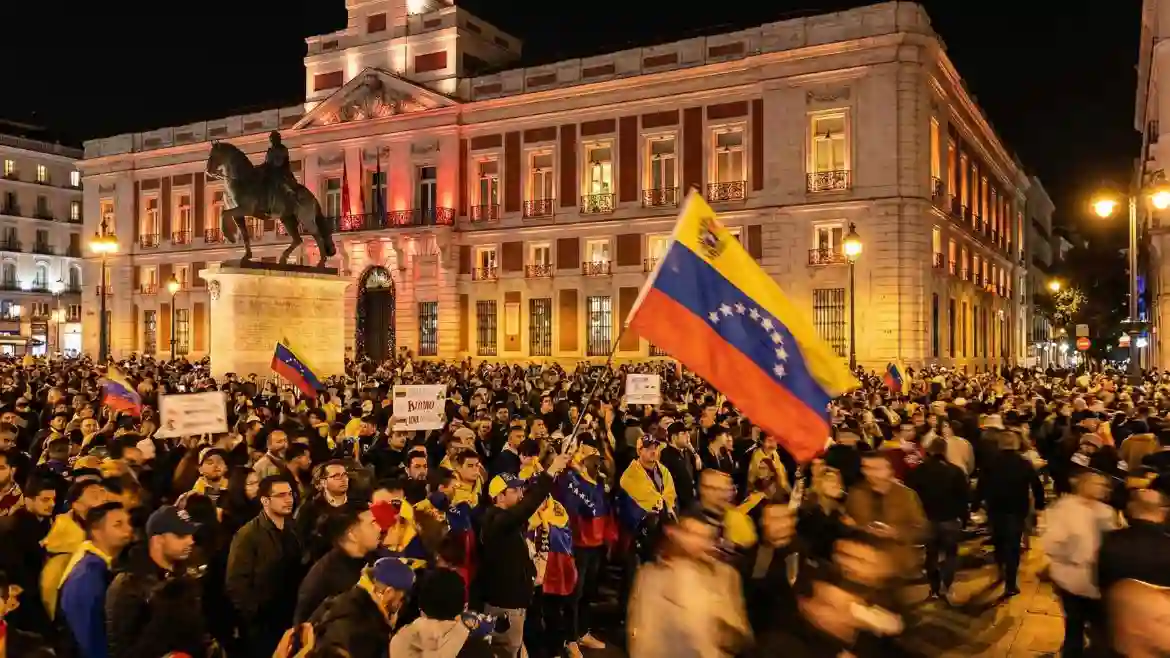
The geopolitical landscape shifted dramatically in the first days of January 2026 as tensions between the United States and Venezuela reached a boiling point. Following reports of explosions in Caracas and targeted military actions, the world’s eyes are once again fixed on Nicolas Maduro. This article explores the recent US strikes, the history of the Maduro regime, and the implications of this renewed conflict for the Americas.
Table of Contents
- Introduction
- The Spark: Explosions in Caracas and US Strikes
- Trump vs Maduro: A History of Hostility
- Who is Nicolas Maduro? From Bus Driver to Autocrat
- The State of the Nicolas Maduro Regime in 2026
- Global Reactions to the US Venezuela Conflict 2026
- Economic Fallout and Humanitarian Concerns
- Conclusion
- Frequently Asked Questions (FAQs)
Introduction
For over a decade, the name Maduro has been synonymous with political survival and economic turbulence in South America. However, the events of early January 2026 have thrust the Venezuelan leader back into the center of a global firestorm. The long-simmering tensions between Washington and Caracas have seemingly erupted, moving from diplomatic sanctions to kinetic action. For observers in the United States, the situation raises critical questions about foreign policy, regional stability, and the future of Venezuela’s leadership.
Nicolas Maduro, who succeeded Hugo Chávez, has managed to cling to power despite hyperinflation, mass migration, and multiple coup attempts. But the recent developments suggest that the status quo is no longer sustainable. With the return of Donald Trump to the geopolitical stage, the approach to the Maduro administration has taken a decidedly more aggressive turn. This article aims to break down exactly what is happening, who Maduro is, and why these events matter to the average American.
The Spark: Explosions in Caracas and US Strikes
The morning of January 3, 2026, began with chaos as Caracas bombing news began to filter across international wire services. Residents of the Venezuelan capital reported loud blasts near key government and military installations. Shortly after, it was confirmed that these were not internal sabotages, but the result of coordinated US strikes in Venezuela.
The operation targeted specific command and control centers allegedly linked to illicit trafficking and threats against U.S. national security. While the Pentagon described the strikes as “precision actions intended to degrade hostile capabilities,” Maduro immediately took to state television to denounce what he called an “imperialist invasion.”
Key Targets and Immediate Impact
- Military Communications: The strikes aimed to sever the communication lines between Maduro and his top generals.
- Air Defense Systems: Several radar sites around Caracas were reportedly neutralized.
- Miraflores Palace: While the presidential palace itself was not leveled, explosions occurred in its vicinity, sending a clear warning message to Maduro.
This military action marks a significant escalation. For years, the U.S. relied on economic pressure. The shift to direct engagement indicates that the patience with the Maduro government has officially run out.
Trump vs Maduro: A History of Hostility
The dynamic of Trump vs Maduro is not new, but in 2026, it has evolved into a direct confrontation. During his previous term, President Trump employed a “maximum pressure” campaign, recognizing opposition leaders and tightening sanctions. Maduro, in turn, used this foreign antagonism to rally his base, painting himself as the defender of Venezuelan sovereignty.
However, the Trump Venezuela military action seen this week is different. It moves beyond rhetoric. Analysts suggest that the U.S. administration believes Maduro is at his weakest point, facing internal dissent and a crumbling infrastructure.
The Rhetoric of 2026
In statements leading up to the strikes, the U.S. administration cited Maduro‘s continued refusal to hold free and fair elections and his deepening ties with non-hemispheric adversaries as the justification for force. Maduro, typically defiant, has labeled these actions as acts of war, calling on his “civilian-military union” to prepare for defense. The personal animosity between the two leaders drives much of the narrative, making a diplomatic off-ramp difficult to envision.
Who is Nicolas Maduro? From Bus Driver to Autocrat
To understand the crisis, one must understand the man at the center of it. Nicolas Maduro Moros was not always the authoritarian figure seen on news broadcasts today. Born in Caracas, he started his career as a bus driver for the Caracas Metro and eventually became a trade union leader.
The Rise to Power
Maduro was a loyalist to Hugo Chávez from the very beginning. His loyalty was rewarded with positions as Foreign Minister and later Vice President. When Chávez died in 2013, Maduro was his handpicked successor. He narrowly won the subsequent election, but he lacked the charisma and oil wealth that had buoyed his predecessor.
Governing Style
Unlike Chávez, who ruled during an oil boom, Maduro has governed during a collapse. To maintain control, he has:
- Consolidated Power: Stripped the National Assembly of its powers.
- Purged Rivals: Removed potential challengers within his own party.
- Relied on the Military: Gave top generals control over key industries to ensure their loyalty.
Despite presiding over one of the worst economic collapses in modern history outside of war, Maduro has proven to be an incredibly resilient political operator. He has survived mass protests in 2014, 2017, and 2019, as well as a drone assassination attempt.
The State of the Nicolas Maduro Regime in 2026
The Nicolas Maduro regime in 2026 is a complex web of survival strategies. Before the explosions in Caracas, the government was attempting a fragile economic liberalization. The U.S. dollar had become the de facto currency, and some private enterprise was returning. However, political repression remained high.
Internal Cracks
Intelligence reports suggest that loyalty within the Venezuelan armed forces is fraying. The US Venezuela conflict 2026 might be designed to exploit these cracks. By targeting command structures but sparing widespread civilian infrastructure, the strategy seems to be encouraging a defection from within the ranks surrounding Maduro.
The Circle of Trust
Maduro relies on a very small circle of advisors and his wife, Cilia Flores. As external pressure mounts, this circle tightens, often leading to paranoia and erratic decision-making. The regime’s survival depends entirely on the security forces’ willingness to suppress dissent, a willingness that is being tested by the threat of further U.S. airstrikes.
Global Reactions to the US Venezuela Conflict 2026
The international community has reacted with a mix of support and alarm to the escalation. The US Venezuela conflict 2026 is not just a regional issue; it involves global players.
- Russia and China: Traditional allies of Maduro, these nations have condemned the U.S. strikes, calling for restraint. However, their financial support for Venezuela has waned in recent years, leaving Maduro more isolated.
- Latin America: The region is divided. Some nations, tired of the migration crisis caused by the Venezuelan collapse, quietly support the removal of Maduro. Others fear the precedent of U.S. military intervention in the region.
- European Union: European leaders have called for an immediate ceasefire and a return to the negotiating table, fearing that a protracted conflict could destabilize energy markets further.
Economic Fallout and Humanitarian Concerns
The tragedy of the situation is the impact on the Venezuelan people. Under Maduro, millions have fled the country. The new wave of conflict threatens to exacerbate an already dire humanitarian crisis.
Oil Markets
Venezuela sits on the largest proven oil reserves in the world. Any threat to Maduro and the state-run oil company, PDVSA, sends jitters through the global energy market. While production has been low due to mismanagement, the potential for total disruption could spike gas prices in the U.S. and abroad.
The Migration Crisis
If the conflict drags on, neighboring countries like Colombia and Brazil expect a new surge of refugees. The Maduro government has often blamed sanctions for the economic misery, but economists point to corruption and mismanagement as the primary culprits. War, however, brings a new level of desperation.
Conclusion
As the dust settles from the explosions in Caracas, the future of Nicolas Maduro hangs in the balance. He has survived sanctions, coup attempts, and diplomatic isolation, but direct military confrontation with the United States is an entirely different challenge.
For the United States, the goal is clear: a transition of power. But Maduro has shown time and again that he is willing to drag his country through immense hardship to retain control. The events of January 2026 mark a dangerous new chapter in this saga. Whether this leads to the end of the Maduro era or a prolonged conflict remains to be seen.
The world watches as Maduro faces his toughest test yet. The decisions made in the coming days by both Washington and Caracas will shape the destiny of Venezuela for decades to come.
Frequently Asked Questions (FAQs)
Q: Why did the U.S. launch strikes against Maduro? A: The U.S. cited immediate threats to national security and illicit activities by the Nicolas Maduro regime as the primary reasons for the military action.
Q: Is Nicolas Maduro still in power? A: Yes, as of the latest reports following the explosions in Caracas, Maduro remains in power and has addressed the nation, though his grip on the military is being tested.
Q: How has Maduro responded to the attacks? A: Maduro has condemned the strikes as an act of war and imperialism, rallying his supporters and military to defend the nation’s sovereignty.
Q: What is the main cause of the conflict between the US and Maduro? A: The conflict stems from accusations of election fraud, human rights abuses, and Maduro‘s authoritarian rule, which the U.S. has opposed for over a decade.
Q: Are there US troops on the ground in Venezuela? A: Currently, the reports indicate airstrikes and missile attacks; there has been no confirmation of a large-scale ground invasion to remove Maduro.
Q: How does this affect gas prices in the US? A: While Venezuela is a major oil holder, its production has been low for years. However, instability involving Maduro can cause speculation in global markets, potentially leading to slight increases in gas prices.
Suggested SEO Tags: Maduro, Venezuela Crisis, US Strikes Venezuela, Caracas Explosions, Trump Foreign Policy, Nicolas Maduro, Venezuela Conflict 2026, South America Politics.
Visit Vic Waves for the latest trending USA news, updates, and insights you may have missed today, and more stories.