
With the recent U.S. military action in Venezuela and the capture of Nicolas Maduro, history seems to be repeating itself. To understand the present, we must look to the past—specifically to 1989 and the case of Manuel Noriega. This article explores the rise and fall of the Panamanian dictator, the details of “Operation Just Cause,” and the striking parallels between the Panama invasion 1989 and the unfolding crisis in Caracas.
Table of Contents
- Introduction
- Who Was Manuel Noriega?
- From Ally to Adversary: The CIA Connection
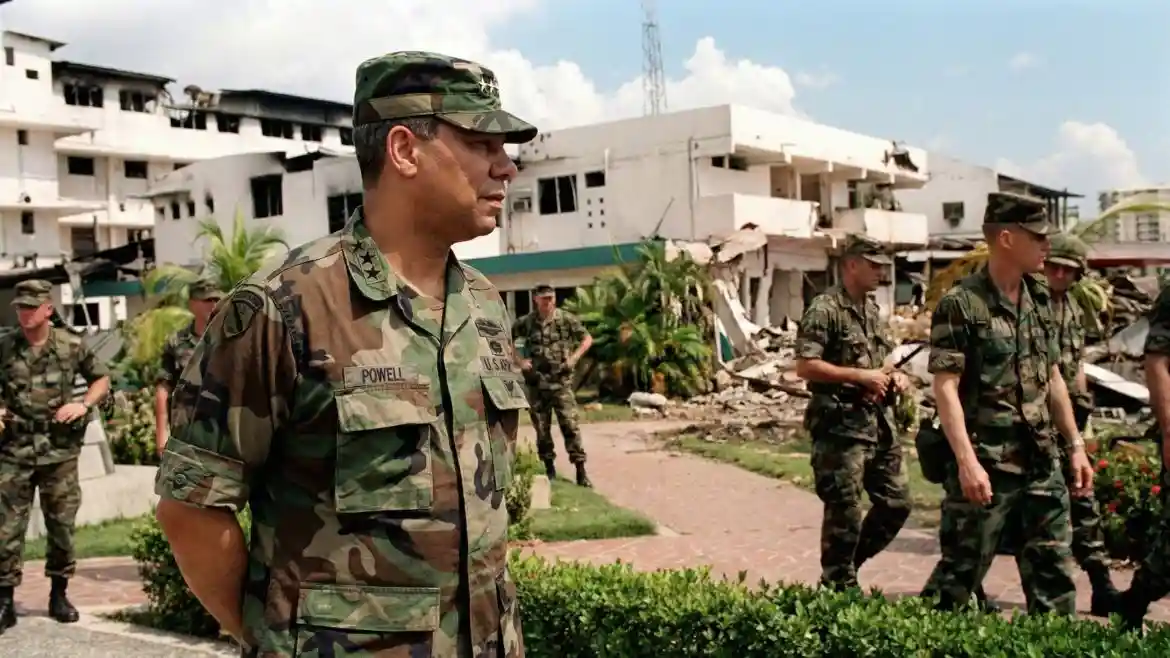
- Operation Just Cause: The 1989 Invasion
- The Rock & Roll Siege: How Noriega Was Captured
- Maduro vs Noriega: A Historical Comparison
- The Aftermath and Legal Precedents
- Conclusion
- Frequently Asked Questions (FAQs)
Introduction
In January 2026, the world was stunned by reports of a U.S. strike in Venezuela resulting in the capture of Nicolas Maduro. For many observers, this dramatic turn of events felt like a scene from a decades-old movie. Thirty-six years prior, American troops descended on Panama City with a similar objective: to depose and capture General Manuel Noriega.
The story of Manuel Noriega is essential to understanding the current U.S. foreign policy playbook. Once a valued intelligence asset, Noriega transformed into a geopolitical liability and a convicted drug trafficker. His removal marked a turning point in regime change history, establishing a controversial blueprint for military intervention in Latin America. As we analyze the US military intervention Venezuela, the ghost of Noriega looms large, offering clues about legal battles, public reaction, and the chaotic aftermath that follows the removal of a strongman.
Who Was Manuel Noriega?
Before he was an international pariah, Manuel Noriega was a career soldier who climbed the ranks through loyalty, intelligence, and ruthlessness. Born in a poor neighborhood of Panama City in 1934, he overcame his humble beginnings to become the de facto ruler of Panama from 1983 to 1989.
The Rise to Power
Noriega was not a charismatic populist; he was a master of the shadows. He rose under the wing of General Omar Torrijos, the military leader who negotiated the Panama Canal Treaties with the U.S. After Torrijos’s mysterious death in a plane crash in 1981, Manuel Noriega consolidated power. He reorganized the National Guard into the Panama Defense Forces (PDF), effectively making himself the gatekeeper of the nation.
Unlike traditional presidents, Manuel Noriega preferred to rule from the barracks. He installed puppet presidents to maintain a veneer of civilian rule, but everyone in Panama—and Washington—knew who was really in charge.
From Ally to Adversary: The CIA Connection
One of the most complex aspects of the Manuel Noriega story is his long-standing relationship with the United States. For decades, he was on the CIA payroll. His strategic value was immense; Panama was a vital listening post in Latin America, and Noriega provided intelligence on leftist guerrilla movements in the region.
However, this relationship was a double-edged sword. While taking American money, Manuel Noriega was also facilitating drug shipments for the Medellín Cartel. He played both sides, aiding U.S. efforts against communism while turning Panama into a hub for money laundering and narco-trafficking.
By the late 1980s, the “Pineapple” (a nickname mocking his pockmarked face) had become a liability. The crack cocaine epidemic in the U.S. turned public opinion against drug traffickers, and Noriega’s brutality—highlighted by the beheading of opposition figure Hugo Spadafora—made him impossible to support.
Operation Just Cause: The 1989 Invasion
Tensions reached a boiling point in December 1989. After a failed coup attempt and the killing of a U.S. Marine by Panamanian forces, President George H.W. Bush ordered the invasion of Panama. The mission was code-named Operation Just Cause.
The Military Objective
On December 20, 1989, over 27,000 U.S. troops launched a massive assault. The goals were clear:
- Protect the lives of U.S. citizens in Panama.
- Defend the integrity of the Panama Canal Treaty.
- Restore democracy.
- Capture Manuel Noriega and bring him to face justice.
The Panama invasion 1989 was swift and overwhelming. The Panama Defense Forces crumbled within hours, but the hunt for the dictator took an unexpected turn.
The Rock & Roll Siege: How Noriega Was Captured
The Manuel Noriega capture is one of the most bizarre chapters in military history. Evading the initial dragnet, Noriega sought asylum in the Apostolic Nunciature, the Vatican’s embassy in Panama City.
Because it was diplomatic soil, U.S. troops could not enter. Instead, they engaged in psychological warfare. The U.S. Army surrounded the building and blasted deafeningly loud rock music 24 hours a day. The playlist was intentional and mocking, featuring songs like:
- “I Fought the Law” by The Clash
- “Panama” by Van Halen
- “Welcome to the Jungle” by Guns N’ Roses
- “You Shook Me All Night Long” by AC/DC
After ten days of sleeplessness and pressure from the Vatican, Manuel Noriega surrendered on January 3, 1990—ironically, the exact same date as the reported 2026 strike against Maduro. He was flown to Miami, still wearing his general’s uniform, to face trial.
Maduro vs Noriega: A Historical Comparison
The events of 2026 have sparked an immediate Venezuela Panama comparison. The similarities are striking, but there are key differences that make the current situation unique.
The Similarities
- Narco-Terrorism Charges: Just as Noriega was indicted in 1988 for drug trafficking, Nicolas Maduro was indicted by the U.S. Department of Justice in 2020 on charges of narco-terrorism and corruption.
- Election Fraud: Both leaders annulled or manipulated elections to stay in power despite overwhelming opposition support.
- Sanctions: Both regimes faced heavy economic sanctions before military action was taken.
- The “Strongman” Defense: In the Maduro vs Noriega debate, both men used anti-imperialist rhetoric to rally their base, claiming the U.S. only wanted their country’s resources (the Canal for Panama, oil for Venezuela).
The Differences
- Military Footprint: In 1989, the U.S. already had thousands of troops stationed in the Panama Canal Zone, making the logistics of Operation Just Cause much simpler than a strike in Venezuela.
- Geopolitics: Venezuela in 2026 has powerful allies that 1989 Panama did not, including Russia, China, and Iran. The geopolitical fallout of the US military intervention Venezuela is far riskier.
The Aftermath and Legal Precedents
The capture of Manuel Noriega set a significant legal precedent. He was the first foreign head of state to be convicted in a U.S. jury trial. His lawyers argued that as a head of state, he had sovereign immunity and should be treated as a prisoner of war. The courts disagreed, ruling that his drug crimes violated U.S. law and that his capture, even if controversial, did not invalidate the jurisdiction of the court.
This is the Maduro extradition precedent that legal scholars are citing today. If Maduro is brought to U.S. soil, his defense team will likely recycle Noriega’s arguments. However, the ruling in United States v. Noriega suggests that once a dictator is in U.S. custody, the path to conviction is open.
Manuel Noriega spent the rest of his life in prison. He served 17 years in the U.S., was extradited to France for money laundering, and finally returned to Panama to serve time for murder. He died in a Panama City hospital in 2017, a lonely figure far removed from the power he once wielded.
Conclusion
The story of Manuel Noriega serves as a cautionary tale and a historical roadmap. It highlights the shifting sands of U.S. foreign policy, where allies can become enemies overnight. The Manuel Noriega capture demonstrated the immense reach of American power but also the messy, complicated reality of regime change history.
As the world processes the news regarding Venezuela, the parallels are impossible to ignore. From the Panama invasion 1989 to the strikes of 2026, the message from Washington remains consistent: sovereignty does not shield leaders from justice when drugs and democracy are at stake. Whether the outcome in Venezuela mirrors the stability eventually found in Panama remains to be seen, but the shadow of the General lingers over every headline.
Frequently Asked Questions (FAQs)
Q: Why did the U.S. invade Panama to capture Manuel Noriega? A: The U.S. initiated Operation Just Cause to protect American lives, restore democracy, defend the Panama Canal Treaty, and capture Manuel Noriega to face drug trafficking charges in the United States.
Q: What happened to Manuel Noriega after he was captured? A: Manuel Noriega was flown to Miami, convicted of drug trafficking, racketeering, and money laundering. He served prison time in the U.S., France, and eventually Panama, where he died in 2017.
Q: How is the Maduro situation similar to Noriega? A: The Maduro vs Noriega comparison rests on both leaders being indicted by the U.S. for drug-related crimes, accused of election fraud, and eventually targeted by U.S. military action for removal.
Q: Did the “loud music” tactic really happen? A: Yes. During the Manuel Noriega capture operation, U.S. troops blasted rock music at the Vatican embassy to create a psychological barrier and prevent eavesdropping, eventually pressuring Noriega to surrender.
Q: Was Manuel Noriega a CIA asset? A: Yes. For decades, Manuel Noriega provided intelligence to the CIA regarding communist activities in Latin America, even while he was involved in illicit activities like drug trafficking.
Q: Is the 2026 Venezuela strike legally justified based on the Panama precedent? A: Legal experts debate this. While the Maduro extradition precedent suggests he can be tried if captured, the legality of the US military intervention Venezuela under international law remains highly contentious, similar to the debates surrounding the 1989 invasion.
SEO Tags: Manuel Noriega, Operation Just Cause, Panama Invasion 1989, Maduro vs Noriega, US Foreign Policy, Regime Change History, Venezuela Crisis 2026, General Noriega Capture.
Visit Vic Waves for the latest trending USA news, updates, and insights you may have missed today, and more stories.