

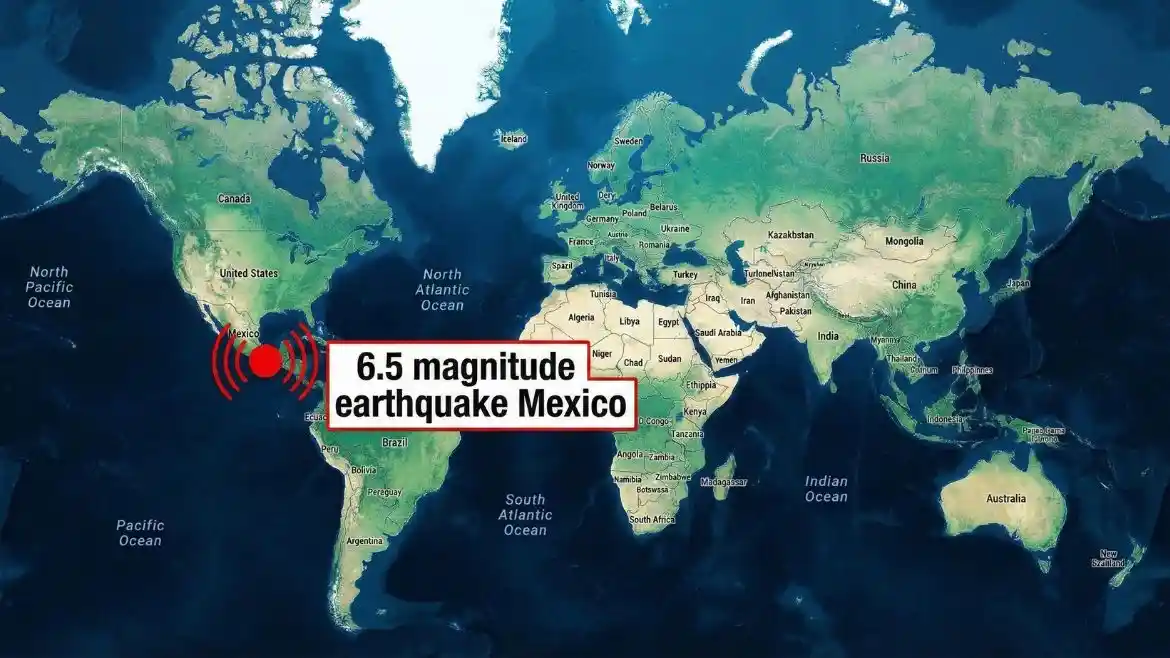
On January 2, 2026, a significant mexico earthquake with a preliminary magnitude of 6.5 rattled the Pacific coast, sending shockwaves as far as Mexico City. The epicenter was located near the town of San Marcos in Guerrero, causing buildings to sway and triggering seismic alarms across the region. This article covers the latest updates, the science behind the quake, and essential safety information for residents and travelers.
Table of Contents
- Introduction
- Details of the Mexico Earthquake on January 2, 2026
- Impact on Acapulco and Coastal Areas
- Reaction in Mexico City: The Seismic Alarm
- Understanding the Geology: Why Mexico Shakes
- USGS and Scientific Data Breakdown
- Tsunami Warnings and Coastal Safety
- Travel Advice for U.S. Citizens in Mexico
- Historical Context of Earthquakes in Mexico
- Conclusion
- Frequently Asked Questions (FAQs)
Introduction
The ground shook and sirens wailed early on Friday, marking a turbulent start to the new year for millions of people south of the U.S. border. A powerful mexico earthquake struck on the morning of January 2, 2026, reminding residents and tourists alike of the region’s volatile geology. For those in the United States watching the news, reports of swaying buildings and evacuations in popular vacation spots like Acapulco have raised immediate concerns for friends and family in the area.
This recent mexico earthquake registered a magnitude of 6.5, a strength sufficient to cause panic and potential structural damage near the epicenter. While Mexico is no stranger to seismic activity, every major tremor brings a fresh wave of anxiety, particularly given the country’s history with devastating quakes. From the bustling streets of the capital to the beaches of Guerrero, the impact was felt widely. In this comprehensive guide, we will break down exactly what happened, exploring the geological triggers and providing crucial safety advice for U.S. travelers who might be planning a trip to the region.
Details of the Mexico Earthquake on January 2, 2026
The Mexico earthquake Jan 2 2026 event occurred just days into the new year, catching many off guard as they returned to work and school routines. According to preliminary reports, the quake struck during the morning hours, maximizing the number of people who felt the movement in office buildings and public spaces.
Seismologists pinpointed the epicenter in the state of Guerrero, near the town of San Marcos. This is a notoriously active seismic zone where the Cocos tectonic plate interacts with the North American plate. The depth of the mexico earthquake was relatively shallow, estimated between 10 to 35 kilometers. Shallow earthquakes often result in more intense shaking at the surface compared to deeper events, explaining the widespread alarm.
Residents described the sensation as a “rolling” motion that intensified quickly. In the immediate aftermath, communication lines in rural areas near the epicenter were temporarily congested as families rushed to check on loved ones. For those tracking the event globally, the 6.5 magnitude earthquake Mexico alert flashed across monitoring screens, signaling a significant geological event that required immediate attention from civil protection agencies.
Impact on Acapulco and Coastal Areas
Perhaps the most alarming reports for international observers came from the coast. The Acapulco earthquake today was felt strongly in the resort city, which is still recovering from past natural disasters. Acapulco sits precariously close to the subduction zone, meaning that when a mexico earthquake occurs in this region, the city often bears the brunt of the energy release.
Tourists in high-rise hotels reported swaying fixtures and pool water sloshing over edges. Hotel staff, well-trained in earthquake protocols, quickly guided guests to designated safety zones. While the Earthquake damage report Acapulco is still being finalized, early visuals indicated minor structural damage, such as cracked facades and broken windows in older buildings.
In the smaller towns of Guerrero and neighboring Michoacan, closer to the epicenter of the Earthquake near Michoacan, the shaking was more violent. Local authorities immediately dispatched patrols to assess roads and bridges. In these rural areas, the primary concern is often landslides, which can block highways and isolate communities. The resilience of the local population is evident, however, as neighbors quickly mobilized to check on the elderly and clear debris from the streets.
Reaction in Mexico City: The Seismic Alarm
Hundreds of miles away from the epicenter, the mexico earthquake caused significant disruption in the nation’s capital. Mexico City is built on an ancient lakebed, a geological quirk that amplifies seismic waves. This means that even a quake centered far away on the coast can feel terrifyingly strong in the city center.
The Mexico City seismic alarm (SASMEX) played a crucial role during this event. The system, designed to detect P-waves (the faster, non-damaging waves) from the coast, sends a radio signal to the city, triggering sirens up to 60 seconds before the slower, damaging S-waves arrive. On January 2, 2026, this system worked as intended. The distinct, drone-like wail of the sirens sent thousands of people streaming out of skyscrapers and apartments onto the streets of Reforma and Condesa.
The shaking interrupted President Claudia Sheinbaum’s morning press briefing, forcing an evacuation of the National Palace. Witnessing the President evacuate underscored the severity of the mexico earthquake for the public. Witness reports described the scene on the streets as orderly but tense. Office workers in high-rises watched as their blinds swayed and lights flickered. For many, any mexico earthquake triggers memories of the devastating 1985 and 2017 quakes, making the psychological impact just as significant as the physical shaking.
Understanding the Geology: Why Mexico Shakes
To understand why a mexico earthquake is a relatively common occurrence, one must look at the tectonic map. Mexico is situated atop three large tectonic plates: the North American, Cocos, and Pacific plates.
The country is part of the “Ring of Fire,” a horseshoe-shaped area around the Pacific Ocean where many of the world’s earthquakes and volcanic eruptions occur. The movement causing this specific mexico earthquake is likely subduction. This is a process where the heavier oceanic Cocos plate slides beneath the lighter continental North American plate.
As these plates grind against each other, friction builds up. Eventually, the rock snaps, releasing stored energy in the form of seismic waves—what we experience as an earthquake. The coast of Guerrero is a “seismic gap,” an area that seismologists watch closely because it has accumulated significant stress over time. Every mexico earthquake in this region releases some of that pressure, but it also serves as a reminder of the immense forces at play beneath our feet.
USGS and Scientific Data Breakdown
For precise data, scientists and researchers turn to the United States Geological Survey (USGS) and Mexico’s National Seismological Service (SSN). The USGS Mexico quake update provided critical technical details shortly after the event.
- Magnitude: 6.5 (Moment Magnitude scale)
- Depth: Shallow (approx. 10-35 km)
- Mechanism: Thrust faulting
Thrust faulting is consistent with the subduction zone description mentioned earlier. The USGS “ShakeMap” indicated that while the shaking was severe near the epicenter, the intensity dropped off as the waves traveled inland. However, because a mexico earthquake of this size involves such a release of energy, it was detectable by seismometers around the world.
The data helps engineers understand how buildings performed and allows the government to update building codes. A mexico earthquake is not just a news event; it is a data point that helps save lives in the future by improving construction standards in seismic zones.
Tsunami Warnings and Coastal Safety
Whenever a strong mexico earthquake strikes near the coast, the immediate fear is water. Tsunamis can be generated when the ocean floor is displaced vertically during a quake. Following the tremor on January 2, 2026, the Pacific Tsunami Warning Center and local Mexican authorities immediately reviewed the data regarding a Tsunami warning Mexico.
Fortunately, for a magnitude 6.5 event, the risk of a wide-reaching, destructive tsunami is generally low. Tsunami generation usually requires a magnitude of 7.0 or higher. However, local disturbances in the water can occur. Authorities monitored sea level gauges in Acapulco for any anomalies.
Beachgoers were advised to move to higher ground as a precaution immediately after the shaking stopped. This is standard protocol: if you are on the coast and feel a strong mexico earthquake that makes it hard to stand, do not wait for a siren—move to high ground immediately. In this instance, the “all clear” was given relatively quickly, allowing residents to return to their homes, though advised to remain vigilant for aftershocks.
Travel Advice for U.S. Citizens in Mexico
For U.S. travelers currently in Mexico or planning a trip, a mexico earthquake can be a frightening prospect. However, knowledge is power. If you are visiting regions like Mexico City, Oaxaca, or the Pacific Coast, it is essential to be prepared.
- Know the Drop, Cover, and Hold On Protocol: This is the universal safety maneuver. If you feel shaking, drop to your hands and knees, cover your head and neck (preferably under a sturdy table), and hold on until the shaking stops.
- Listen for the Alarm: If you hear the seismic alarm (a loud, unique siren), take it seriously. You may have anywhere from 20 to 60 seconds before the shaking starts.
- Stay Connected: Use apps like the USGS app or SkyAlert (popular in Mexico) to get real-time notifications about any mexico earthquake.
- Register with STEP: The Smart Traveler Enrollment Program (STEP) is a free service for U.S. citizens traveling abroad. It allows the U.S. Embassy to contact you in an emergency.
If a mexico earthquake occurs during your trip, follow the instructions of local authorities and hotel staff. Most hotels in seismic zones are built to withstand tremors and have specific evacuation points.
Historical Context of Earthquakes in Mexico
This latest mexico earthquake is part of a long history of seismic activity that has shaped the culture and infrastructure of the nation. The most infamous event remains the September 19, 1985 earthquake, an 8.0 magnitude disaster that caused catastrophic damage in Mexico City.
More recently, the 2017 earthquakes (one of which also occurred on September 19) caused significant loss of life and property. These events have created a culture of prevention. Mexico now conducts national earthquake drills regularly. The response to the Jan 2, 2026 mexico earthquake demonstrates the effectiveness of these drills; evacuation times have improved, and the panic, while still present, is better managed.
Comparing the magnitude 6.5 of today’s event to the 8.1 of 1985 helps provide perspective. The magnitude scale is logarithmic, meaning an 8.0 releases roughly 32 times more energy than a 7.0, and a 7.0 is vastly stronger than a 6.0. While a 6.5 mexico earthquake is considered “strong” and can cause damage, it is generally survivable for modern buildings, unlike the “great” earthquakes of the past.
Conclusion
The mexico earthquake of January 2, 2026, serves as a potent reminder of the dynamic planet we live on. With a magnitude of 6.5, it shook the coast of Guerrero and the high-rises of Mexico City, testing the nerves of millions but also showcasing the resilience of the Mexican people and their infrastructure.
From the immediate activation of the SASMEX alarm system to the rapid assessment by the USGS, the response highlights how far earthquake preparedness has come. For travelers and observers in the USA, seeing the headlines of a mexico earthquake can be worrying, but understanding the context—that these are natural, frequent events in this region—helps manage the fear.
As cleanup begins in the affected coastal towns and aftershocks are monitored, the focus remains on safety and vigilance. Whether you are a local resident or a visitor, respecting the power of nature and knowing how to react remains the best defense against the next mexico earthquake.
Frequently Asked Questions (FAQs)
Q: How often does a Mexico earthquake occur? A: A mexico earthquake is a very common occurrence. The country experiences thousands of small tremors every year. Strong earthquakes (magnitude 6.0 and above) occur less frequently but are not rare, happening several times a year on average.
Q: Is it safe to travel to Mexico after an earthquake? A: Generally, yes. Unless there is catastrophic infrastructure damage, tourism usually resumes quickly. Airports and resorts are typically inspected immediately. However, always check the latest travel advisories regarding the specific mexico earthquake location before flying.
Q: What should I do if a Mexico earthquake strikes while I am in a hotel? A: Stay inside. Do not run outside during the shaking as falling glass and debris are major hazards. Drop, cover, and hold on. Once the shaking stops, follow the evacuation route posted on the back of your hotel room door.
Q: Did the Jan 2, 2026, quake cause a tsunami? A: Based on current data, the mexico earthquake on Jan 2, 2026, did not generate a destructive ocean-wide tsunami, though local authorities always monitor for small sea-level changes near the epicenter.
Q: Why are earthquakes in Mexico City so strong even if they are far away? A: Mexico City is built on the soft soil of an ancient lakebed. When seismic waves from a mexico earthquake hit this soft soil, they slow down and amplify, causing buildings to shake more violently and for longer periods than they would on solid rock.
Visit Vic Waves for the latest trending USA news, updates, and insights you may have missed today, and more stories.