
Renee Nicole Good was a 37-year-old poet, writer, and mother whose life was tragically cut short on January 7, 2026, during a confrontation with federal agents in Minneapolis. This article explores her life, the controversial Minneapolis ICE shooting, and the viral video that has sparked a national debate on Immigration and Customs Enforcement tactics in Minnesota.
Table of Contents
- Introduction
- Who Was Renee Nicole Good?
- The Day of the Shooting: January 7, 2026
- Analyzing the Viral Video
- Political Fallout: Trump vs. Minnesota Leaders
- Community Reaction and Vigils
- Legal and Future Implications
- Conclusion
- Frequently Asked Questions (FAQs)
Introduction
The name Renee Nicole Good has quickly become a rallying cry across the United States following a devastating incident on the snowy streets of South Minneapolis. On a cold Wednesday morning in January 2026, what began as a routine day for the 37-year-old mother ended in tragedy when she was fatally shot by an agent of Immigration and Customs Enforcement (ICE). The event has not only left a family shattered but has also ignited a firestorm of political debate regarding federal overreach, the definition of “sanctuary cities,” and the safety of American citizens on their own streets.
As the video of the encounter circulates online, millions are asking the same question: Who was Renee Nicole Good? Beyond the headlines and the political spin, she was a beloved partner, a creative soul, and a dedicated community member. She was not the target of a federal investigation, nor was she a criminal suspect. She was a civilian navigating a city that had suddenly become a staging ground for a massive federal operation. This article aims to cut through the noise, offering a detailed and human look at her life while meticulously examining the facts surrounding the Minneapolis ICE shooting that led to her untimely death.
Who Was Renee Nicole Good?
Before she became a national news story, Renee Nicole Good was known to her friends and family as a compassionate, artistic, and deeply loving individual. Born in Colorado, she eventually made Minnesota her home, settling in the Twin Cities to build a life filled with art, music, and family. Her journey was one of resilience, creativity, and an unwavering commitment to the people she loved.
A Life of Creativity and Care
Renee Nicole Good was a writer and poet at heart. Her voice was one of quiet observation and emotional depth. In 2020, she was recognized for her literary talent when she won the Old Dominion University College Poetry Prize, a significant achievement that highlighted her ability to capture the nuance of the human experience through words. Her writing often explored themes of love, loss, and the beauty found in everyday moments.
Her social media presence offered a window into her personality. Her bio painted a picture of a humble and humorous woman, describing herself as a “poet and writer and wife and mom and shitty guitar strummer.” This self-deprecating humor endeared her to many. Friends and neighbors recall her as the “kindest person” they knew. She was the type of neighbor who looked out for others, often described as a caregiver by nature. Whether she was tending to her garden in the summer months, writing poetry in local cafes, or caring for her six-year-old child, Renee Nicole Good led a life defined by gentle acts of service.
Family and Tragedy
Her life had already been touched by profound tragedy before 2026. Renee Nicole Good was a widow, having lost her first husband, Timmy Ray Macklin Jr., in 2023. The loss of a spouse at such a young age is a burden that would break many, but friends say she navigated her grief with grace, focusing her energy on raising her child and keeping her family together.
Despite this loss, she found love again and was raising a blended family with a new partner. She was rebuilding her life, brick by brick, finding joy in new beginnings. At the time of the shooting, her car was filled with children’s toys—a heartbreaking detail that emphasizes her primary role. She was not an agitator or a threat; she was a mother likely running errands or transporting her family’s belongings when her life was taken.
The Day of the Shooting: January 7, 2026
The events that led to the death of Renee Nicole Good occurred during a period of heightened tension in the Twin Cities. The Trump administration had recently launched “Operation Aurora,” a massive immigration enforcement initiative deploying thousands of federal agents to “sanctuary cities,” including Minneapolis. The atmosphere in the city was already charged with fear and uncertainty before the first shot was fired.
The Incident on Portland Avenue
On the morning of January 7, Renee Nicole Good was driving her Honda Pilot on Portland Avenue South. It was a typical Minnesota winter morning—cold, with snow piled on the curbs. According to witnesses, the area was chaotic due to an ongoing ICE operation targeting a nearby residence. Federal agents, unmarked vehicles, and local confusion dominated the street.
Renee Nicole Good was not the target of any arrest warrant. Reports indicate that she found her path blocked by the federal operation. Like any motorist in a confusing traffic situation, she attempted to navigate around the blockage. Witnesses described her waving at agents, signaling for them to pass or asking for a way out. She appeared to be a confused driver caught in the middle of a tactical maneuver she likely did not understand. As agents surrounded her vehicle with weapons drawn, conflicting commands were shouted, creating a “fog of war” scenario on a residential street.
The Fatal Moments
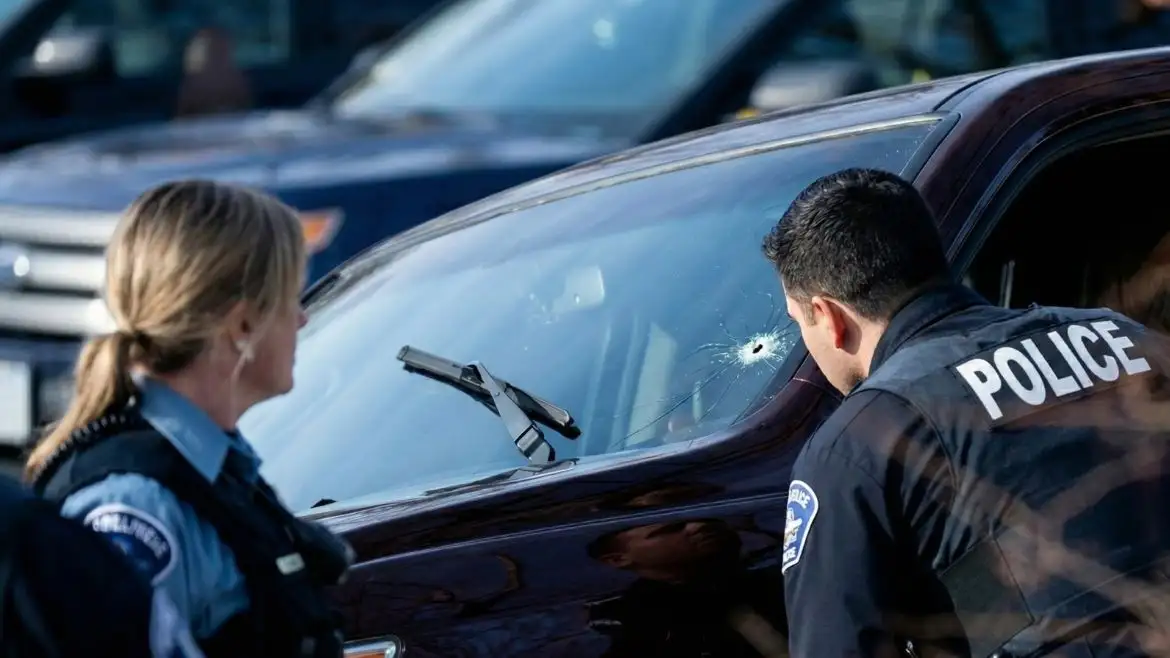
As Renee Nicole Good attempted to maneuver her car—reversing slightly to create space and then steering forward away from an agent—the situation escalated in split seconds. An Immigration and Customs Enforcement agent, positioned near the front of her vehicle, discharged his weapon. He fired three times through the driver’s side window.
The bullets struck Renee Nicole Good in the head. She immediately lost control of the vehicle, which careened off the road and crashed into a nearby light pole. Emergency services were called, and she was rushed to Hennepin County Medical Center—a facility all too familiar with treating trauma victims in Minneapolis—but she was pronounced dead shortly after arrival. The news rippled through the city instantly: a civilian mother had been killed by federal agents.
Analyzing the Viral Video
In the age of smartphones, official government narratives are often tested by citizen documentation. A video of the shooting of Renee Nicole Good went viral almost immediately, providing a perspective that starkly contradicted initial federal reports. This footage has become the centerpiece of the investigation and the public outcry.
- The Federal Account: The Department of Homeland Security (DHS) and Secretary Kristi Noem initially released a statement claiming that Renee Nicole Good “weaponized her vehicle” in an act of “domestic terrorism.” They alleged she attempted to run over agents, justifying the use of lethal force. This narrative sought to frame her as an aggressor allied with political dissidents.
- The Video Evidence: The footage, viewed by millions on social media platforms within hours, tells a different story. It shows Renee Nicole Good‘s car stopped in the road, surrounded by shouting men in tactical gear. As she tries to drive away, the video clearly shows her steering away from the agent standing in front of her car. The agent, who was not struck and appeared to have a clear path to step back, is seen tracking the vehicle with his weapon and firing into the side window as it moves past him.
This discrepancy has fueled public outrage. Legal experts and local officials have pointed out that shooting into a moving vehicle is generally against modern police standards unless there is an immediate threat of deadly force other than the vehicle itself. The logic is that disabling the driver turns the car into an unguided missile, endangering the public further. For many, the video proves that Renee Nicole Good was not a “terrorist,” but a panicked motorist trying to flee a frightening situation involving armed men who did not clearly identify themselves to her satisfaction.
Political Fallout: Trump vs. Minnesota Leaders
The killing of Renee Nicole Good has deepened the divide between the federal government and state leaders in Minnesota, turning a local tragedy into a national constitutional crisis. The incident has become a flashpoint for the debate over states’ rights versus federal immigration enforcement powers.
The White House Stance
President Donald Trump took to social media to aggressively defend the Immigration and Customs Enforcement agent involved. He characterized Renee Nicole Good as “disorderly” and accused her of being part of a “mob of agitators” trying to disrupt federal law enforcement. The administration has held firm to the narrative that the agents were under siege in a hostile city and acted in self-defense. They have used the incident to justify even heavier deployments of federal assets to Democratic-led cities.
The Local Response
In sharp contrast, Minneapolis Mayor Jacob Frey and Governor Tim Walz have unequivocally condemned the shooting. Mayor Frey, after viewing the footage, bluntly rejected the federal narrative, calling the self-defense claim “bullshit” in a press conference.
- Governor Walz’s Actions: The Governor reacted by putting the Minnesota National Guard on standby. Historically, the Guard is deployed to quell civil unrest, but in a twist, Walz indicated their presence was to protect the sovereign rights of the state and its citizens from federal overreach.
- City Council Statement: The Minneapolis City Council issued a joint statement identifying Renee Nicole Good as a neighbor who was simply “caring for her community.” They demanded immediate transparency and the release of unedited body camera footage, asserting that Minneapolis would not be treated as an occupied territory.
Community Reaction and Vigils
The death of Renee Nicole Good has struck a raw nerve in Minneapolis, a city still healing from the trauma of the 2020 uprising following George Floyd’s murder. The location of this shooting, just a mile from where Floyd was killed, carries heavy symbolic weight for the residents.
“Defend 612” and Neighborhood Defense
Almost immediately, the community mobilized. A vigil was held on the evening of January 7, drawing thousands of mourners to the site of the crash on Portland Avenue. In the freezing cold, neighbors placed candles, flowers, and copies of poems written by Renee Nicole Good in the snowbanks. It was a solemn reminder of the human cost of policy decisions made in Washington.
Groups like “Defend 612″—a reference to the local area code—have organized to monitor ICE activities. These neighborhood defense networks teach residents how to safely document arrests, provide legal support to immigrants, and protect their community members from harassment. The sentiment on the ground is one of grief mixed with fierce determination. Neighbors describe a “war zone” atmosphere created by the influx of federal agents, with Renee Nicole Good viewed as a civilian casualty of an aggressive military-style operation that failed to distinguish between a threat and a mother driving a car.
Legal and Future Implications
As the dust settles, the legal battle over the death of Renee Nicole Good is just beginning. The complexities of jurisdiction will make this a landmark case in American jurisprudence.
Conflicting Investigations
The Minnesota Bureau of Criminal Apprehension (BCA) has launched a homicide investigation. Simultaneously, the FBI and DHS are conducting their own internal reviews. The conflict arises here: can a state prosecutor charge a federal agent for actions taken while on duty? Under the Supremacy Clause of the Constitution, federal agents often have immunity from state prosecution if they can prove they were acting reasonably within the scope of their employment. However, if the state can prove the agent acted recklessly or with malice—outside the scope of necessary force—charges could stick.
Key Questions Remaining
The legal teams representing the family of Renee Nicole Good will likely focus on several key aspects:
- Identification: Did the agents clearly identify themselves as law enforcement? Unmarked cars and non-standard uniforms can cause confusion.
- Use of Force: Was the use of lethal force objectively reasonable? The video evidence suggests the car was moving away from the agent, diminishing the “imminent threat” defense.
- Wrongful Death: Beyond criminal charges, a massive civil wrongful death suit is expected, which could force the release of sensitive internal documents regarding the rules of engagement for “Operation Aurora.”
This case is likely to set a precedent for how local jurisdictions interact with federal enforcement during mass deportation operations. If the agent is charged by the state, it could lead to a Supreme Court showdown. For now, the focus remains on seeking justice for Renee Nicole Good, a woman who went out for a morning drive and never returned.
Conclusion
Renee Nicole Good was more than a headline or a political talking point. She was a mother, a poet, and a cherished member of the Minneapolis community whose life had value and meaning. Her death during a Minneapolis ICE shooting has exposed deep fractures in the American political landscape and raised urgent questions about the use of force by federal agents on domestic soil.
The tragedy highlights the perilous reality of militarized law enforcement in civilian spaces. When the lines between immigration enforcement and combat operations blur, civilians like Renee Nicole Good are put at risk. As investigations continue and protests swell, her memory serves as a somber reminder of the human cost of political conflict. Her legacy will likely endure not just in her poetry, but in the structural changes her tragic death may force upon the system. The nation watches Minneapolis once again, waiting to see if justice will be served for a poet who simply wanted to go home.
Frequently Asked Questions (FAQs)
Who was Renee Nicole Good? Renee Nicole Good was a 37-year-old writer, poet, and mother living in Minneapolis. She was fatally shot by an ICE agent on January 7, 2026, during a traffic stop confrontation. She was known for her kindness, her poetry, and her dedication to her family.
Why was Renee Nicole Good shot? She was shot during a confrontation with Immigration and Customs Enforcement agents on a Minneapolis street. While the DHS claims she attempted to use her vehicle as a weapon against agents, viral video evidence suggests she was trying to maneuver her car away from the agents when she was killed.
Is there a video of the incident? Yes, a bystander video of the shooting has gone viral across social media. It captures the moments leading up to the shooting, showing Renee Nicole Good‘s vehicle being surrounded and the agent firing into the side window, which contradicts some official federal accounts of the event.
Was Renee Nicole Good a target of ICE? No. Local police, the Mayor, and other city officials have confirmed that Renee Nicole Good was not the target of any arrest warrant or immigration enforcement operation. She was a U.S. citizen caught in the middle of an operation.
How has the community responded? The Minneapolis community has responded with large-scale vigils, protests, and the formation of neighborhood watch groups. Local leaders, including the Mayor and Governor, have condemned the shooting and called for transparency, with the Governor even placing the National Guard on standby to protect the city’s residents.
Visit Vic Waves for the latest trending USA news, updates, and insights you may have missed today, and more stories.