
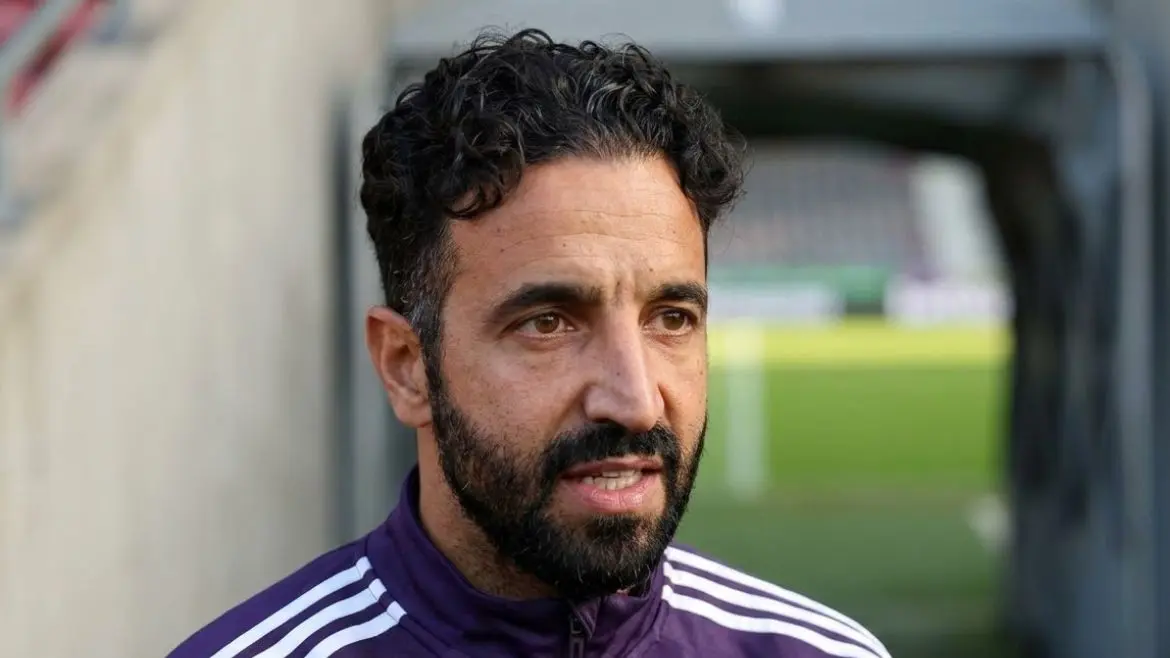
The football world was rocked on January 5, 2026, by the announcement that Manchester United had parted ways with their head coach. After a turbulent 14-month tenure filled with tactical shifts and boardroom friction, Ruben Amorim has left Old Trafford. This article dives deep into his time at the club, the explosive final days, the feud with technical director Jason Wilcox, and what lies ahead for the Red Devils as Darren Fletcher takes the reins.
Table of Contents
- Introduction
- The Promise: Why Ruben Amorim Was the Chosen One
- The Tactics: Did the 3-4-3 System Fail in England?
- The Breaking Point: A Feud Revealed
- The Numbers Game: Analyzing the Stats
- The Interim Era: Darren Fletcher Steps Up
- What’s Next for Manchester United?
- Conclusion
- Frequently Asked Questions (FAQs)
Introduction
In the high-stakes world of European football (or soccer, as it is often called stateside), few jobs are as scrutinized as the head coach of Manchester United. On a cold Monday morning in January 2026, the club made the headline-grabbing decision to terminate the contract of Ruben Amorim. Arriving from Sporting CP in November 2024 with a reputation as one of the brightest young minds in the game, Ruben Amorim was tasked with restoring glory to a fallen giant. However, just 14 months later, his project has come to an abrupt and dramatic halt.
For fans in the USA following the Premier League, this news might feel like déjà vu. The cycle of hope and heartbreak at Old Trafford continues. But this dismissal feels different. It wasn’t just about bad results; it was about a clash of ideologies, public outbursts, and a vision that never quite translated from Lisbon to Manchester. As Manchester United news today is dominated by his exit, we explore exactly what went wrong for Ruben Amorim and why the “new Mourinho” label proved to be a heavy burden to bear.
The Promise: Why Ruben Amorim Was the Chosen One
To understand the bitter end, we must look back at the optimistic beginning. When Manchester United hired Ruben Amorim in late 2024, he was the most coveted young manager in Europe. He had broken the Benfica-Porto duopoly in Portugal, leading Sporting CP to league titles with a distinct style of play.
The “Young Mourinho” Tag
Ruben Amorim carried an aura of charisma and tactical rigidity that reminded many of Jose Mourinho. He was articulate, handsome, and incredibly confident. The United board, led by INEOS, believed they had found a long-term architect who could build a dynasty similar to what Pep Guardiola achieved across town at Manchester City.
The Vision for United
The plan was clear: implement a modern structure. Ruben Amorim was brought in not just to coach the first team, but to align the club’s identity. He promised high-intensity pressing, a solid defensive foundation, and a winning mentality. For the first few months, it seemed to work. There was a “new manager bounce,” and fans were chanting his name. But in the Premier League, the honeymoon period is notoriously short.
The Tactics: Did the 3-4-3 System Fail in England?
One of the biggest talking points surrounding Ruben Amorim was his unwavering commitment to his preferred formation. At Sporting, his 3-4-3 system was a well-oiled machine. At Manchester United, it often looked like a puzzle with missing pieces.
Square Pegs in Round Holes
The roster Ruben Amorim inherited wasn’t built for a back three. The squad was heavy on wingers who preferred a 4-3-3 and lacked the dynamic wing-backs necessary to make Amorim’s system fly.
- The Wing-Back Issue: In the USA, fans of the NFL understand the importance of specialized positions. Asking a traditional fullback to play as a high-flying wing-back is like asking a quarterback to play receiver—it requires a different skillset. Ruben Amorim struggled to find players who could defend the back post and cross the ball effectively.
- Midfield Overload: Premier League teams quickly figured out that United could be overrun in the midfield. With only two central midfielders, opponents often outnumbered United in the center of the park, leading to turnovers and counter-attacks that left the defense exposed.
Refusal to Adapt
Critics argued that a great manager adapts to his players, but Ruben Amorim insisted the players adapt to him. This stubbornness became a source of friction. While the system produced some exciting wins, it also led to confusing losses where the team looked disjointed. By late 2025, it was clear the players were losing faith in the system, and perhaps, in the man himself.
The Breaking Point: A Feud Revealed
While tactical issues were simmering, the real explosion happened off the pitch. The narrative of Ruben Amorim sacked isn’t complete without discussing the internal politics that plagued his final weeks.
The Post-Match Explosion
The final nail in the coffin was the Ruben Amorim post-match press conference following a humiliating defeat to Leeds United. In a moment of raw frustration, Amorim went off-script. Instead of protecting his players or taking the blame, he pointed fingers at the recruitment strategy.
He publicly questioned why certain transfer targets were missed and alluded to interference from above. For U.S. audiences familiar with sports drama, this was the equivalent of a head coach calling out his General Manager on live TV. In the corporate structure of Manchester United, this was a cardinal sin.
Ruben Amorim vs Jason Wilcox Feud
Reports had been circulating for months about a Ruben Amorim vs Jason Wilcox feud. Jason Wilcox, the club’s Technical Director, was tasked with implementing a specific “Game Model” for the club. Ruben Amorim, however, wanted total control.
- Transfer Disagreements: Amorim wanted experienced players ready to win now. Wilcox and the board preferred younger data-driven signings.
- The Power Struggle: The tension boiled over when Amorim felt undermined by recruitment decisions. His public criticism of the board was seen as a direct attack on Wilcox’s authority. In the end, the club chose the executive over the manager.
The Numbers Game: Analyzing the Stats
Emotion aside, the decision to remove Ruben Amorim was also driven by cold, hard data. The 2025-2026 season was turning into a nightmare statistically.
Threat of History Repeating
As January approached, the team was languishing in the bottom half of the table. Fears began to grow regarding Manchester United lowest Premier League finish stats. The club had never finished lower than 8th in the Premier League era, but under Amorim’s guidance in his second season, they were trending dangerously close to 10th or 11th.
- Goals Conceded: United’s defense, supposed to be the strength of the 3-4-3, was leaking goals at an alarming rate.
- Home Form: Old Trafford, once a fortress, had become an easy place for visiting teams to pick up points.
- Player Regression: Key stars who were expected to flourish under Ruben Amorim seemed to regress. The development of young talent stalled, which was a major concern for the ownership group.
The board simply could not risk missing out on European football entirely. The financial implications of a bottom-half finish would be disastrous, forcing their hand to make a change.
The Interim Era: Darren Fletcher Steps Up
With Ruben Amorim Man Utd departure confirmed, the club has turned to a familiar face to steady the ship. Darren Fletcher interim manager is the new reality for the remainder of the season.
Who is Darren Fletcher?
For U.S. fans who might not know the history, Darren Fletcher is a club legend. A tenacious midfielder who played under Sir Alex Ferguson, Fletcher understands the “DNA” of Manchester United. He has been working within the coaching setup and offers a safe pair of hands.
The Job Ahead
Fletcher’s mandate is simple: restore calm. He isn’t expected to reinvent the wheel or introduce a complex new tactical system. His job is to:
- Improve the mood in the locker room.
- Simplify the tactics (likely returning to a back four).
- Salvage a European qualification spot.
While Fletcher is likely a stop-gap solution, a strong run of form could always complicate the search for a permanent successor.
What’s Next for Manchester United?
The exit of Ruben Amorim opens up a vacuum at the biggest club in the world. The rumor mill is already spinning regarding Next Man Utd manager candidates 2026.
The Potential Candidates
- Julian Nagelsmann: The German tactician has long been admired by United. His high-pressing style fits the modern game, though he would command a high salary and significant control.
- Gareth Southgate: A controversial choice among fans, but one with strong links to the INEOS ownership group. His management of England showed he can handle media pressure, though his club record is thin.
- Kieran McKenna: A former United coach who has done wonders at Ipswich Town. He represents a younger, progressive choice, similar to the initial appeal of Ruben Amorim, but with Premier League experience.
- Zinedine Zidane: The eternal link. Whenever the United job opens up, Zidane’s name is mentioned. However, his lack of English and preference for established squads might make this unlikely.
Lessons Learned?
The hiring of Ruben Amorim was supposed to be the end of the “manager-go-round.” His firing proves that Manchester United is still a volatile environment. The next appointment cannot just be a good coach; they must be a diplomat, a politician, and a thick-skinned leader capable of handling the immense pressure that crushed Amorim.
Conclusion
The story of Ruben Amorim at Manchester United is a cautionary tale of potential unfulfilled. He arrived as a savior, a young genius ready to conquer England. He leaves as another name on the long list of managers who couldn’t tame the beast that is Old Trafford.
Ultimately, Ruben Amorim was a victim of his own rigidity and the chaotic environment of a club in transition. His refusal to compromise on his 3-4-3 formation, combined with the explosive Ruben Amorim vs Jason Wilcox feud, made his position untenable. As Darren Fletcher takes over, the fans are left wondering: How many more “rebuilds” must they endure?
For Ruben Amorim, his stock remains relatively high in Europe due to his success at Sporting, and he will likely find work quickly. But his chapter in Manchester will be remembered as a brief, stormy interlude that promised thunder but only delivered rain.
Frequently Asked Questions (FAQs)
1. Why was Ruben Amorim fired by Man Utd? Ruben Amorim was fired due to a combination of poor results, the team languishing in the bottom half of the table, and an irreparable breakdown in his relationship with the board, specifically Technical Director Jason Wilcox.
2. How long was Ruben Amorim the manager of Manchester United? He served as head coach for approximately 14 months, having been hired in November 2024 and sacked in January 2026.
3. Who is replacing Ruben Amorim? Former player and current coach Darren Fletcher has been appointed as the interim manager while the club searches for a permanent replacement.
4. Did Ruben Amorim win any trophies at Manchester United? No, Ruben Amorim did not win any major silverware during his short stint at the club, although he did lead the team on a few promising cup runs that ultimately fell short.
5. What formation did Ruben Amorim use? He famously stuck to a 3-4-3 formation, a system he used successfully at Sporting CP but which struggled to find consistency in the Premier League.
Visit Vic Waves for the latest trending USA news, updates, and insights you may have missed today, and more stories.