
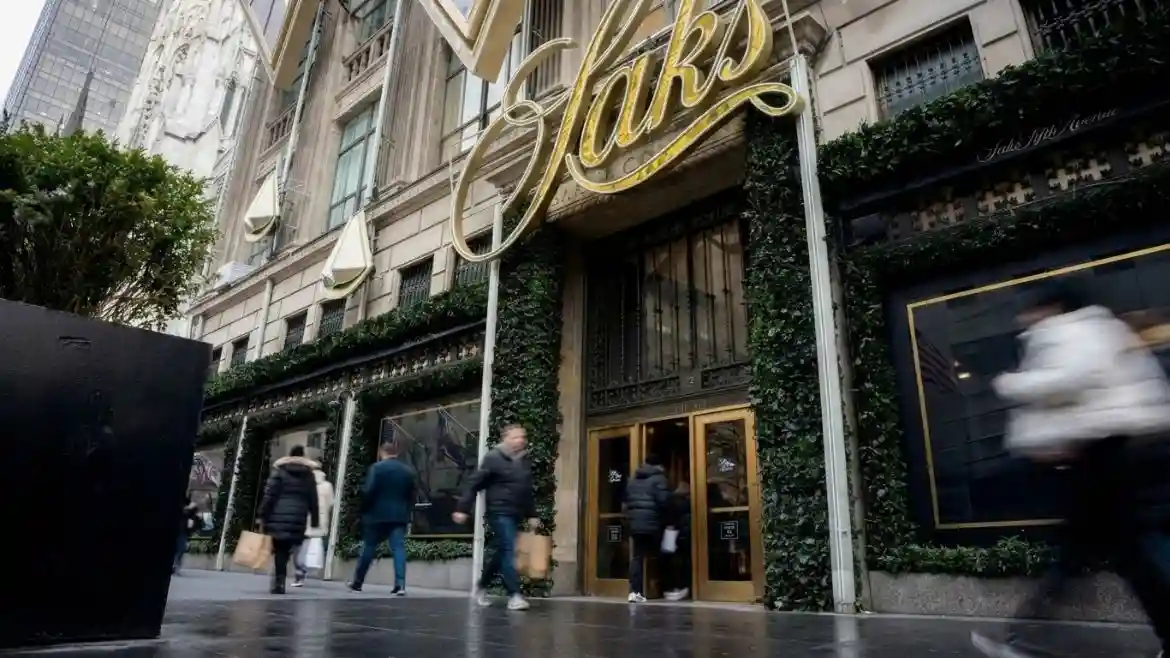
In a seismic shift for the American luxury market, Saks Global—the parent company of Saks Fifth Avenue, Neiman Marcus, and Bergdorf Goodman—has officially filed for Chapter 11 bankruptcy. The filing, announced on January 14, 2026, comes just over a year after the blockbuster merger between Saks and Neiman Marcus. Burdened by billions in debt and a cooling luxury economy, the retail giant is now initiating a massive restructuring effort. This article details the reasons behind the collapse, the leadership changes, and what this means for shoppers and the fashion industry.
Table of Contents
- Introduction
- The Breaking News: Chapter 11 Filing
- The “Failed Gamble”: Why Saks Global Collapsed
- The Neiman Marcus Merger: A Debt-Fueled Deal
- What Happens to the Stores? Operations & Financing
- Leadership Shakeup: CEO Changes Amid Crisis
- The Ripple Effect: Impact on Luxury Brands
- Conclusion
- Frequently Asked Questions (FAQs)
Introduction
For over a century, Saks Fifth Avenue has been synonymous with high-end fashion, serving as a beacon of luxury on Main Streets and in malls across America. However, the glittering facade has officially cracked. On Wednesday, January 14, 2026, Saks Global, the entity formed to control the largest luxury department store portfolio in the U.S., filed for bankruptcy protection.
This development marks one of the most significant retail collapses since the pandemic. It exposes the fragility of the department store model in an era where consumers are pulling back on discretionary spending and luxury brands are increasingly selling directly to customers. With a new CEO at the helm and billions in debt to restructure, Saks Fifth Avenue enters a fight for its survival.
The Breaking News: Chapter 11 Filing
Saks Global filed voluntary petitions for Chapter 11 relief in the U.S. Bankruptcy Court for the Southern District of Texas. The filing includes its marquee banners: Saks Fifth Avenue, Saks OFF 5TH, Neiman Marcus, Bergdorf Goodman, and Last Call.
According to court documents, the company estimated its liabilities between $1 billion and $10 billion, with thousands of creditors ranging from small vendors to global fashion powerhouses like Chanel and Gucci. The move allows the company to pause its debt payments while it reorganizes its finances, aiming to emerge as a leaner, more sustainable business later this year.
The “Failed Gamble”: Why Saks Global Collapsed
The bankruptcy is not a sudden event but the culmination of mounting financial pressure. Analysts point to a “perfect storm” of factors that pushed Saks Fifth Avenue’s parent company over the edge:
- Crushing Debt: The company struggled to manage the massive leverage taken on to acquire Neiman Marcus.
- Luxury Slowdown: After a post-pandemic boom, global luxury spending contracted in late 2025 and 2026. Aspirational shoppers stopped buying entry-level luxury items (like handbags and sneakers) due to inflation and economic uncertainty.
- Vendor Disputes: In the months leading up to the filing, reports surfaced that Saks Fifth Avenue had fallen behind on payments to vendors, causing some brands to withhold inventory during the crucial holiday season.
Note: The company missed a critical $100 million interest payment in December 2025, signaling to Wall Street that a default was imminent.
The Neiman Marcus Merger: A Debt-Fueled Deal
The core of the financial distress lies in the 2024 acquisition of Neiman Marcus. Orchestrated by Hudson’s Bay Company (HBC) and its executive chairman Richard Baker, the $2.65 billion deal was designed to create a U.S. luxury monopoly that could negotiate better terms with brands and cut operational costs.
Instead, the merger saddled the new entity, Saks Global, with unmanageable debt service costs just as the market turned. Rather than creating a “powerhouse,” the consolidation created a financial black hole. Critics of the deal argue that combining two struggling legacy retailers did not solve the fundamental issue: shoppers are increasingly buying directly from brands like Louis Vuitton and Hermes, bypassing the department store middleman entirely.
What Happens to the Stores? Operations & Financing
For customers of Saks Fifth Avenue and Neiman Marcus, the immediate impact will be minimal. Saks Global has secured $1.75 billion in financing, including $1 billion in “debtor-in-possession” (DIP) funding, to keep the lights on during the bankruptcy process.
- Store Operations: All stores, websites, and apps remain open and operational.
- Customer Programs: Gift cards, returns, and loyalty programs continue to be honored.
- Employee Pay: The company has filed motions to continue paying wages and benefits to its workforce without interruption.
However, the long-term footprint is under review. While no immediate mass closures were announced on day one, the company stated it would “evaluate its operational footprint,” which is corporate speak for potential future store closings to cut costs.
Leadership Shakeup: CEO Changes Amid Crisis
The bankruptcy filing was accompanied by a dramatic changing of the guard in the C-suite.
- Marc Metrick: The longtime CEO of Saks who navigated the company through the pandemic stepped down earlier in January 2026.
- Richard Baker: The architect of the Neiman Marcus merger stepped down as Executive Chairman and CEO of Saks Global effectively immediately.
- The New CEO: Geoffroy van Raemdonck, the former CEO of Neiman Marcus Group, has been appointed to lead Saks Global through the restructuring.
This shift suggests that the creditors and board believe van Raemdonck, who successfully guided Neiman Marcus through its own bankruptcy in 2020, is better suited to salvage the combined company than the team that built it.
The Ripple Effect: Impact on Luxury Brands
The collapse of Saks Fifth Avenue’s parent company sends shockwaves through the fashion industry. Department stores are traditional wholesale partners for major brands, and when they fail to pay bills, the brands suffer.
Court filings revealed the scale of the debt owed to luxury houses:
- Chanel: Owed approximately $136 million.
- Kering (Gucci, Saint Laurent): Owed approximately $60 million.
- LVMH: Owed approximately $26 million.
These unpaid debts may force luxury brands to further tighten their distribution, pulling more product out of department stores and focusing strictly on their own boutiques—a trend that could make it even harder for Saks Fifth Avenue to recover.
Conclusion
The Chapter 11 filing of Saks Fifth Avenue‘s parent company is a historic moment that signals the end of an era for the American department store. What was meant to be a consolidation of strength between Saks and Neiman Marcus turned into a cautionary tale of debt and bad timing.
As Saks Global navigates the bankruptcy courts in Texas, the goal remains to save the iconic banners that have defined American luxury for generations. However, the Saks Fifth Avenue that emerges from this process will likely be smaller, leaner, and under immense pressure to prove it still has a place in the modern retail landscape.
Frequently Asked Questions (FAQs)
Is Saks Fifth Avenue closing down? No. While the parent company, Saks Global, has filed for bankruptcy, all Saks Fifth Avenue stores and websites remain open and operational. The bankruptcy process is designed to restructure debt, not necessarily to liquidate the company.
Can I still use my Saks gift cards? Yes. The company has stated that it will continue to honor all customer programs, including gift cards, returns, and loyalty rewards, during the restructuring process.
Why did Saks Fifth Avenue file for bankruptcy? The primary reasons are a massive debt load resulting from the acquisition of Neiman Marcus in 2024, combined with a slowdown in luxury spending and rising competition from brands selling directly to consumers.
Who owns Saks Fifth Avenue now? Saks Fifth Avenue is owned by Saks Global, which was formed by Hudson’s Bay Company (HBC). However, during bankruptcy, control largely shifts to the creditors and lenders who are financing the restructuring.
What is happening to Neiman Marcus? Neiman Marcus is part of the same bankruptcy filing as Saks Fifth Avenue. Like Saks, its stores remain open, and it is now under the leadership of the combined entity’s new CEO, Geoffroy van Raemdonck.
Visit Vic Waves for the latest trending USA news, updates, and insights you may have missed today, and more stories.