

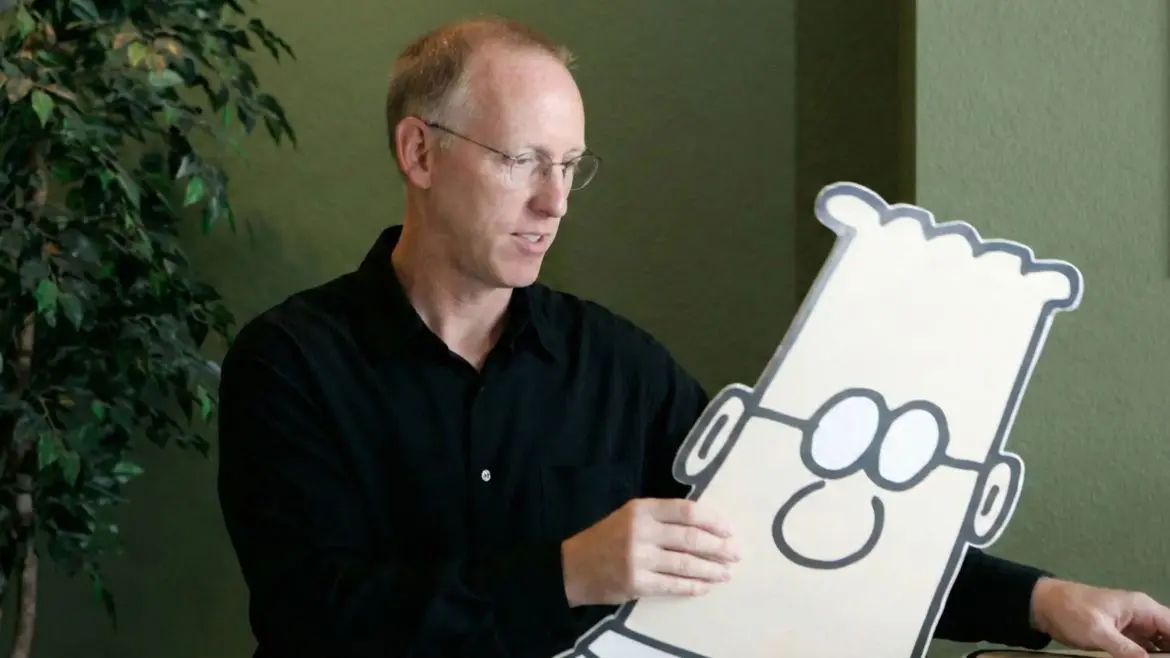
Scott Adams, the cartoonist who gave the world Dilbert and famously satirized the absurdities of corporate life, has died at the age of 68. On January 13, 2026, news broke that Scott Adams passed away following a battle with prostate cancer. Known for his sharp wit, business bestsellers, and a late-career pivot into polarizing political commentary, Adams leaves behind a complicated legacy. This article explores his rise from a cubicle worker to a global phenomenon, the health struggles he overcame, and the controversies that defined his final years.
Table of Contents
- Introduction
- Breaking News: Scott Adams Dead at 68
- The Battle with Cancer: Scott Adams Cause of Death
- Rise to Fame: The History of the Dilbert Comic Strip
- Beyond the Funny Pages: Books and Business
- From Cubicles to Controversy: The Later Years
- The Cultural Impact of Scott Adams
- Conclusion
- Frequently Asked Questions (FAQs)
Introduction
For decades, millions of workers started their day by reading Scott Adams. His creation, Dilbert, wasn’t just a comic strip; it was a cultural touchstone for anyone who had ever suffered through a pointless meeting or dealt with a micromanaging boss. Scott Adams possessed a unique ability to distill the frustrations of the modern workplace into three panels of deadpan humor. However, the man behind the bespectacled engineer was far more complex than his characters.
On January 13, 2026, the world learned that Scott Adams had passed away. His death marks the end of a career that spanned nearly four decades, characterized by immense highs—including best-selling books and a TV show—and significant lows, most notably the Scott Adams controversy that led to his effective cancellation from mainstream media in 2023. As we look back on his life, it is impossible to separate the artist who made us laugh from the provocateur who made headlines.
Breaking News: Scott Adams Dead at 68
The announcement came early Tuesday morning: Scott Adams dead at the age of 68. His family confirmed that he passed away peacefully at his home. For many fans who had followed his work since the late 1980s, the news was a somber start to the year. Scott Adams had been a fixture in the American media landscape, evolving from a cartoonist into a pundit and internet personality.
While he had largely retreated to alternative media platforms in recent years, Scott Adams remained an active voice, hosting his daily podcast, Real Coffee with Scott Adams, where he discussed persuasion, politics, and current events. His death has sparked a wave of reactions across social media, ranging from tributes by fellow cartoonists to debates about his later political stances. Regardless of where one stood on his views, there is no denying that Scott Adams was a significant figure in American pop culture.
The Battle with Cancer: Scott Adams Cause of Death
The official Scott Adams cause of death has been identified as complications from metastatic prostate cancer. Adams had previously shared his diagnosis with his audience, approaching the topic with the same analytical, almost detached style that he applied to his cartoons. In 2025, he revealed that the cancer had spread to his bones, a diagnosis that typically carries a difficult prognosis.
Throughout his health battles, Scott Adams remained open about his condition. He often used his platform to encourage men to get screened early, turning his personal struggle into a public service message. This wasn’t the first time Scott Adams faced a medical crisis; earlier in his life, he overcame focal dystonia, a condition that nearly ended his drawing career, and spasmodic dysphonia, which affected his voice. His resilience in the face of these ailments was a central theme in his book How to Fail at Almost Everything and Still Win Big.
Rise to Fame: The History of the Dilbert Comic Strip
To understand the magnitude of his loss, one must look at the Dilbert comic strip history. Before Scott Adams became a household name, he was just another cog in the corporate machine. He worked at Crocker National Bank and later Pacific Bell, experiences that provided the raw material for Dilbert.
Launched in 1989, Dilbert initially focused on the title character’s eccentric hobbies, but it didn’t truly take off until Scott Adams moved the setting to the office. Suddenly, the strip resonated with millions. Characters like the Pointy-Haired Boss, Dogbert, and Wally became archetypes for the incompetence and cynicism found in offices everywhere.
- The Email Innovation: Scott Adams was one of the first cartoonists to include his email address in his strip. This direct line to readers allowed him to crowdsource material. If a reader sent a story about a ridiculous corporate policy, ScottAdams would turn it into a punchline the next week.
- Syndication Success: At its peak, Dilbert was published in over 2,000 newspapers in 65 countries.
- The Dilbert Principle: This concept—that companies tend to promote incompetent employees to management to get them out of the workflow—became a legitimate topic of discussion in business schools.
The success of Dilbert allowed Scott Adams to leave his day job in 1995 and focus entirely on his creative empire, which soon expanded into merchandise, an animated TV series, and video games.
Beyond the Funny Pages: Books and Business
Scott Adams was never content with just being a cartoonist. He viewed himself as a hypnotist, a student of persuasion, and an entrepreneur. His business books, starting with The Dilbert Principle in 1996, topped the New York Times Best Seller list. These weren’t just collections of comics; they were satirical yet insightful guides to surviving corporate America.
He also ventured into the food industry with the “Dilberito,” a vitamin-fortified burrito that, while a commercial failure, showcased his willingness to experiment. Scott Adams often spoke about “talent stacking”—the idea that you don’t need to be the best at one thing, but if you are pretty good at several things (drawing, humor, business experience), you can become unique. This philosophy defined his career.
From Cubicles to Controversy: The Later Years
The narrative of Scott Adams shifted dramatically in the mid-2010s. As the cultural and political climate in the U.S. became more polarized, so did Adams. He began blogging about the persuasion techniques of politicians, famously predicting Donald Trump’s 2016 victory when few others did. This brought him a new audience but alienated many longtime fans.
The Scott Adams controversy reached a boiling point in February 2023. During an episode of his YouTube show, ScottAdams commented on a Rasmussen poll regarding racial relations. His remarks, in which he labeled Black Americans a “hate group” and advised white people to “get the hell away,” triggered an immediate backlash.
- The Fallout: Within days, major distributors like Andrews McMeel Universal severed ties.
- Newspaper Drops: Hundreds of newspapers, including The Washington Post and The Los Angeles Times, ceased publishing Dilbert.
- The Response: ScottAdams defended his comments as hyperbole and context-dependent, but the damage to his mainstream career was permanent.
In his final years, Scott Adams continued to create Dilbert for an online subscription audience on platforms like Locals. He leaned into his role as a cancelled figure, often discussing the mechanics of cancellation and free speech.
The Cultural Impact of Scott Adams
Despite the turbulent end to his career, the Dilbert creator leaves a lasting imprint on American culture. Scott Adams changed the way we talk about work. Phrases like “cubicle farm” and the visual of the tie curving upward became shorthand for white-collar drudgery.
He validated the feelings of millions of engineers and office workers who felt unheard. ScottAdams showed them that they weren’t crazy—the system was. His work on persuasion and his concept of “loserthink” also influenced a generation of online commentators and self-help authors.
Even critics of his later politics acknowledge the genius of early Dilbert. Scott Adams managed to capture the zeitgeist of the 1990s and 2000s economy perfectly. His legacy is a duality: he is the man who made the world laugh at bad bosses, and he is the man who became a cautionary tale about the boundaries of public speech.
Conclusion
The death of Scott Adams at 68 closes the book on one of the most successful and controversial cartoonists in history. From the humble beginnings of sketching on lunch breaks at Pacific Bell to building a multimedia empire, ScottAdams lived a life defined by bold moves and sharp observations.
While the Scott Adams controversy will undoubtedly be part of his obituary, his contribution to the world of comics remains undeniable. He taught us to laugh at the absurdity of the corporate ladder and gave a voice to the voiceless employee. As fans and critics alike reflect on his passing on this January day in 2026, ScottAdams will be remembered as a figure who was, above all else, impossible to ignore.
Frequently Asked Questions (FAQs)
When did Scott Adams die? ScottAdams passed away on January 13, 2026.
What was the Scott Adams cause of death? ScottAdams died after a battle with metastatic prostate cancer, which he had revealed had spread to his bones in 2025.
Who was the Dilbert creator? ScottAdams was the creator of Dilbert, a comic strip that satirized office life and ran in thousands of newspapers globally.
Why was Dilbert cancelled? In 2023, Scott Adams made controversial comments about race during his podcast, leading syndicators and newspapers to drop the comic strip.
What books did Scott Adams write? Scott Adams wrote several bestsellers, including The Dilbert Principle, Win Bigly, and How to Fail at Almost Everything and Still Win Big.
Did Scott Adams have other health issues? Yes, Scott Adams notably recovered from focal dystonia (which affected his drawing hand) and spasmodic dysphonia (which affected his voice) earlier in his career.
Visit Vic Waves for the latest trending USA news, updates, and insights you may have missed today, and more stories.