

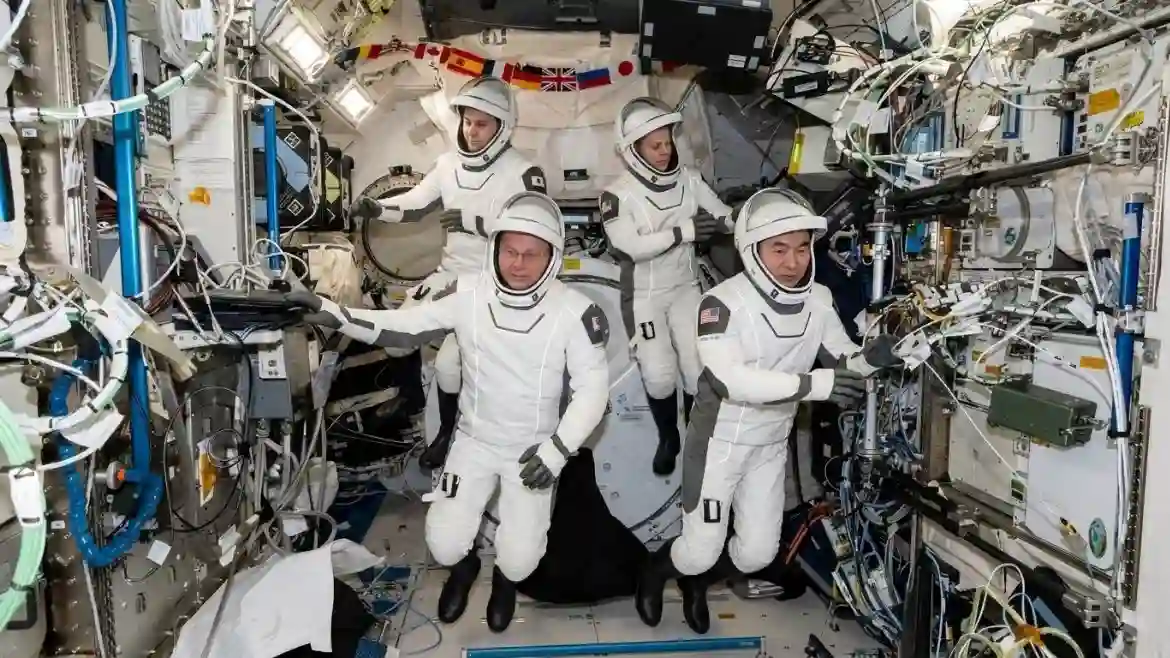
In a historic first for the International Space Station (ISS), a SpaceX Crew Dragon capsule has successfully returned four astronauts to Earth early due to a medical emergency. The “Endeavour” spacecraft splashed down off the coast of California on January 15, 2026, carrying the Crew-11 team after their mission was cut short by weeks to address an undisclosed health concern with one of the crew members.
Table of Contents
- Historic Splashdown off California Coast
- Unprecedented Medical Evacuation
- Crew Status and Recovery
- Mission Background: SpaceX Crew-11
- Frequently Asked Questions (FAQs)
Historic Splashdown off California Coast
On Thursday morning, January 15, 2026, the SpaceX Crew Dragon capsule Endeavour executed a picture-perfect splashdown in the Pacific Ocean near San Diego. The return marked the conclusion of a high-stakes operation to bring NASA astronauts Zena Cardman and Mike Fincke, JAXA (Japan Aerospace Exploration Agency) astronaut Kimiya Yui, and Roscosmos cosmonaut Oleg Platonov home safely.
The splashdown occurred at approximately 3:41 a.m. EST, just over 10 hours after the spacecraft undocked from the orbiting laboratory. Recovery teams from SpaceX and NASA were immediately on the scene to retrieve the capsule and assist the crew.
Unprecedented Medical Evacuation
This mission marks a significant milestone in spaceflight history: it is the first time in the 25-year operation of the ISS that a mission has been terminated early for a dedicated medical evacuation.
While minor medical issues have been managed on orbit before, NASA officials determined that one crew member’s condition required diagnostic equipment and care only available on Earth. Due to the design of the SpaceX Dragon capsule—which serves as the “lifeboat” for the entire four-person crew—all four astronauts had to return together, leaving the space station temporarily with a reduced skeleton crew.
Crew Status and Recovery
NASA has maintained strict privacy regarding the identity of the affected astronaut and the specific nature of the medical issue. However, the agency confirmed in a statement that the crew member was in “stable” condition prior to departure and remained stable throughout the reentry process.
Upon splashdown, the crew was extracted from the SpaceX capsule and flown by helicopter to a nearby hospital for standard post-flight medical evaluations. The expedited return timeline was designed to minimize the physical stress of reentry on the affected crew member while ensuring they received prompt care.
Mission Background: SpaceX Crew-11
The Crew-11 mission launched on August 1, 2025, and was originally scheduled to conclude in February 2026. During their five months in orbit, the diverse team conducted hundreds of scientific experiments and maintenance tasks.
Despite the abrupt end to their stay, the mission is considered a success. The SpaceX platform has once again demonstrated its reliability, not just as a transport vehicle, but as a critical safety valve capable of executing complex emergency return scenarios on short notice.
Frequently Asked Questions (FAQs)
Why did SpaceX Crew-11 return early? The crew returned early due to an undisclosed medical concern with one of the astronauts that required evaluation and treatment on Earth.
Was the medical issue life-threatening? NASA stated the astronaut was in stable condition throughout the event. The evacuation was described as a “controlled expedited return” rather than an immediate emergency deorbit.
Who was on the SpaceX Crew-11 mission? The crew consisted of NASA astronauts Zena Cardman (Commander) and Mike Fincke (Pilot), along with Mission Specialists Kimiya Yui (JAXA) and Oleg Platonov (Roscosmos).
Has a medical evacuation happened on the ISS before? No. While crew members have returned sick or injured in the past (such as during the Soviet era), this is the first time an ISS mission was specifically cut short for a medical evacuation in the station’s 25-year history.
Visit Vic Waves for the latest trending USA news, updates, and insights you may have missed today, and more stories.