

A hauntingly beautiful adaptation of Denis Johnson’s novella has captured the hearts of critics and audiences alike. Here is a deep dive into the film’s production, its celebration of the Pacific Northwest, and its road to the Academy Awards.
Table of Contents
- A Quiet Masterpiece: Train Dreams and the 2026 Oscars
- Filmed in WA: Capturing the Spirit of the Northwest
- Spokane and Metaline Falls as Cinematic Backdrops
- Bringing Bonners Ferry to Life
- The Story of Robert Grainier: An Ode to Forestry and Solitude
- Joel Edgerton and Felicity Jones Shine
- From Denis Johnson’s Novella to the Screen
- Clint Bentley’s Vision
- Conclusion
- Frequently Asked Questions (FAQs)
A Quiet Masterpiece: Train Dreams and the 2026 Oscars
When the Oscar nominations 2026 were announced this Thursday, many film fans were thrilled to see a particular title make the list. Train Dreams, a meditative period drama produced by Netflix, defied the odds to secure four prestigious nominations. While blockbuster epics often dominate the conversation, this intimate portrait of an American laborer has quietly become one of the most talked-about films of the year.
The film’s recognition is a testament to its raw emotional power. Train Dreams isn’t just a movie; it is a visual poem that explores the rapid industrialization of the American West through the eyes of one man. Its inclusion in the Best Picture race highlights the Academy’s growing appreciation for storytelling that prioritizes atmosphere and character over explosive action.
For residents of the Pacific Northwest, the success of Train Dreams feels personal. The production has put a spotlight on the region’s natural beauty and its rich history of logging and railways. As the awards ceremony approaches, all eyes are on this understated gem to see if it can take home the gold.
Filmed in WA: Capturing the Spirit of the Northwest
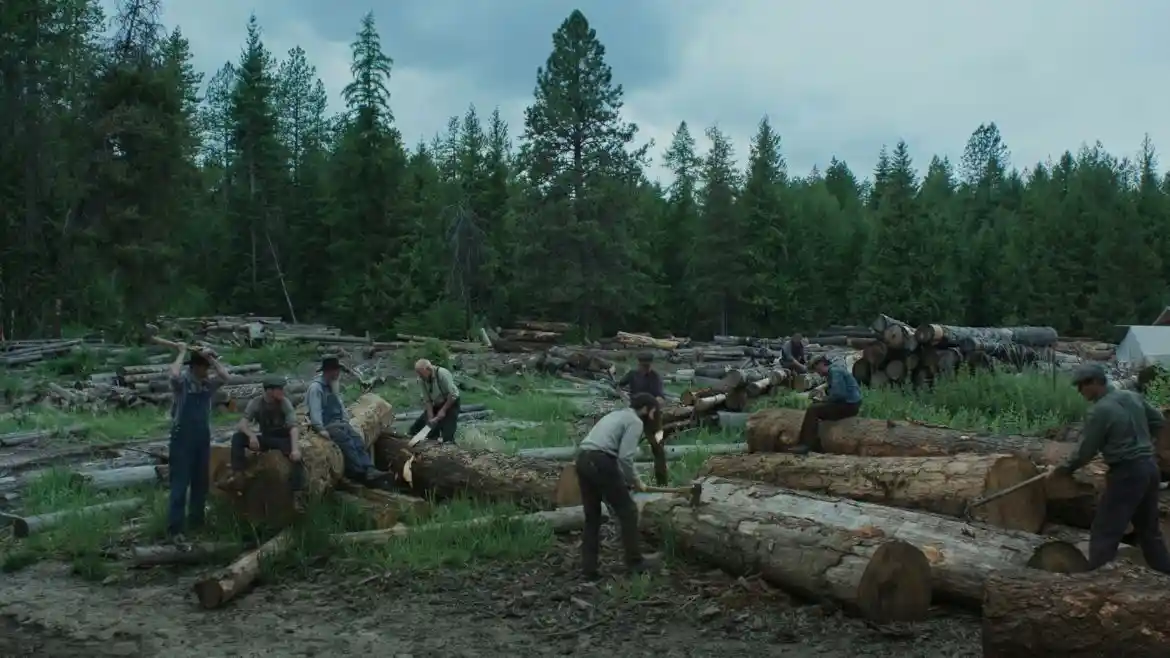
One of the most striking elements of Train Dreams is its visual authenticity. The film does not rely on green screens or sound stages to recreate the rugged wilderness of the early 20th century. Instead, it was filmed in WA, utilizing the actual landscapes that inspired the original story.
Director Clint Bentley was adamant about shooting on location to capture the specific quality of light and the towering presence of the forests. The production team scoured the state of Washington to find locations that could double for the Idaho Panhandle of the 1910s and 20s. The result is a film that feels tactile and grounded, where the mud, the river water, and the bark of the trees are almost characters themselves.
Spokane and Metaline Falls as Cinematic Backdrops
Local crews and residents were buzzing when the production arrived in town. Spokane served as a major hub for the film, providing both urban settings that could be dressed as turn-of-the-century towns and easy access to the surrounding wilderness. The historic architecture of the area allowed the filmmakers to recreate the era with minimal CGI intervention.
Further north, the town of Metaline Falls provided the rugged, river-adjacent scenery necessary for the logging sequences. The crew also utilized locations in Colville, Tekoa, and Snoqualmie. These areas, with their dense woods and mist-covered mornings, perfectly encapsulated the mood of Train Dreams. The decision to keep the production local not only boosted the Washington economy but ensured that the film’s “ode to the lonely labor of forestry” felt genuine.
Bringing Bonners Ferry to Life
While the movie was shot in Washington, the story is deeply rooted in the geography of Idaho. The narrative is set in and around Bonners Ferry, a town that author Denis Johnson called home for many years. Train Dreams faithfully recreates the isolation and the community spirit of this specific slice of the American frontier.
The film depicts a time when Bonners Ferry was a gateway to the wild, a place where the modern world of locomotives was just beginning to encroach on the silent, ancient forests. By using the neighboring landscapes of Washington, the filmmakers honored Johnson’s vision, creating a seamless visual tapestry that transports viewers back in time.
The Story of Robert Grainier: An Ode to Forestry and Solitude
At the heart of Train Dreams is the life of Robert Grainier, a day laborer who witnesses the transformation of the American West. The film follows him over several decades, from his youth as a railroad worker to his later years as a hermit living in the woods. It is a story about the “ordinary man”—someone who builds the bridges and cuts the timber that fuels progress, yet often remains invisible to history.
The narrative is a poignant exploration of grief and survival. After a devastating fire takes everything he loves, Grainier retreats into a life of solitude. The film does not shy away from the harsh realities of forestry and logging in the early 1900s. It depicts the physical toll of the work, the danger of falling trees, and the camaraderie formed between men who risk their lives daily.
Train Dreams manages to find beauty in this hardship. It suggests that there is a profound dignity in labor and a spiritual connection to the land that modern society has largely lost. The “dreams” of the title refer not just to the sleep of the protagonist, but to the mythical, almost hallucinated quality of a world that is disappearing before his eyes.
Joel Edgerton and Felicity Jones Shine
The film’s emotional weight rests on the shoulders of Joel Edgerton, who delivers a career-defining performance as Robert Grainier. Edgerton communicates volumes with very little dialogue, using his physicality to express the character’s stoicism and deep-seated sorrow. His portrayal has rightfully earned him buzz alongside the film’s Oscar nominations 2026.
Opposite him is Felicity Jones, who plays Gladys, Grainier’s wife. Though her screen time is limited compared to Edgerton’s, her presence haunts the entire film. Jones brings a warmth and vitality to the role that makes her absence feel palpable in the later acts. The chemistry between the two anchors the film, making the tragedy that befalls them all the more heartbreaking. The cast is rounded out by the legendary William H. Macy, who adds a layer of grit and wisdom as a fellow logger.
From Denis Johnson’s Novella to the Screen
Adapting Denis Johnson is no easy feat. The late author is revered for his distinct prose style—hallucinatory, gritty, and transcendent. His novella Train Dreams is considered a modern classic, a short but dense work that covers an entire lifetime.
The challenge for the filmmakers was to translate Johnson’s internal, lyrical voice into visual storytelling. Screenwriters had to capture the episodic nature of the book without making the movie feel disjointed. They succeeded by leaning into the silence. Train Dreams is a film that breathes; it allows the audience to sit with the characters in the quiet moments, much like reading the novella requires a slow, thoughtful pace.
Clint Bentley’s Vision
Director Clint Bentley has proven himself to be a master of the “contemporary Western” aesthetic. With Train Dreams, he has crafted a film that feels both classic and urgent. His direction emphasizes the smallness of man against the vastness of nature.
Bentley’s use of natural light and wide shots emphasizes the isolation of the characters. He understands that in a story about forestry and the wilderness, the environment is the antagonist and the lover all at once. His collaboration with cinematographer Adolpho Veloso (who received one of the film’s four nominations) resulted in some of the most stunning imagery seen on screen this year. Every frame of Train Dreams looks like a painting from the Hudson River School, further elevating the source material.
Conclusion
Train Dreams is a rare cinematic achievement. It is a film that trusts its audience to find meaning in silence and beauty in tragedy. With its Oscar nominations 2026, including Best Picture, it has secured its place in film history.
For the communities in Spokane, Bonners Ferry, and throughout the Pacific Northwest, the film is a proud celebration of their heritage. It captures the “lonely labor of forestry” with a reverence that is seldom seen in Hollywood. Whether you are a fan of Denis Johnson, an admirer of Joel Edgerton, or simply a lover of great cinema, Train Dreams is a must-watch.
As we wait to see if it takes home the gold, one thing is certain: this story of a man and his changing world will linger in the minds of viewers long after the credits roll.
Frequently Asked Questions (FAQs)
1. How many Oscar nominations did Train Dreams get in 2026? Train Dreams received four Oscar nominations in 2026, including nods for Best Picture and Best Cinematography.
2. Where was the movie Train Dreams filmed? The movie was primarily filmed in WA (Washington state). Key locations included Spokane, Metaline Falls, Colville, Tekoa, and Snoqualmie.
3. Is Train Dreams based on a true story? The film is based on a novella by Denis Johnson. While it is a work of fiction, it is historically grounded in the real events and lifestyle of early 20th-century laborers in the Idaho Panhandle.
4. Who stars in the Train Dreams movie? The film stars Joel Edgerton as Robert Grainier and Felicity Jones as his wife, Gladys. It also features William H. Macy and Kerry Condon.
5. What is the plot of Train Dreams? Train Dreams follows the life of Robert Grainier, a day laborer in the American West, as he navigates love, devastating loss, and the rapid modernization of the world around him.
6. Is the movie set in Washington or Idaho? While it was filmed in Washington, the story is set in and around Bonners Ferry, Idaho, and the surrounding Kootenai Valley.
7. Can I watch Train Dreams on Netflix? Yes, Train Dreams is a Netflix production and is available for streaming on the platform.
Visit Vic Waves for the latest trending USA news, updates, and insights you may have missed today, and more stories.