

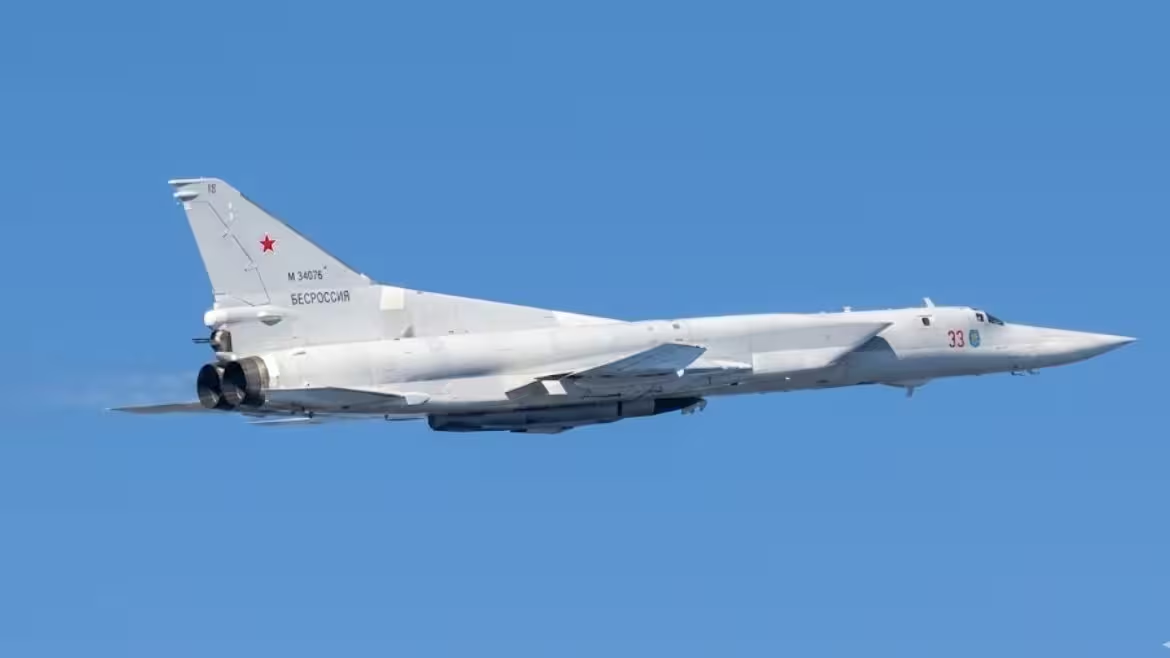
NATO fighters intercepted Russian military aircraft over the baltic sea: NATO fighter jets from six nations scrambled to intercept Russian military aircraft over the Baltic Sea on April 20, 2026. The operation involved nuclear-capable Tu-22M3 bombers escorted by Su-30 and Su-35 fighters. The French Rafale detachment in Lithuania led the NATO response, highlighting ongoing tensions in Northern Europe and the strategic importance of NATO Baltic Air Policing missions.
Table of Contents:
- Multi-National NATO Response to Russian Aircraft
- Details of the Russian Flight Group
- Conflicting Statements from NATO and Russia
- Strategic Implications for Baltic Security
- NATO Aircraft Coordination Across Member States
- FAQ: Nato fighters intercepted russian military aircraft over the baltic sea
NATO scrambled fighter jets from France, Sweden, Finland, Poland, Denmark, and Romania to intercept Russian aircraft detected over international waters in the Baltic Sea. The alert came after the Russian flight was reported without standard transponder signals or filed flight plans.
French Rafale fighters from the Šiauliai Air Base in Lithuania led the interception mission, with additional jets coordinating to monitor and escort the Russian planes across international airspace. The operation lasted several hours and ensured that NATO maintained control of the region’s airspace.
MULTI-NATIONAL NATO RESPONSE TO RUSSIAN AIRCRAFT
The mission demonstrated NATO’s readiness to respond to potential airspace violations. Coordination across six nations reflected the alliance’s integrated approach to Baltic Air Policing, emphasizing rapid response to nuclear-capable strategic bombers.
The operation involved precise tracking, communications, and tactical positioning to prevent escalation while ensuring the Russian flight remained within neutral waters. NATO jets maintained visual contact throughout the transit.
DETAILS OF THE RUSSIAN FLIGHT GROUP
Russian Tu-22M3 supersonic strategic bombers formed the core of the mission, accompanied by approximately ten Su-30 and Su-35 fighters providing continuous escort. These aircraft have long-range nuclear capabilities, adding strategic weight to the flight.
The bombers were monitored carefully by NATO assets to prevent violations of international airspace and to ensure safety over the busy Baltic corridors. Flight paths remained over neutral waters, according to Russian statements.
CONFLICTING STATEMENTS FROM NATO AND RUSSIA
While NATO officials emphasized the need to intercept unidentified aircraft due to safety and compliance concerns, the Russian Ministry of Defense described the operation as a routine mission over international waters.
NATO noted that interceptions are often necessary when aircraft fail to communicate with civilian air traffic control or neglect to file flight plans, which can present risks to regional aviation.
STRATEGIC IMPLICATIONS FOR BALTIC SECURITY
This operation underscores persistent tensions in the Baltic region, where Russia has increased military activity near NATO borders. Strategic bombers operating close to allied airspace amplify security concerns and require robust air policing.
Western officials also expressed concern over broader military developments, including Russia’s ongoing modernization of nuclear-capable aircraft, which reinforces the need for continual readiness in Northern Europe.
NATO AIRCRAFT COORDINATION ACROSS MEMBER STATES
The interception involved seamless coordination among national air forces, with France providing lead coverage and additional support from neighboring nations. This multinational approach reinforces NATO’s collective defense principle.
Sweden, Finland, Poland, Denmark, and Romania contributed assets and personnel, demonstrating interoperability in tracking and managing complex aerial scenarios across national boundaries.
FAQ: Nato fighters intercepted russian military aircraft over the baltic sea
What aircraft did NATO intercept over the Baltic Sea?
NATO intercepted two Russian Tu-22M3 strategic bombers escorted by ten Su-30 and Su-35 fighters during a flight over international waters on April 20, 2026.
Which NATO countries participated in the interception?
The mission involved jets from France, Sweden, Finland, Poland, Denmark, and Romania, coordinated under the NATO Baltic Air Policing mission.
Why was the interception necessary?
The Russian aircraft were not communicating via standard transponders and lacked filed flight plans, posing potential safety risks and necessitating NATO’s visual monitoring and escort.
If you’re searching for Web Development, AI Automation, or AWS Cloud Architecture services, visit Shabihaz for expert solutions. Don’t forget to explore VicWaves for the latest trending USA news, updates, and important stories.